

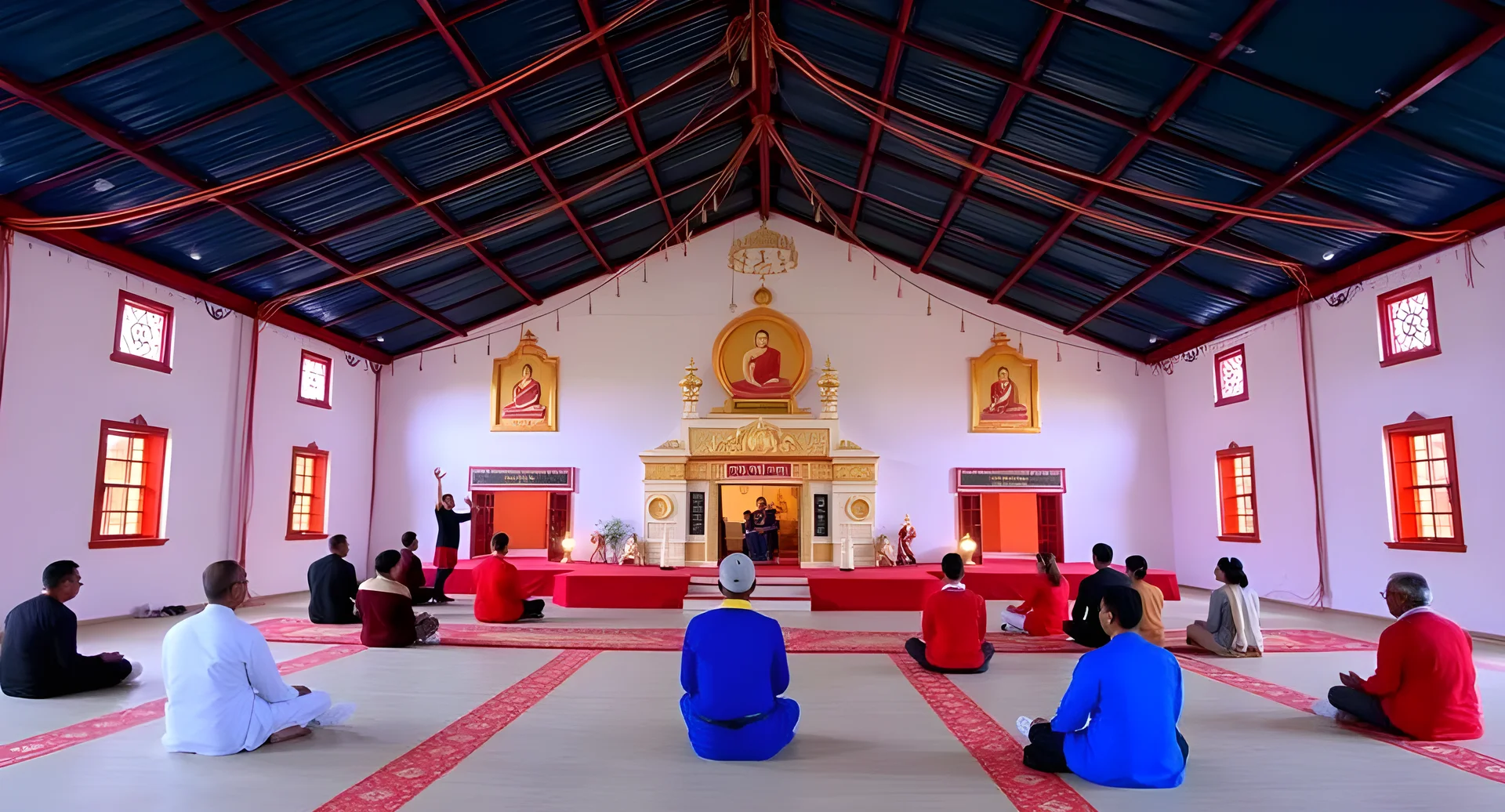
Tapsyadham, a newly constructed spiritual center in Dhulabari, Mechinagar-10, Jhapa, Nepal, is rapidly emerging as a hub for spiritual tourism in the region. Located just 1.5 kilometers from the Dhulabari turning on the East West Highway, the center offers a serene environment for meditation, Rajyoga, and spiritual development, positioning Nepal as an attractive destination for seekers of inner peace and enlightenment.
Connection to Brahma Kumaris and Mount Abu
Tapsyadham is closely linked to the international headquarters of the Brahma Kumaris World Spiritual University, located in Mount Abu, Rajasthan, India. The design of the Dhulabari center mirrors key structures from the Mount Abu campus, creating a symbolic and physical bridge between Nepal and India. This connection is expected to draw both local and international spiritual tourists, particularly from India, who are familiar with the teachings of Prajapita Brahma Baba, the founder of the Brahma Kumaris.
The spiritual philosophy of the Brahma Kumaris emphasizes meditation, self-awareness, and the pursuit of peace. Tapsyadham offers visitors the opportunity to learn about these teachings and participate in Rajyoga meditation sessions, a practice rooted in the tradition of the Brahma Kumaris.
Boosting Spiritual Tourism in Nepal
Tapsyadham’s emergence aligns with a broader trend in Nepal’s tourism sector, where spiritual tourism is gaining momentum. According to recent reports, Nepal has seen a steady increase in spiritual tourism, with visitors drawn to the country’s diverse cultural and religious heritage. This new center is expected to further diversify Nepal’s tourism offerings and attract a different kind of traveler—one seeking personal growth and transformation.
For Indian visitors, Tapsyadham provides a convenient option for spiritual retreats without the need to travel to India. The proximity to the Nepal-India border, combined with the cultural and spiritual ties to the Brahma Kumaris, is likely to draw a significant number of visitors from both countries.
“Tapsyadham represents a significant step forward for spiritual tourism in Nepal,” said a local tourism official. “It offers a unique blend of spiritual practice and cultural connection, which is increasingly sought after by modern travelers.”
Economic and Cultural Impact
The development of Tapsyadham is anticipated to have a positive economic impact on the surrounding region. As more visitors arrive, local businesses such as hotels, restaurants, and transportation services are expected to benefit. The center is also projected to contribute to the growth of Nepal’s tourism infrastructure, including improvements to roads, visitor centers, and other amenities.
With the rise of spiritual tourism, Nepal is positioning itself as a destination that offers not only natural beauty and cultural heritage but also opportunities for personal and spiritual development. This shift could lead to increased investment in the sector, including the development of similar centers in other parts of the country.
Tapsyadham’s success may also encourage the government and private sector to invest in other spiritual and cultural tourism sites, further enhancing Nepal’s appeal as a destination for significant travel experiences.
As the center continues to grow, it is expected to play a key role in the expansion of spiritual tourism across Nepal. The potential for international visitors, especially from India, will not only bring spiritual knowledge but also financial growth to the region, reinforcing the importance of spiritual tourism as a key driver of economic development in Nepal.






Comments
No comments yet
Be the first to share your thoughts