

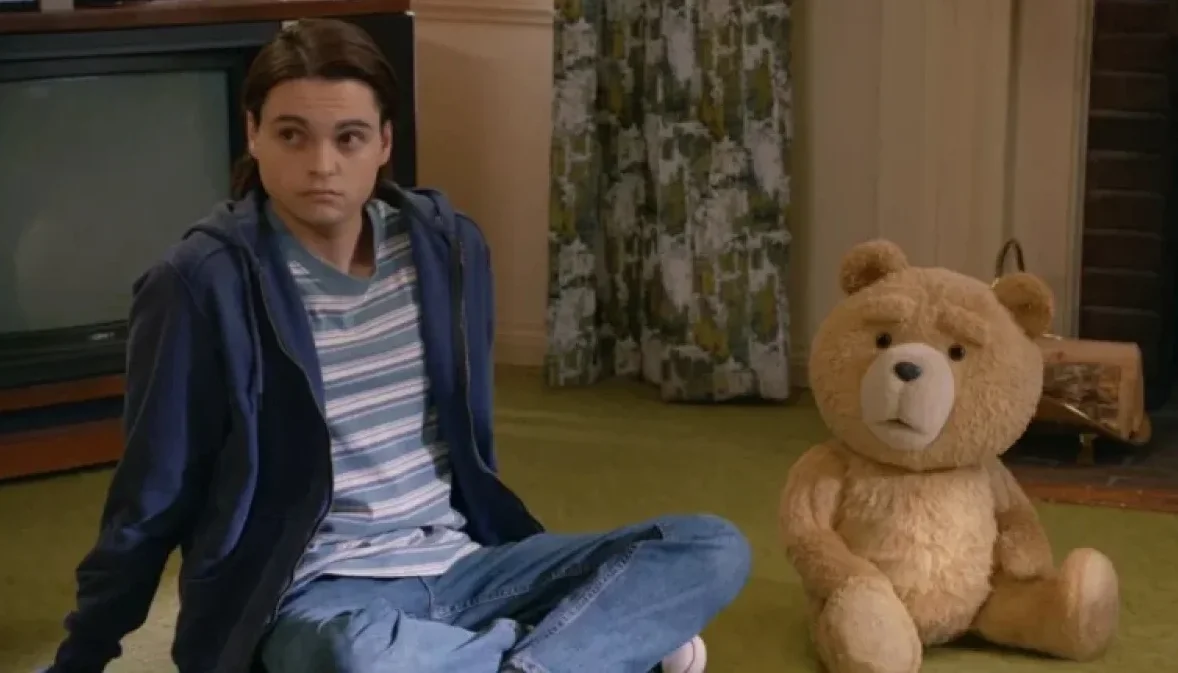
The production of Ted TV Series has revealed a high-cost dilemma, with creator and star Seth MacFarlane stating there is ‘no way to do it at a lower cost,’ raising questions about the show’s future and the role of AI in Season 2. The show, which follows a talking teddy bear as he accompanies a teenage John Bennett through high school in Massachusetts, has become a technical and financial challenge, with MacFarlane admitting there is ‘no plan … at the moment to do season 3.’
Impact on Trade and Production
The show’s reliance on advanced special effects to bring Ted to life has made it one of the most expensive series on Peacock. According to MacFarlane, the cost is not just a line item but a core part of the show’s premise. ‘The cost is not simply ‘production,’ but the ability to keep the central illusion from becoming the joke,’ he said. This has forced the production to explore alternatives, including AI, to maintain the illusion while managing costs.
Season 2, which begins streaming on March 5, has introduced a new element: an AI-assisted cameo by MacFarlane as former President Bill Clinton. MacFarlane described the use of AI as a necessary step after traditional CGI attempts were deemed ‘terrifying to look at’ and ‘distracting from the jokes.’
What Analysts Say About the AI Shift
The decision to use AI in the Clinton cameo highlights a broader issue: the show’s creative identity and technical pipeline are deeply intertwined. According to industry analysts, this shift reflects a willingness to adapt tools to serve the show’s comedic goals, even if it means relying on emerging technology.
‘The cameo is revealing precisely because it was not required to carry the series in the way Ted’s on-screen presence does,’ said one analyst. ‘The decision signals a willingness to swap one costly tool for another when quality and comedic timing are at stake.’
This approach raises questions about the long-term sustainability of the series. If the production model is one where ‘there is no way to do it at a lower cost,’ then the show may be limited by its own technical requirements. This could affect not only the show’s future but also the broader industry’s approach to high-cost productions.
Who Benefits and Who Is Implicated
Three groups are central to the current standoff between ambition and sustainability. Seth MacFarlane benefits creatively from choosing whichever method best serves the writing, but he is also the one articulating the production-cost barrier and acknowledging there is no Season 3 plan ‘at the moment.’
Peacock and Universal, the companies behind the series, are implicated as the entities communicating that the show is expensive and cannot be made for less. Their position, as relayed by MacFarlane, is that there is no lower-cost version of the series available—an assertion that, if true, becomes a gatekeeper over renewal decisions.
Audiences are being asked to accept two separate claims at once: first, that the technical illusion is now so ‘convincing’ it is easy to forget the work behind it; second, that this same hidden work may cap the show’s future. The show’s marketing hook depends on that illusion staying invisible, yet the production’s cost structure may be the reason it cannot continue.
The public-facing pitch is comedy and nostalgia, but the behind-the-scenes pressure point is whether the production can keep delivering a believable lead character without spending at a level that triggers renewal hesitation. This contradiction is at the heart of the show’s current position in the market.
As Season 2 rolls out, the public record contains a clear on-the-record argument from MacFarlane: the show is costly, there is no plan for Season 3 at the moment, and certain visual goals required an AI-assisted approach when CGI proved unusable. What remains unclear is the decision framework that turns those constraints into a renewal outcome—and what safeguards or standards govern the use of AI technology in performance-driven comedy.
For viewers, the immediate ask is straightforward: consistent clarity from the companies MacFarlane named—Peacock and Universal—on whether ‘no way to do it at a lower cost’ is a technical limitation, a budget ceiling, or a strategic choice. For the creators, the ask is equally direct: a transparent explanation of where AI is being used, why it is being used, and how it is evaluated for quality and appropriateness.
Until those standards are made legible, the franchise’s central paradox will remain unresolved: Ted TV Series sells an illusion so convincing it disappears—while the economic and technological machinery required to sustain that illusion may be exactly what keeps the show from moving forward.






Comments
No comments yet
Be the first to share your thoughts