

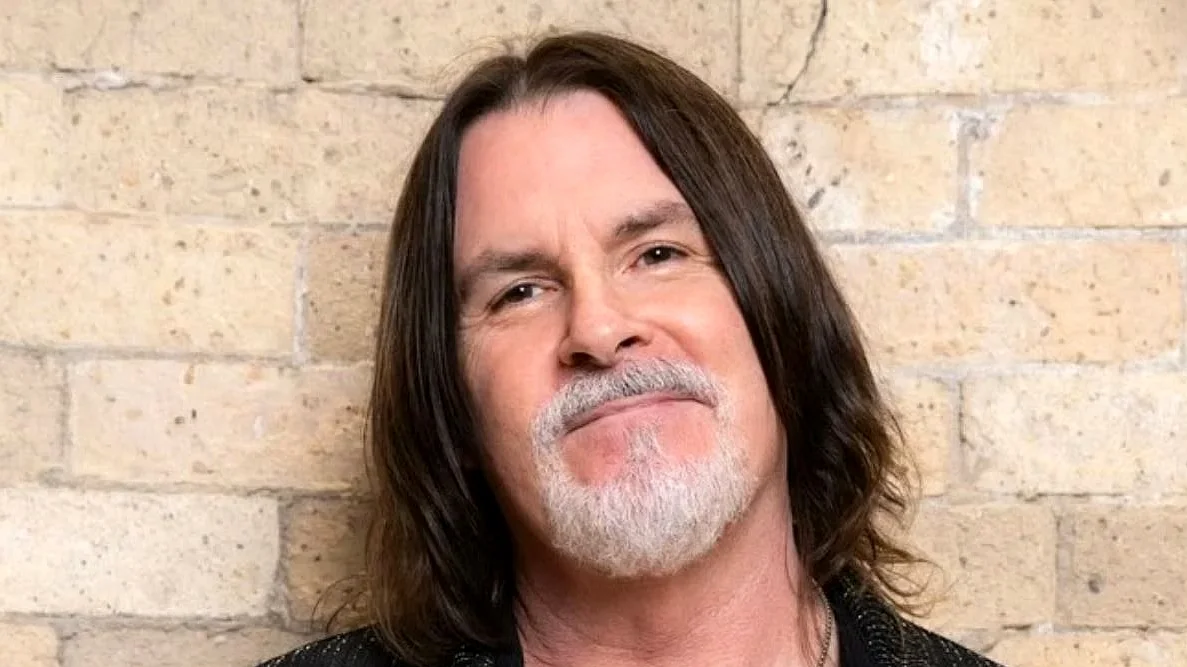
Tommy DeCarlo died on Monday, March 9, 2026, at the age of 60, after a months-long battle with brain cancer that had begun with a sudden brain bleed in late September 2025. His children — Annie, Talia, and Tommy Jr. — confirmed his death in a post on his Facebook and Instagram pages, writing: ‘It is with heavy hearts that we share the passing of our Dad, Tommy DeCarlo, on Monday, March 9th, 2026. After being diagnosed with brain cancer last September, he fought with incredible strength and courage right up until the very end.’
The MySpace Page That Changed Everything
The story of how Tommy DeCarlo became the lead singer of one of the most beloved classic rock bands in American history is one of music’s genuinely improbable tales. It begins in 2007 with a family computer and a grieving fan. When Brad Delp — the tenor voice behind ‘More Than a Feeling,’ ‘Peace of Mind,’ ‘Amanda,’ and ‘Don’t Look Back’ — died by suicide on March 9, 2007, the music world lost not just a specific human voice but a sonic identity so distinctive that most music industry observers assumed no replacement was possible.
DeCarlo, then 43 and living in Cornelius, North Carolina, had been a Boston fan since childhood, having discovered the band not long after their 1976 self-titled debut. He wrote and recorded an original tribute song to Delp and posted it alongside several Boston covers on a MySpace page that his daughter helped him create.
His daughter encouraged him to send the link to the band. DeCarlo got a polite initial rejection, according to Rolling Stone, but the band’s mastermind and founding guitarist Tom Scholz eventually heard the recordings — his wife first brought them to his attention, telling him to listen to something remarkable. Scholz’s reaction, as he later described it to Best Classic Bands, was immediate and disoriented: ‘I said, Which show is that?’ He assumed he was hearing a live recording of his own band. ‘I can not tell you that that wasn’t Brad Delp,’ Scholz said. ‘It was amazing.’
Two Decades of Giving Boston Its Voice
The voice was coming from a man who had never been in a professional band, who was working a day job as a credit manager, and who had been singing along to Boston records in his own time for thirty years. Scholz invited him to perform at a Brad Delp tribute concert at the Bank of America Pavilion in Boston — DeCarlo’s first-ever public performance. He then asked him to join the band.
From 2007 until his death in 2026, Tommy DeCarlo was the lead vocalist for every touring lineup of Boston. He sang on their 2013 studio album Life, Love and Hope — their first album since 1994, a gap of 19 years — and toured with the band every year between 2014 and 2017, memorably celebrating the group’s 40th anniversary in 2016 with a rare show in their namesake city.
Tom Scholz, who has worked with more musicians across more decades than almost anyone in the genre’s history, was characteristically precise in his assessment: ‘Tommy does for Boston on stage what Brad Delp did for Boston in the studio. Brad was the best male studio singer I’ve ever heard and Tommy is the best male stage singer I’ve ever heard.’
The distinction was meaningful. DeCarlo did not mimic Delp; he inhabited the same vocal space through a different kind of musicianship, bringing the explosive, sustained notes that define Boston’s catalogue to live audiences who, in many cases, had never heard the band perform them with that force before.
DeCarlo had also formed a separate band with his son Tommy Jr., simply called DeCarlo, which signed with Frontier Records and released Lightning Strikes Twice in January 2020 and Dancing in the Moonlight in December 2022 — demonstrating a musical independence and creative ambition beyond his role as Boston’s custodian.
A GoFundMe launched by Tommy Jr. in late 2025, after his father’s emergency craniotomy revealed two melanoma masses on his brain and a spot on his lungs, raised widespread donations from a rock community that understood exactly what DeCarlo had given them across two decades. A benefit concert called Voices of Change had been planned for March 29 near his home. He did not live to attend it. A wave of tribute messages arrived from fellow musicians, classic rock institutions, and the generations of Boston fans who had watched DeCarlo step into the most unenviable role in rock music and make it, somehow, his own.






Comments
No comments yet
Be the first to share your thoughts