

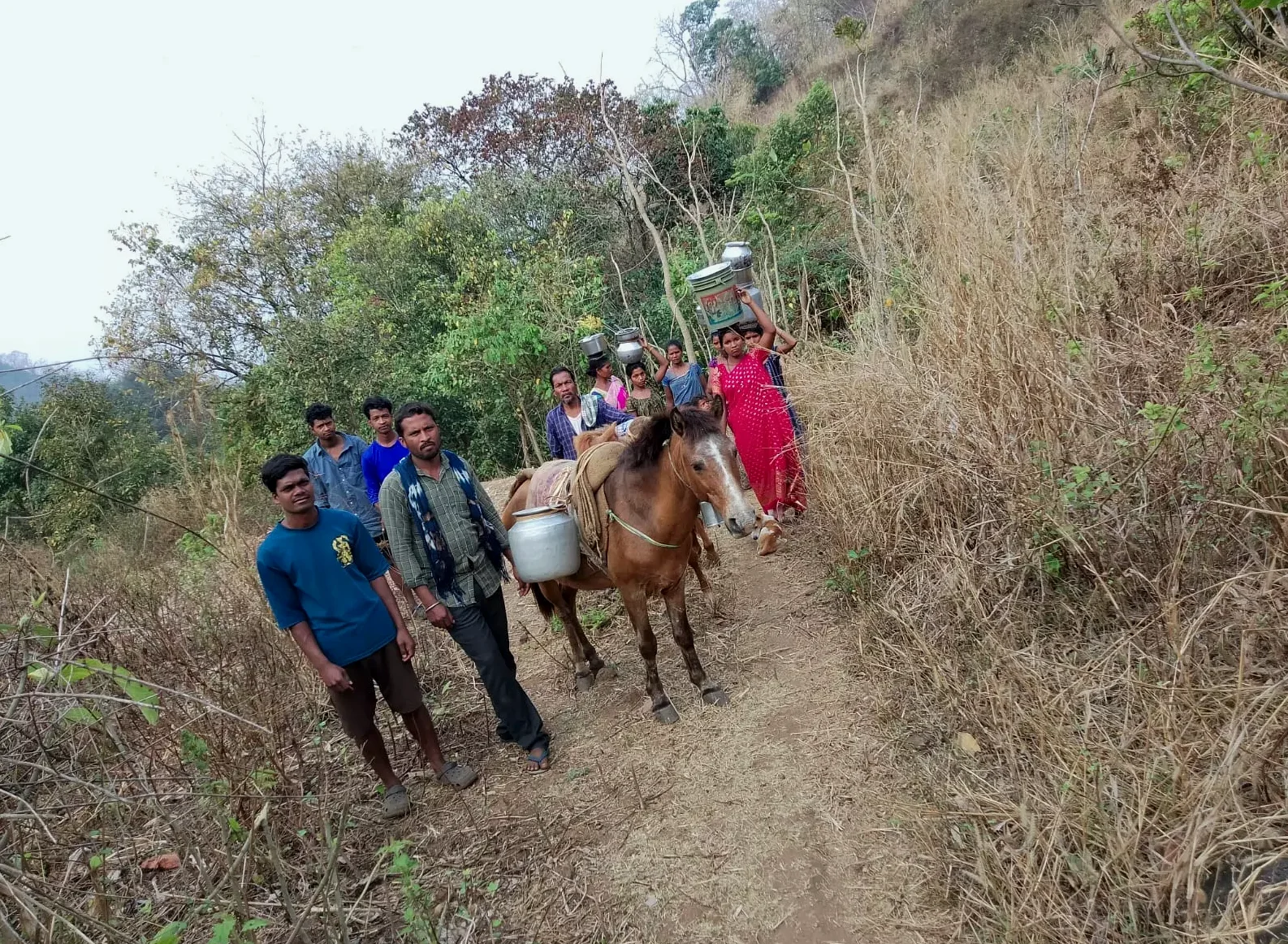
In Pasuvula Bandha, a remote hilltop village under Bavuluwada panchayat in V Madugula mandal of Anakapalle district, tribal families are enduring a daily struggle to access clean drinking water. Seven households from the Particularly Vulnerable Tribal Groups (PVTG) travel nearly two kilometres on horseback to fetch water from a spring in Jiluga village. The water, however, is known to cause illness, yet it remains their only available source.
Impact on Daily Life
The lack of infrastructure and road connectivity has turned the act of fetching water into a daily burden. During medical emergencies, villagers carry patients on a doli to Chimalapadu in Ravikamatam mandal for urgent treatment. The journey is not only physically demanding but also a risk to health, particularly during the summer months when the heat intensifies.
In April of last year, the tribal families raised their grievances through the Public Redressal Grievance System (PRGS). Following this, officials allocated ₹4 lakh from the zilla parishad general fund to construct a water tank and pipeline. An assistant engineer visited the village, and materials such as sand and gravel were transported on horseback for the project.
However, the work has not progressed since then. Promises to provide taps to every household remain unfulfilled. As the summer approaches, the hardship of carrying water on horseback has only increased, putting additional strain on the already vulnerable community.
Community Frustration and Demands
Villagers, including Seediri Kameswara Rao, Seediri Naidu, and Seediri Chilakamma, have repeatedly appealed to local authorities, only to be met with inaction. They warned that if officials continue to ignore their plight, they will stage a protest at the upcoming zilla parishad general meeting by carrying empty water bottles to highlight their demand for access to safe drinking water.
“Our demand is simple yet urgent — access to safe drinking water, a basic necessity that has eluded us for far too long,” said Seediri Kameswara Rao. The situation highlights the deepening inequality and neglect faced by tribal communities in the region.
The issue is not isolated. Similar cases of inadequate water supply and infrastructure have been reported in other tribal areas across the state, often due to a combination of geographical challenges, lack of investment, and bureaucratic delays.
With the upcoming zilla parishad general meeting, the villagers are preparing to draw attention to their plight. The local administration has been urged to provide a timeline for the completion of the water project and to address the immediate health concerns of the community.
Analysts suggest that unless there is a significant shift in policy and resource allocation, similar situations are likely to persist in other remote tribal areas. The government has been advised to prioritize infrastructure development in these regions to prevent further health crises and ensure the basic rights of the tribal population.
The villagers’ struggle highlights the urgent need for action, not only in Anakapalle but across the state, where many tribal communities continue to face similar challenges in accessing essential services.





Comments
No comments yet
Be the first to share your thoughts