

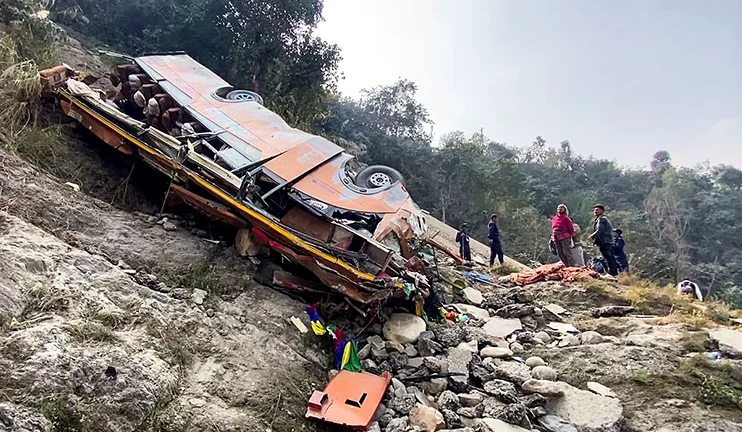
The Trishuli River, a lifeline for centuries of Nepalese communities, has once again become a site of profound sorrow. On Monday, February 22, 2026, a tourist bus veered off a mountain road in Dhading District and plunged over 200 meters into the icy waters of the Trishuli River. Nineteen people were killed, including three foreign nationals—a British tourist, a Chinese woman, and an Indian man. The tragedy is not just a reminder of the dangers of Himalayan travel but also a stark reflection of systemic issues that have long plagued Nepal’s roads and infrastructure.
The Tragedy and Its Victims
The bus was traveling from Pokhara, a city known for its stunning mountain views and adventure tourism, to Kathmandu. At the time of the accident, 44 passengers were on board, including five foreigners. Among the dead was Dominic Stewart, a 23-year-old British tourist who had just completed the Annapurna Circuit, a popular trekking route that draws adventurers from around the world. His family described him as ‘a very loving and caring young man who was happiest trekking.’
Stewart was due to celebrate his 24th birthday in March, and his death has sent shockwaves through the international travel community. His father, a well-known figure in Exeter’s junior football circles, expressed his grief, saying that Dominic had lived his whole life in Exeter and was known for his kindness and love for the outdoors.
A Pattern of Tragedy
This disaster is not an isolated incident. In July 2024, two buses carrying more than 50 people were swept into the Trishuli River after a landslide. The same river, which flows through the heart of Nepal’s most scenic landscapes, has been the site of multiple tragedies. This pattern of disaster raises urgent questions about the safety of travel in Nepal and the conditions of its infrastructure.
Local police officer Prakash Dahal confirmed that the cause of the crash is under investigation. However, the frequency of such incidents points to a larger issue: Nepal’s roads, often poorly maintained, are prone to landslides and accidents, especially during the rainy season. The country’s mountainous terrain, combined with inadequate infrastructure and reckless driving, has made road accidents a common, if often underreported, hazard.
The Cost of Adventure
Nepal has long been a symbol for adventure tourism, with its majestic mountains, ancient temples, and diverse cultural heritage drawing travelers from across the globe. The Annapurna Circuit, the Everest region, and the Langtang Valley are just a few of the many attractions that make Nepal a must-visit destination. However, the allure of these landscapes comes with a cost—one that has been borne by the likes of Dominic Stewart and others who have perished in similar tragedies.
For many, the Trishuli River is a symbol of natural beauty and serenity. But for the families of the victims, it is now a symbol of loss and grief. The river, which flows through Dhading District, has become a tragic reminder of the risks that come with exploring Nepal’s rugged terrain.
The Systemic Issues
Experts point to a combination of factors that have contributed to the frequency of such accidents. Poor road maintenance, lack of safety measures, and a culture of reckless driving are all significant contributors. In a country where tourism is a major economic driver, these issues are not just a matter of public safety—they are also a matter of national reputation.
According to a 2023 report by the Nepal Tourism Board, the country saw over 1.5 million international tourists in a single year, with a significant portion of them opting for adventure sports and mountain treks. However, the same report noted that road accidents accounted for nearly 40% of all tourism-related fatalities. This statistic is a stark wake-up call for both the government and the tourism industry.
Dr. Anupama Shrestha, a transportation expert at Tribhuvan University, said, ‘Nepal’s road infrastructure is not keeping pace with the demand for tourism. We need a thorough approach that includes better road maintenance, stricter enforcement of traffic laws, and investment in safer transportation for tourists.’
International Reactions and Calls for Change
The tragedy has drawn international attention, with foreign governments and travel organizations expressing concern. The British Foreign Office confirmed that they were supporting the family of Dominic Stewart and had been in contact with local authorities. Similar expressions of concern have come from Chinese and Indian officials, who have urged the Nepalese government to take immediate action to improve road safety.
In the wake of the crash, the Nepalese government has announced a review of its transportation policies, with a focus on improving infrastructure in the Himalayan regions. However, many experts argue that this is not enough. They are calling for a more sustained investment in road maintenance, better training for drivers, and the implementation of stricter safety regulations for tourist vehicles.
The International Air Transport Association (IATA) has also called for increased collaboration between Nepal and international organizations to address the growing concerns around road safety in the region. ‘Tourism is a vital part of Nepal’s economy, but it cannot come at the cost of human lives,’ said a spokesperson for IATA.
A Path Forward
As Nepal grapples with the aftermath of the Trishuli River tragedy, the focus must shift from crisis management to long-term solutions. This means not only improving infrastructure but also addressing the root causes of road accidents. For tourists, this means being more aware of the risks and advocating for safer travel conditions. For the Nepalese government, it means taking concrete steps to ensure that the country’s natural beauty is not marred by preventable tragedies.
The story of Dominic Stewart is a poignant reminder of the price of adventure. But it is also a call to action—for Nepal and for the global community. The Trishuli River may continue to flow, but the lives lost in its icy depths must not be in vain.




Comments
No comments yet
Be the first to share your thoughts