

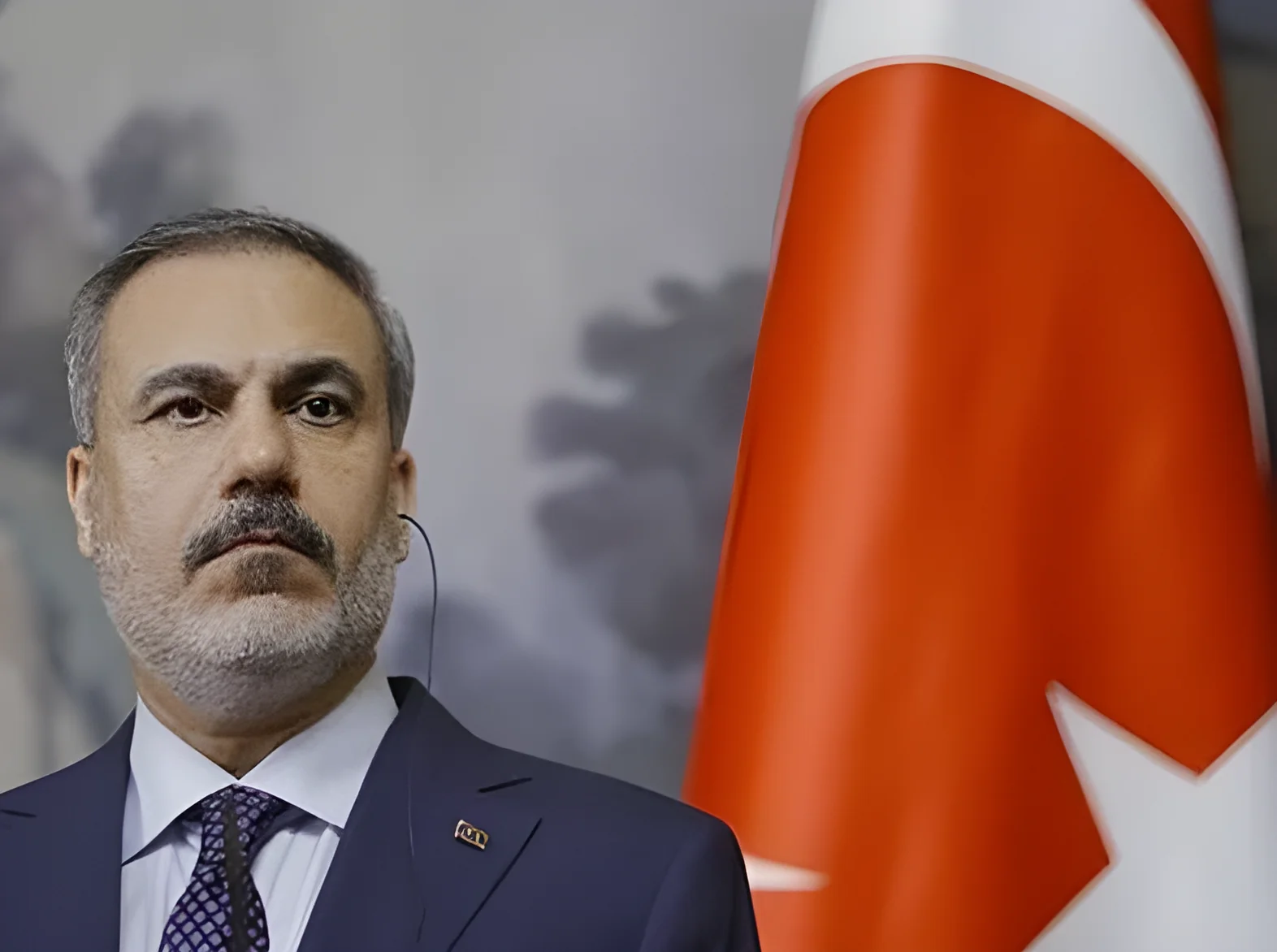
Turkey’s Foreign Ministry issued a strong statement on Monday condemning a drone attack that struck the Nakhchivan Autonomous Republic, a territory under Azerbaijani control. The attack, which occurred in a sensitive region close to the Armenian border, has raised concerns about the potential for further escalation in an already volatile part of the Caucasus.
Regional Tensions and Diplomatic Reactions
The Turkish statement, reported by the Doğan news agency, emphasized the need for an immediate halt to attacks targeting third countries in the region, warning that such actions increase the risk of the ongoing conflict expanding beyond its current scope.
‘We condemn today’s drone attack on the Nakhchivan Autonomous Republic. Turkey, as always, will continue to stand by Azerbaijan,’ the ministry said in its statement. The remarks come amid heightened tensions between Azerbaijan and Armenia, which have been locked in a dispute over Nagorno-Karabakh, a region claimed by both sides.
Iran has denied any involvement in the attack, according to officials. However, the denial has not quelled speculation about the origin of the strike, as both Armenia and Iran have been accused in the past of supporting separatist movements in the region.
Escalating Concerns Over Regional Stability
The drone attack has reignited fears of a broader regional conflict, particularly as the situation in Nagorno-Karabakh remains precarious. In 2020, a similar escalation led to a brief but intense war between Armenia and Azerbaijan, resulting in significant loss of life and displacement of civilians.
According to the United Nations, over 100,000 people were displaced during the 2020 conflict, with many still living in temporary shelters. The current situation has raised similar concerns, with humanitarian organizations warning of a potential repeat of the crisis.
Experts say that the involvement of external actors, including Iran and Turkey, further complicates the situation. Turkey has long been a staunch ally of Azerbaijan, while Iran maintains close ties with Armenia. The interplay of these relationships has historically fueled regional instability.
What Analysts Say About the Situation
‘This attack is not just a regional issue—it has the potential to draw in major powers and destabilize the entire Caucasus region,’ said Dr. Elif Yılmaz, a regional affairs analyst at Istanbul University.
Dr. Yılmaz added that the involvement of drones in such attacks highlights a growing trend of asymmetric warfare in the area, which poses new challenges for conflict resolution and international mediation efforts.
Meanwhile, Azerbaijan has been working to strengthen its military capabilities, including acquiring advanced drone technology from Turkey. This has raised concerns among Armenian officials, who view such moves as a provocation.
As of now, no official claims of responsibility have been made for the Nakhchivan attack, and investigations are ongoing. However, the Turkish statement has made it clear that the country will not tolerate attacks on its allies, particularly in a region that has seen repeated cycles of violence.
The next few weeks will be critical, with the potential for further military action or diplomatic interventions. International mediators, including Russia and the United States, are expected to play a role in preventing a full-scale conflict, but their influence has been limited in recent years.
With the region on edge and tensions rising, the situation in Nakhchivan has once again become a focal point of concern for both local populations and the international community.






Comments
No comments yet
Be the first to share your thoughts