

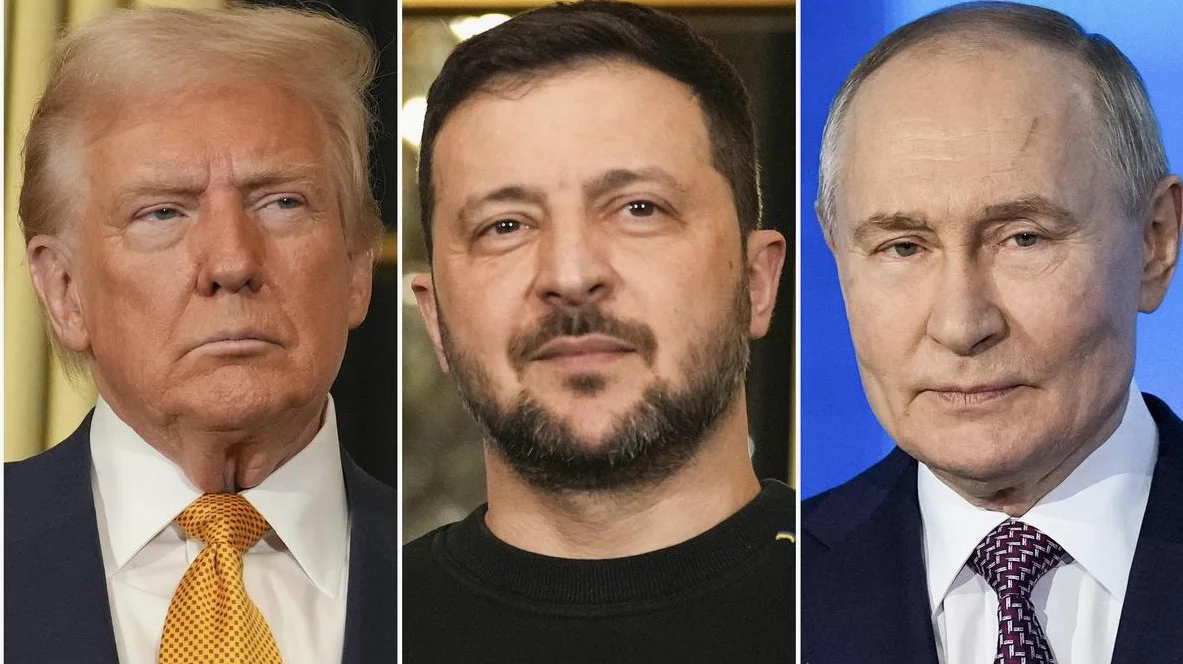
The talks come amid a complex geopolitical landscape, including recent U.S.-Israel strikes on Iran and weakened political support for President Donald Trump following midterm elections. A U.S. official said the goal is to seek a “final end” to the war, adding that the U.S. would “need Europe at the table” to achieve a lasting peace.
U.S. officials have indicated that Moscow and Kyiv are showing “a little bit of flexibility” in private discussions, particularly on the issue of who would control Ukraine’s eastern regions in a post-war scenario. A U.S. official said, “They will not solve the Donetsk issue and the territorial issue until they know what the security architecture is going to be after the war.”
A key sticking point remains the fate of Donetsk, which is now mostly occupied by Russia. Moscow demands that Ukraine relinquish the parts it still holds, while Kyiv wants to freeze the contact line. Neither side has budged publicly, though the U.S. official noted that “this was just the public stance.”
The U.S. is proposing a new “security architecture” between Russia and Europe, including security consultations, crisis communications hotlines, and “reciprocal de-escalation measures.” Jared Kushner, U.S. peace envoy, described the framework as involving “stronger consultation, reliable crisis communications, greater military transparency, and reciprocal measures to reduce escalation risks.”
European officials are wary of a U.S.-Russia deal that excludes them, fearing it could undermine European security. European Commission President Ursula von der Leyen urged the inclusion of NATO allies and EU members in any meaningful discussions about Europe’s security architecture. Kaja Kallas, the EU’s top diplomat, said, “We already have a European security architecture in place.”
The U.S. delegation includes Jared Kushner and Steve Witkoff, while Russian and Ukrainian delegations include senior officials who have participated in previous talks. Russia’s team is led by Vladimir Medinsky, and Ukraine’s by Rustem Umerov.
U.S. officials have floated the re-activation of the NATO-Russia Council, which has been largely paused since 2022, and potential sanctions relief for Russia. They also discussed with Russia potential security guarantees for Ukraine similar to NATO’s Article 5, though critics note that Article 5 does not obligate members to defend others.
Russian President Vladimir Putin has made clear that he will not agree to a general ceasefire, arguing it would allow Ukrainian forces to rest and resupply. Ukrainian President Volodymyr Zelenskyy insists that an immediate ceasefire is necessary and that a direct meeting with Putin is the only way to settle territorial issues.
Comments
No comments yet
Be the first to share your thoughts