

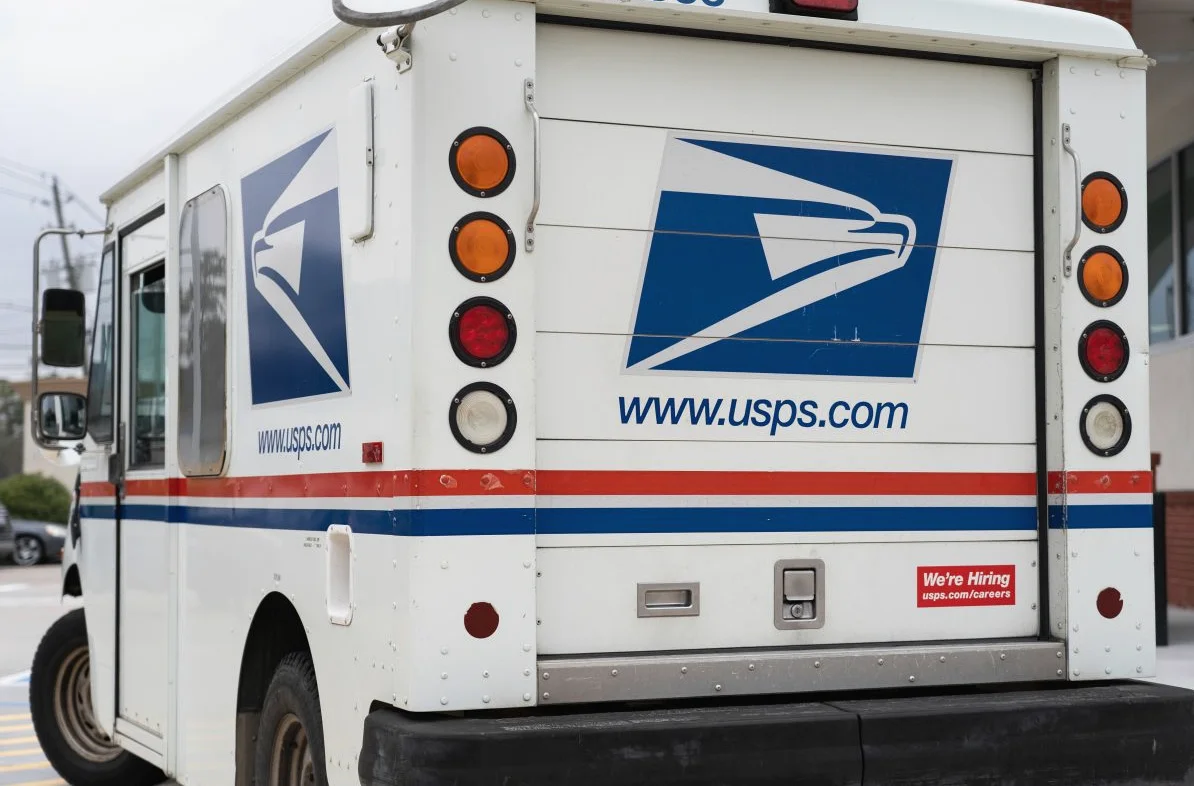
Starting December 24, the U.S. Postal Service (USPS) implemented changes that could affect whether mail-in ballots are counted in upcoming elections, particularly in Texas. The policy shift impacts the postmarking of ballots, a critical factor in determining whether they are received on time for the March 3 Democratic and Republican primary elections.
How the Postmark Rule Has Changed
The USPS clarified that mail no longer receives a guaranteed same-day postmark. Previously, voters could rely on the date they placed their ballot in a mailbox or handed it to a postal worker as the official submission date. Now, the postmark is applied only when the mail reaches a processing facility, which may be the next day or later.
“The postmark now is applied when it reaches a processing facility, not when you drop it in your post box,” said Jessica Pace, communications and education manager at the League of Women Voters Houston. “So, whether it’s your postage for USPS driver to pick up or one of their blue boxes at their locations, that’s no longer a viable date to have something like your ballot postmarked.”
Reduced Mail Truck Visits Complicate Timelines
The policy change follows another adjustment made in April 2026, which halved the number of mail truck visits to post offices in ZIP codes more than 50 miles from a regional processing center. Previously, mail trucks would pick up mail twice daily from local post offices, allowing ballots to be postmarked the same day they were submitted.
“In years past, the postal service would have trucks that would pick up mail at each of the post offices and bring it to a regional center twice a day, so you had a better chance of your ballot or your mail being brought back and postmarked the same day,” said Tom Lopach, president and CEO of the nonprofit Voter Participation Center. “Now, as of April, they only have trucks going once a day to pick up mail, and now they’re only allowing the postmark to take place at a regional facility.”
Lopach noted that in a place like Houston, voters may drop off their mail after 3 p.m. at a local post office, only for it to be postmarked the next day. This delay could disqualify ballots if they are not postmarked by 7 p.m. on Election Day.
Rural and Urban Voters Face Unique Challenges
Texas law requires mail-in ballots to be postmarked by 7 p.m. on Election Day to be legally admissible. Seventy-six percent of all Texas post offices are affected by the new policy, with rural areas facing the greatest risk. Many rural voters live beyond the 50-mile radius of a regional processing center, making it harder to meet the deadline.
“Texas is the first state where we’re going to see how this impacts voters with your March 3 primary,” Lopach said. “And in 2024 in the general election, Texas had 398,000 people who voted by mail. So, there’s a significant number of people that could be impacted whose mail-in ballots may not be counted.”
Rural voters, in particular, may face challenges in ensuring their ballots are postmarked on time if they delay sending them. With fewer mail truck pickups, the risk of ballots not arriving at a processing facility by Election Day increases significantly.
Encouraging Early Action and Alternative Postmark Options
Pace, of the League of Women Voters Houston, emphasized the urgency for voters to act quickly. She encouraged those planning to vote by mail to get their ballots postmarked as soon as possible to avoid disqualification.
“You can also go to a USPS [processing] facility and walk it in and have one of the members of the USPS manually stamp your ballot, saying that it is postmarked on that day,” Pace said. “Dropping it into the mailbox isn’t viable unless you’re really beating that Election Day deadline.”
The Voter Participation Center, which has been promoting mail-in voting through high-volume direct mail and digital outreach, stated it notifies election directors in every state, including Texas, ahead of its mailings. The organization said it appreciates the review process to ensure election materials are up to date.
According to a USPS document released before the December policy change, the new policies were adopted to “improve operational efficiency and precision.” However, the changes have raised concerns about the potential for more mail-in ballots to be rejected in the upcoming primary.
With the March 3 primary looming, voters across Texas are being advised to plan ahead and consider alternative methods to ensure their ballots are counted. The impact of these changes could be significant, particularly for those who rely on mail-in voting due to age, disability, or other factors.





1 Comment