

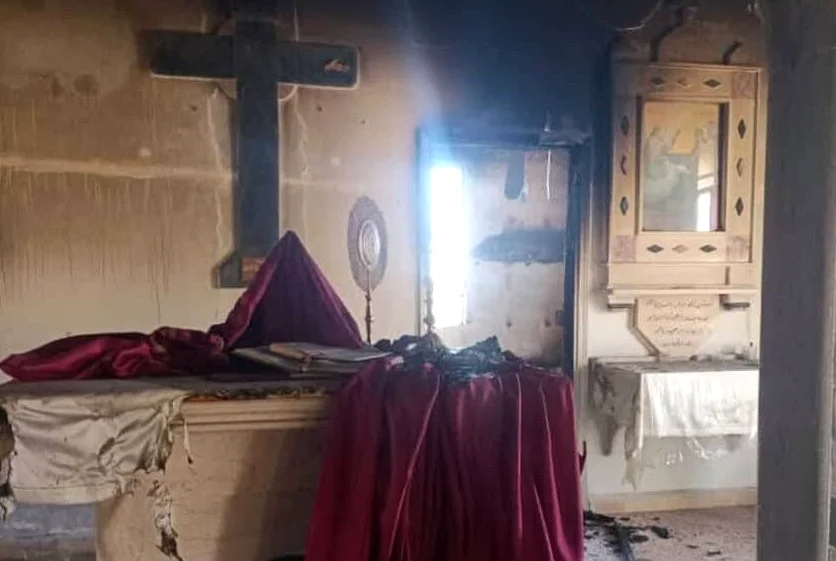
Archbishop Ettore Balestrero, the Vatican’s permanent observer to the United Nations in Geneva, has called on governments and international organizations to strengthen protections for Christians facing persecution and violence across the globe. Speaking at an event on March 3, he cited data showing that nearly 400 million Christians worldwide face persecution or violence, making them the most persecuted religious group in the world.
The Scale of Persecution
Archbishop Balestrero said that one in seven Christians is affected by persecution, with an alarming figure of 5,000 Christians killed for their faith in 2025—equating to an average of 13 per day. This information was presented during a meeting titled ‘Standing with Persecuted Christians – Defending the Faith and Christian Values,’ held during the 61st session of the U.N. Human Rights Council in Geneva.
The event, organized by the Vienna-based Observatory on Intolerance and Discrimination against Christians (OIDAC), was the first time a state-sponsored side event at the Human Rights Council specifically addressed persecution and discrimination against Christians. It brought together diplomats, experts, and civil society representatives to raise awareness about global Christian persecution and religious freedom challenges in Western countries.
Among the panelists were Anja Tang, director of OIDAC; Nazila Ghanea, U.N. special rapporteur on freedom of religion or belief; Marie-Thérèse Pictet-Althann, ambassador of the Sovereign Order of Malta; and Márk Aurél Érszegi, special adviser for religion and diplomacy of the Ministry of Foreign Affairs and Trade of Hungary.
Religious Freedom as a Human Right
Archbishop Balestrero’s address echoed similar warnings by Open Doors International, a global advocacy organization for persecuted Christians, in its ‘World Watch List 2026,’ published in January. The report estimated that 388 million Christians worldwide experienced ‘high levels of persecution and discrimination for their faith.’
Citing Pope Leo XIV’s address to diplomats accredited to the Holy See in January, Balestrero said the figures showed that ‘religious freedom is considered in many contexts more as a ‘privilege’ or concession rather than a fundamental human right.’
‘For Christians, those who were killed for their faith are ‘martyrs’ in the etymological sense of the word: ‘witnesses’ to their creed who embody values that challenge the logic of power,’ he said. ‘While from the perspective of international law, they are victims of outrageous human rights violations.’
Balestrero emphasized that governments have a ‘fundamental responsibility’ to protect religious freedom and that authorities must prevent violations and protect believers before, during, and after attacks. He lamented that impunity remains one of the most serious issues in the global landscape of religious persecution.
Persecution in Europe
The archbishop highlighted data from the Organization for Security and Co-operation in Europe (OSCE), which reported that in 2024, an estimated 764 anti-Christian hate crimes, including assaults, vandalism, and arson attacks against churches, were recorded in Europe.
However, he also warned that persecution is not always violent or easily measured. Christians can face a ‘kind of ‘polite persecution” that includes a ‘gradual marginalization and exclusion from political, social and professional life, even in traditionally Christian lands.’
He cited examples of Christians in Europe facing persecution for praying near abortion facilities, citing the Bible on social issues, or expressing religious beliefs in regard to sexual ethics.
Balestrero also warned that a proposed euthanasia bill currently being discussed in France could force Christian hospitals and care homes to either provide such services or face fines, prison sentences, and lose public funding. ‘This threat could become a reality in a number of countries seeking to legalize euthanasia,’ he said.
‘These are not superficial acts. They are serious violations of the rights of Christians, perpetrated by the very authorities who are charged with the duty of respecting, protecting and promoting the human rights of all. This contradiction must end,’ the archbishop said.






Comments
No comments yet
Be the first to share your thoughts