

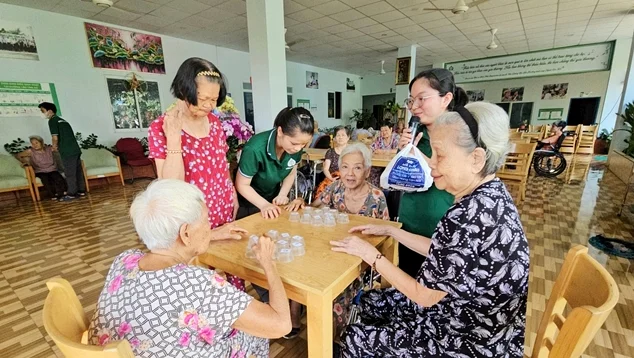
Vietnam is exploring nursing homes as a key component of its ‘silver economy,’ aiming to address the growing needs of its aging population and boost economic growth through elder care services. This initiative comes amid broader efforts to adapt to demographic shifts and economic challenges, including the impact of global shipping disruptions on local businesses and the need for sustainable development.
Government Emphasizes New Mindsets for Economic and Social Challenges
Prime Minister Phạm Minh Chính has emphasized the need for new mindsets to address complex global and regional developments, including non-traditional security threats such as cyberattacks and online fraud. These concerns are part of a broader strategy to ensure stability and growth, particularly in sectors like agriculture and small and medium-sized enterprises (SMEs).
According to Vietnam+, the PM stressed that the increasingly complex developments in the global and regional situation require new approaches, especially in addressing non-traditional security threats. This includes cyberattacks, online fraud, and activities that could undermine political stability and social order. These issues are particularly relevant as Vietnam seeks to modernize its economy and infrastructure to meet the demands of a rapidly changing world.
Meanwhile, Vietnam News reports that the government is working to expand access to social housing by revising legal frameworks and raising eligibility thresholds. This effort is aimed at better reflecting real demand and improving policy effectiveness, which is important for maintaining social stability and supporting economic development.
Economic and Environmental Initiatives in Agriculture
Vietnam’s agricultural sector faces significant challenges, including ensuring stable supply and managing input costs to safeguard farm production against external shocks. Deputy Minister of Agriculture and Environment Le Cong Thanh highlighted that water, climate, and energy are fundamental pillars of sustainable development. In Vietnam, water resources and weather patterns influence every aspect of life, from food and water security to livelihoods, ecosystem stability, and economic growth.
According to Vietnam+, Ninh Binh province is focusing on building an ecological and organic agricultural sector. Many safe farming models applying high technology have been implemented, reflecting a shift towards sustainable practices. This aligns with the national campaign to promote clean water, fresh air, and sustainable development, engaging children, youth, businesses, and communities in climate action and environmental protection, as reported by Vietnam News.
Vietnam’s current agricultural growth still relies heavily on expanding scale, increasing output, exploiting natural resources, and the use of chemical inputs, according to Vietnam News. This approach has raised concerns about long-term sustainability and environmental impact, prompting the need for innovative solutions such as organic farming and ecological agriculture.
Adapting to Global and Regional Challenges
Global shipping disruptions have forced many firms in Ho Chi Minh City to adjust their markets to maintain jobs and ensure business continuity. According to Vietnam News, this includes strategies to mitigate the impact of external shocks on local businesses and the broader economy. These adjustments are part of a larger effort to build resilience in the face of global economic uncertainties.
At the SME Forum 2026 in Ho Chi Minh City on March 20, business leaders and experts noted that Vietnamese SMEs may not lack strategy or ambition but often struggle to turn plans into results. This highlights the need for improved policy frameworks and support mechanisms to help these businesses thrive in a competitive global environment.
Prime Minister Phạm Minh Chính also highlighted the long-standing friendship between Vietnam and Indonesia, founded by President Hồ Chí Minh and President Sukarno. This diplomatic relationship is seen as a model for regional cooperation and mutual support in addressing common challenges, including economic and environmental issues.
Focus on Elder Care and Silver Economy
The push for nursing homes as a driver of the silver economy reflects Vietnam’s growing recognition of the need to address the aging population and the associated economic opportunities. This initiative is part of a broader strategy to develop elder care services, which can create jobs and stimulate economic growth in the healthcare and social services sectors.
According to Vietnam+, the government is considering nursing homes as a new driver for the silver economy, aiming to meet the needs of an aging population and create sustainable economic opportunities. This aligns with efforts to promote clean water, fresh air, and sustainable development, as reported by Vietnam News, which emphasizes the importance of environmental protection and climate action in all sectors of the economy.
The development of nursing homes and elder care services is expected to have a significant impact on the economy, creating jobs and stimulating investment in healthcare infrastructure. This initiative is also seen as a way to support families and reduce the burden on the healthcare system, particularly in rural areas where access to medical services is limited.
Why It Matters and What’s Next
The shift towards a silver economy and the development of nursing homes in Vietnam highlight the country’s efforts to adapt to demographic changes and economic challenges. This initiative is expected to have a lasting impact on the economy, creating new opportunities in the healthcare and social services sectors while promoting sustainable development and environmental protection.
Looking ahead, the government is likely to continue investing in elder care services and infrastructure, supported by policies aimed at promoting sustainable development and addressing the needs of an aging population. This includes expanding access to social housing, improving agricultural practices, and enhancing the resilience of local businesses to global economic uncertainties.





Comments
No comments yet
Be the first to share your thoughts