

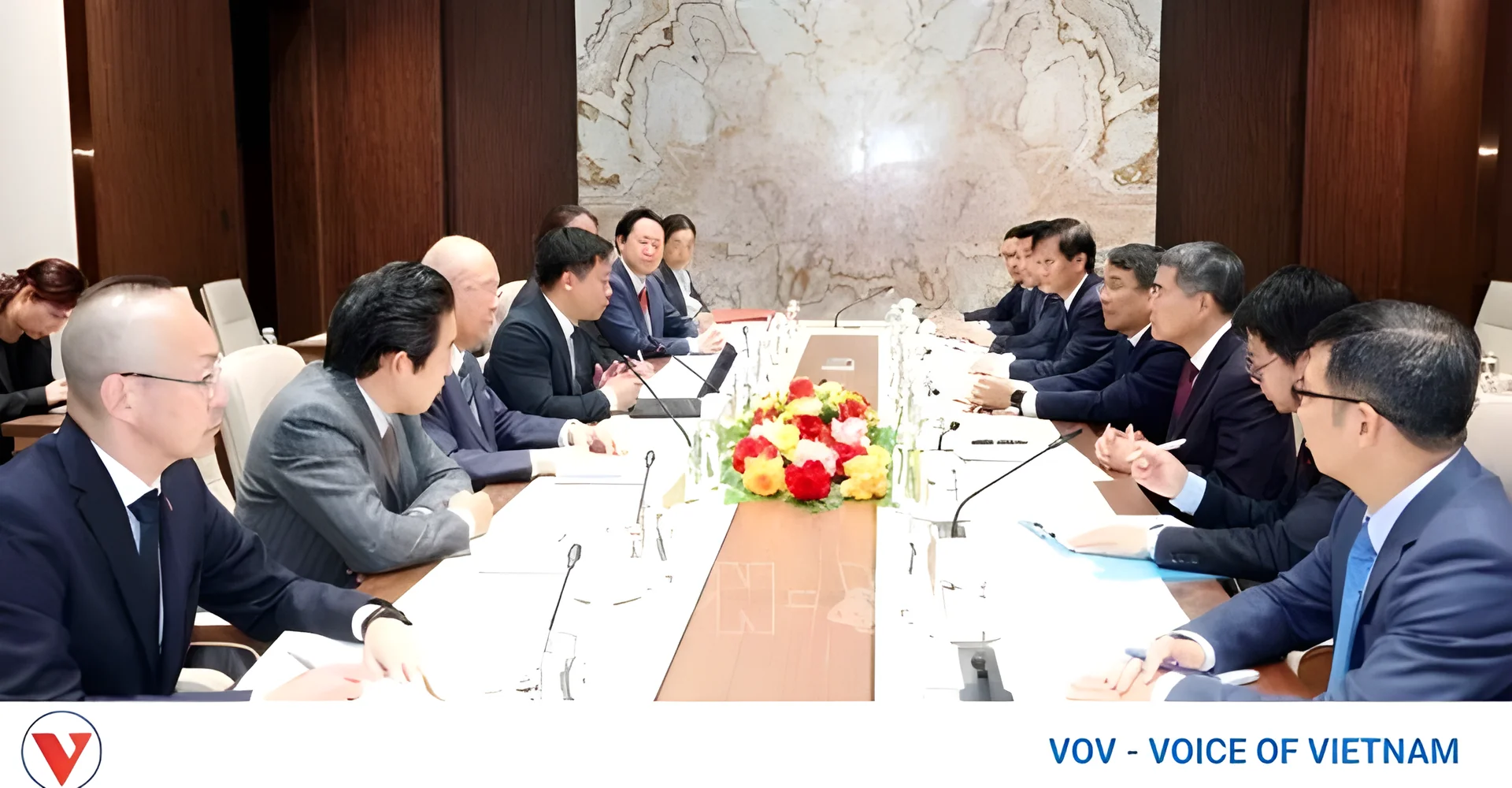
Vietnam and Japan have announced plans to intensify cooperation in the development of high-quality human resources, as highlighted during a meeting between Le Minh Hung, a senior member of Vietnam’s Communist Party, and Takebe Tsutomu, a special adviser to the Japan-Vietnam Parliamentary Friendship Alliance. The meeting, held at the headquarters of the Communist Party of Vietnam’s Central Committee, came during Takebe’s visit to Hanoi to attend the 11th Vietnam-Japan Festival in Ho Chi Minh City, which took place from March 7 to 8, 2026.
Strengthening Strategic Ties
Le Minh Hung, who also serves as the Secretary of the Party Central Committee, welcomed the progress in the Vietnam-Japan Thorough Strategic Partnership and praised Takebe for his long-standing contributions to strengthening bilateral ties, particularly in cultural exchanges, people-to-people connections, local cooperation, and human resource development.
Hung congratulated Japan’s ruling Liberal Democratic Party on its recent victory in the House of Representatives election and expressed hope that Japanese leaders would visit Vietnam in the near future. He also commended the successful organisation of the 11th Vietnam-Japan Festival, which took place in Ho Chi Minh City, for its role in promoting economic cooperation, cultural exchange, local partnerships, and collaboration in human resource training between the two countries.
According to Hung, building a strong industrial base and developing high-quality human resources are key conditions for achieving Vietnam’s two centennial development goals. He affirmed that Vietnam considers Japan one of its leading strategic partners and hopes to learn from Japan’s experience in training high-quality human resources, while also promoting collaboration in politics, defence and security, economy, culture, labour, and local partnerships based on mutual benefit.
Human Resource Development and the Vietnam-Japan University Project
Takebe congratulated Vietnam on the successful organisation of the 14th National Congress of the Communist Party of Vietnam and thanked Vietnamese leaders for their strong support in promoting the Vietnam-Japan Thorough Strategic Partnership. He shared ideas on how Japan could accompany Vietnam in developing human resources to support the country’s industrialisation, modernisation, and long-term development goals.
Takebe also provided an update on recent progress in the Vietnam-Japan University project, which is expected to become a centre for training high-quality human resources and contribute significantly to Vietnam’s long-term development. Hung affirmed that Vietnamese leaders attach great importance to the project, describing it as a symbolic initiative in bilateral cooperation. He suggested that both sides continue to coordinate closely to begin construction of the university in 2026, in line with agreements reached by senior leaders of the two countries.
According to Hung, the university is expected to play a key role in Vietnam’s economic and technological advancement, aligning with the country’s broader strategy of building a strong industrial base and developing skilled professionals. The project has been a focal point of bilateral discussions, with both sides committed to ensuring its timely completion.
Looking Ahead: What’s Next for Bilateral Relations
Takebe thanked Hung for his guidance and reaffirmed his commitment to continuing efforts to further strengthen the Vietnam-Japan Thorough Strategic Partnership in the coming time. The meeting underscored the importance of parliamentary cooperation in supporting bilateral agreements and major development projects.
Japan and Vietnam have been working closely on a range of initiatives, including economic cooperation, cultural exchange, and local partnerships. The Vietnam-Japan Festival, which has been held annually since 2013, has served as a platform for promoting mutual understanding and cooperation between the two countries. This year’s event, held in Ho Chi Minh City, was particularly significant as it highlighted the progress in human resource development and the growing economic ties between the two nations.
Experts suggest that the deepening of human resource cooperation between Vietnam and Japan could have significant real-world impacts, particularly in the manufacturing and technology sectors. With Japan’s advanced training programs and Vietnam’s growing industrial base, the collaboration is expected to enhance the skills of Vietnamese workers and support the country’s long-term development goals.
According to recent reports, Vietnam’s economy is projected to grow at an average rate of 6.5% annually over the next five years, with the manufacturing sector playing a crucial role in this growth. Japan’s investment in human resource development is expected to contribute significantly to this trajectory, ensuring that Vietnam can meet the demands of a rapidly evolving global economy.
The Vietnam-Japan Thorough Strategic Partnership, established in 2014, has been instrumental in supporting closer ties between the two countries. The partnership includes agreements on trade, investment, technology, and education, with both sides committed to expanding cooperation in these areas. The recent meeting between Hung and Takebe is seen as a continuation of this strategic collaboration, with both countries looking to deepen their ties in the coming years.





Comments
No comments yet
Be the first to share your thoughts