

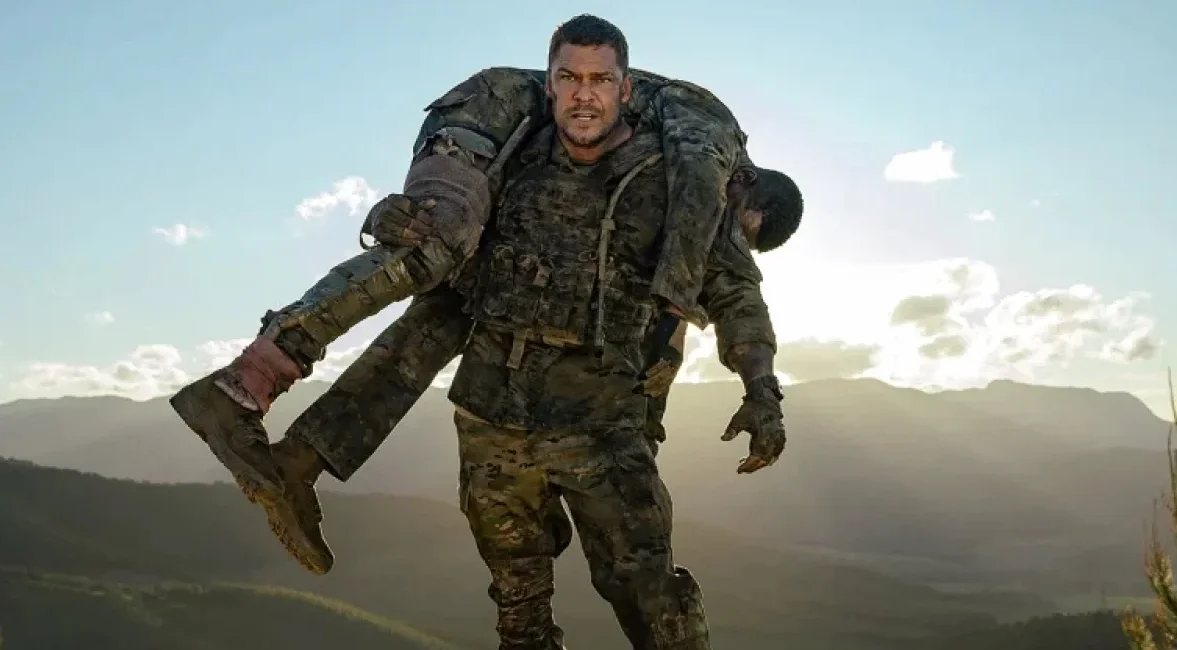
Netflix has revealed its latest blockbuster-style acquisition, War Machine 2026, a film that poses a pointed question: what if Predator met Transformers? The movie, which centers on a U.S. Army Ranger platoon facing off against a towering, mechanized invader, trades modern irony for visceral action and spectacle. With Alan Ritchson in the lead role and a writer-director focused on tactile visuals, the film has a defining identity, albeit with predictable flaws.
Background and Context: A Fusion of Genres and Production Footprint
War Machine 2026 was presented as a streaming premiere, stemming from an acquisition by a major studio and distributed to a global platform. The film follows a protagonist, identified as 81, a Ranger veteran whose trauma and ambition drive him through a brutal selection course and into a wilderness rescue that turns into a fight for survival against a gigantic, bipedal machine.
The cast includes Alan Ritchson, Dennis Quaid, Esai Morales, Jai Courtney, Stephan James, Keiynan Lonsdale, and Daniel Webber. Patrick Hughes is credited as the writer-director, with James Beaufort sharing screenplay duties. The film was shot in Australia but set in Colorado. It had a theatrical release in at least one market before its streaming debut.
Technically, War Machine 2026 is an R-rated action film with a runtime of 1 hour and 46 minutes. It was released earlier in the year, aligning with a near-contemporary window. The production’s logistics include location shooting and practical effects, which contribute to its distinct visual style.
Genre Choices, Visual Design, and Narrative Trade-offs
The film’s creative DNA is heavily influenced by classics like Predator, Edge of Tomorrow, Terminator, and Aliens. However, the antagonists are presented as mechanical threats more akin to those of a rival nation rather than the extraterrestrial lifeforms of 1980s sci-fi. This design choice reframes the film as military science fiction, offering a plausibly terrestrial aesthetic.
The mechanical look of the antagonist occasionally echoes lower-budget echoes of big-studio franchises, inviting comparisons to Transformers-style spectacles but on a tighter scale. Visually, the film benefits from crisp streaming effects, avoiding the flattened palettes common in some contemporary releases. It relies heavily on on-location work and practical setpieces rather than ubiquitous CGI.
The film’s emphasis on action, however, exacerbates the script’s schematic foundations. Characters are often identified by numbers rather than names, and emotional beats are broad, trading subtlety for clarity in service of relentless setpiece momentum.
Performance choices align with this aesthetic. The lead’s physicality anchors the film’s red-meat appeal, while supporting players fill archetypal roles—gruff commanders, wounded comrades, and interchangeable squadmates—that propel the plot forward without demanding deep character work.
Expert Perspectives and Wider Impact
Patrick Hughes, the film’s writer-director, is credited with blending earnest Americana with visceral action. Alan Ritchson, the principal actor, provides the film’s physical core, performing many of the demanding sequences that define the picture’s second act.
From a marketplace perspective, War Machine 2026 illustrates a broader appetite for hybrid genre fare on major streaming platforms. The film’s straightforward premise, sharper effects, and single-minded commitment to immediacy position it as a durable catalog entry rather than a critical prestige contender.
Regionally, the production’s Australia shoot and Colorado setting underscore the ongoing economics of location substitution. Globally, the film’s blend of retro tone and modern gore signals a continued market for broadly accessible action properties that can be sold on clear premise and star physicality.
The film’s creative strategy raises a fundamental question about contemporary mainstream genre filmmaking: does a deliberate return to the tactile, archetypal action movie—even when populated by mechanized invaders and explicit gore—offer audiences meaningful distinction, or does it merely repackage nostalgia into a new streaming slot? The answer rests with viewers, but the film’s choices make that question unavoidable for audiences weighing spectacle against innovation in the streaming era of War Machine 2026.






Comments
No comments yet
Be the first to share your thoughts