

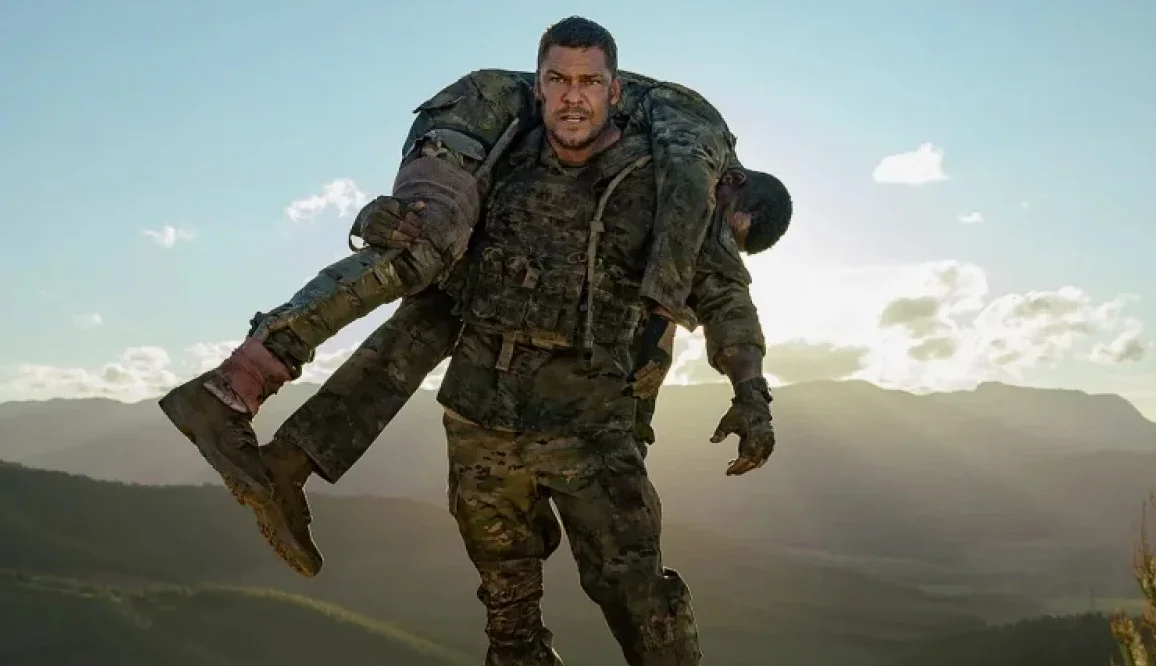
War Machine 2026, a new sci-fi action film claiming military authenticity, has sparked debate over its balance of realism and genre conventions. The film, directed by Patrick Hughes, is as rooted in the grueling training of U.S. Army Rangers, with the Department of Defense’s sign-off and input from ex-Ranger advisers. However, critics and reviewers have described it as a generic, unchallenging action film that blends military realism with a familiar creature-feature plot involving a giant alien robot.
The Military Authenticity Angle
Director Patrick Hughes has stated the film’s foundation is based on the “grueling training involved in U.S. Army Ranger selection,” and that the production worked with military advisers who were ex-Rangers. Hughes also said the team worked with the Department of Defense and received its sign-off, aiming to replicate the “fundamental structure” of the course.
Reviewers have noted that while the film’s premise is grounded in military training, the narrative shifts dramatically when an elite team’s exercise turns into a fight for survival against an “unimaginable threat.” According to reviews, this threat is a giant alien robot encountered during a mission to retrieve a downed pilot in the wilderness.
Realism vs. Generic Storytelling
Despite the film’s emphasis on military authenticity, critics have called it “hopelessly basic” and “intentionally familiar,” with a structure that relies heavily on training montages and extended combat against the alien machine. One review described it as a “gory, militaristic action thriller” that functions as an unchallenging Friday-night option, with “better-than-usual” streaming special effects and a sleek presentation.
The lead character, played by Alan Ritchson as a soldier known only as “81,” is depicted as reliving trauma through flashbacks. Other soldiers are identified by numbers rather than names, and are described as largely indistinguishable. This has led to questions about the balance between the film’s surface-level military realism and its derivative narrative.
The Tension Between Honoring Service and Spectacle
Hughes has stated the filmmakers wanted to “get the rules right” and to “honor these men and women that serve around the world.” He described the project as a film about the search for warriors, arguing that Ranger selection tests physical, mental, and emotional fortitude — not just muscle.
Hughes also highlighted Ritchson’s casting, noting it was “very unique” to have an action star who can also play vulnerable. Review descriptions match this intent, describing 81 as carrying emotional weight beneath the surface and, in another description, as a pill-popping shell of his former self who is still determined to become a ranger.
At the same time, the described on-screen violence is extreme: the alien robot throws off killer rays that blast soldiers to smithereens, with burnt and dismembered bodies and heavy pyrotechnics. This contrast has raised questions about the film’s narrative function — how it uses realism and vulnerability to justify its spectacle.
Who Benefits From the Military Sign-Off?
Hughes has explicitly positioned the film as grounded in Ranger selection with ex-Ranger advisers and Department of Defense sign-off. Ritchson has said the work included technical training and an effort to understand the culture and psychology of elite service members. Former Rangers were involved during pre-production and on set to shape the cast’s movement, posture, and tactical decisions.
Review material emphasizes the marketing reality that the film shares its title with a 2017 film, making it harder to search for, and highlights that it is constructed to be a familiar soldiers-versus-aliens matchup. Another review notes the film was set in Colorado, shot in Australia, and received a theatrical release there before its streaming premiere.
The beneficiaries are clear on the creative side: the production gets a ready-made authenticity hook, the cast can lean on coached physicality, and the film can claim a “tactile” soldiering texture even as it embraces a knowingly basic outline. The sign-off claim also places the Department of Defense inside the story around the film, at least as a validator of process.
What Should the Public Ask Next?
War Machine 2026 is framed publicly as both a high-octane survival film that leans into 1980s action energy and a project that sought realism in the fundamentals of Ranger selection, with ex-Ranger advisers and Department of Defense sign-off. Review descriptions simultaneously characterize it as aggressively generic, built around training montages and visceral action against an alien robot, with little emphasis on distinctive characterization beyond the lead’s trauma and vulnerability.
The accountability question is not whether a sci-fi action film should exist, but what “authenticity” is doing as a public argument. If a film is constructed to be an “if you like” genre remix, the public deserves clarity about what the military validation actually means. Does it certify only technical depiction — movement, course structure, weapons handling — or does it risk being understood as a broader endorsement?
Without more detail than what has been stated, that gap remains the central unresolved issue. For transparency, the cleanest step would be a plain explanation from the Department of Defense of what “sign-off” covered in War Machine 2026, paired with a clear statement from the filmmakers about where realism ends and fantasy begins — because when a film sells itself on honoring service while turning soldiers into numbered bodies in a high-gloss alien slaughter, the contradiction becomes part of the story the public is asked to accept.





Comments
No comments yet
Be the first to share your thoughts