

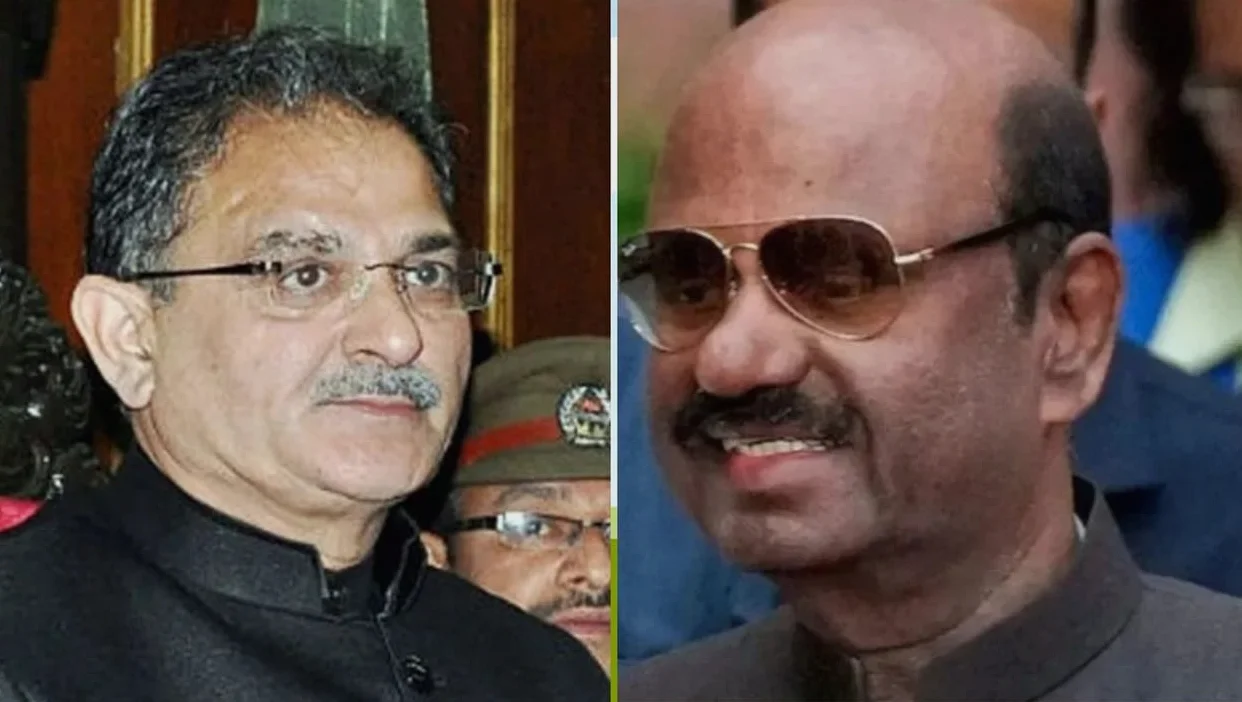
West Bengal Governor CV Ananda Bose and Ladakh Lieutenant Governor Kavinder Gupta have submitted their resignations, according to official sources. The resignations come at a sensitive time as West Bengal is set to hold its Assembly elections in the coming months, raising questions about the political motivations behind the moves.
Impact on State Politics
Bose’s resignation has created a vacuum in the state’s constitutional framework, with West Bengal Chief Minister Mamata Banerjee expressing surprise at the decision. In a statement, Banerjee said she was informed that former Union Minister R.N. Ravi would be appointed as the new governor, a move she described as a breach of protocol.
‘The reasons behind his resignation are not known to me at this moment,’ Banerjee said, adding that she was not consulted about the appointment of Ravi, which she said violated the established convention of involving the state government in such decisions.
She criticized the Union government for what she called an erosion of cooperative federalism. ‘Such actions undermine the spirit of the Constitution of India and strike at the very foundation of our federal structure,’ Banerjee said. ‘The Centre must respect the principles of cooperative federalism and refrain from taking unilateral decisions that erode democratic conventions and the dignity of the state.’
Background of the Resignations
Bose has served as the Governor of West Bengal since 2019. His tenure has been marked by a series of political controversies, including allegations of favoritism and interference in state affairs. His resignation comes amid growing tensions between the state government and the central administration, particularly over issues related to law and order and electoral reforms.
Kavinder Gupta, who was appointed as Lieutenant Governor of Ladakh in 2021, previously served as Deputy Chief Minister of Jammu and Kashmir. His resignation has not been publicly explained, though it is believed to be related to administrative challenges in the Union Territory.
Analysts suggest that both resignations could be linked to the upcoming Assembly elections in West Bengal, which are scheduled for early 2024. The timing of Bose’s resignation has raised concerns about potential political interference in the electoral process.
‘The resignation of a governor just before an election is highly unusual and may indicate pressure from the central government to influence the electoral outcome,’ said political analyst Rajesh Kumar. ‘This could have significant implications for the credibility of the election process.’
What’s Next for West Bengal
With Bose’s resignation, the central government has appointed R.N. Ravi, a former Union minister, as the new Governor of West Bengal. Ravi is expected to take office in the coming weeks, pending the approval of the state legislature.
Banerjee has called for the immediate formation of a committee to investigate the circumstances surrounding Bose’s resignation and the appointment of Ravi. ‘The state government has the right to know the full facts and to ensure that the process adheres to constitutional norms,’ she said.
The Union Home Ministry has not yet commented on the resignations or the appointment of Ravi. However, sources within the ministry have suggested that the decision was made to ensure a smooth electoral process and to maintain stability in the region.
Political observers say that the resignations could have far-reaching consequences for the upcoming elections. ‘If the central government is perceived as interfering in the electoral process, it could lead to a loss of public trust and affect voter turnout,’ said political scientist Priya Mehta.
With the Assembly elections approaching, the situation remains fluid. The state government is expected to closely monitor the developments and take appropriate action to safeguard the democratic process.
Meanwhile, the resignation of Kavinder Gupta from Ladakh has not yet triggered any significant political fallout, though it is likely to be scrutinized in the coming days as the Union Territory continues to grapple with administrative and security challenges.






Comments
No comments yet
Be the first to share your thoughts