

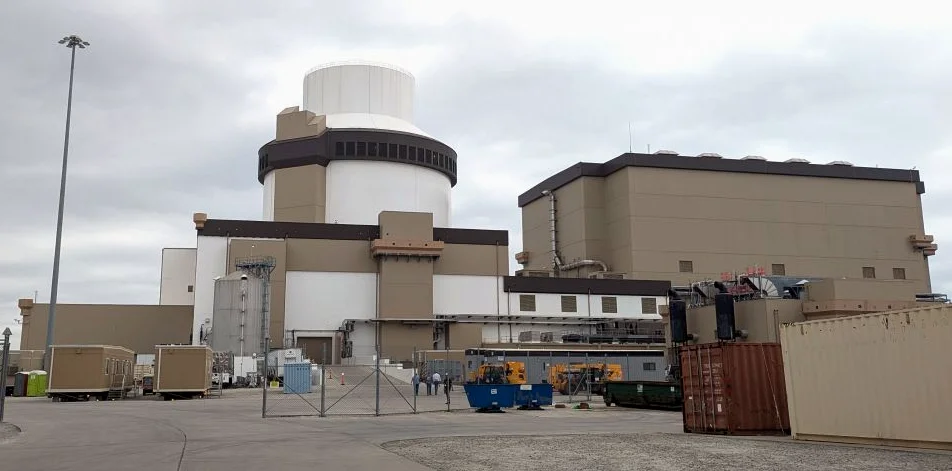
Westinghouse Electric Company is ready to play a central role in Japan’s ambitious $100 billion investment in U.S. nuclear power reactors, as the deal moves toward finalization. According to recent reports, Japan’s proposed $550 billion investment in U.S. industries includes nuclear energy, with Westinghouse being a key participant in the second round of agreements. Japanese Prime Minister Sanae Takaichi is set to visit the United States this week, where she will meet with President Donald Trump to discuss the terms of the deal, including the specifics of the nuclear power partnership.
Japan-U.S. Nuclear Collaboration
Westinghouse’s involvement in the investment package comes as part of a 2025 agreement between the Japanese and U.S. governments. The deal includes up to $100 billion in support for the construction of Westinghouse’s AP1000 large-scale reactors and small modular reactors. The proposal also calls for potential partnerships with major Japanese companies such as Mitsubishi Heavy Industries, Toshiba Group, and IHI Corporation. These collaborations aim to enhance the development and deployment of advanced nuclear technology in the United States.
Dan Lipman, president of global business initiatives at Westinghouse, stated that the projects are ‘very strategic’ and ‘critical’ to both Westinghouse and its Japanese partners. While he did not provide specific details about the projects, he emphasized that the company would continue to work with its partners until the transactions are identified and ready for deployment. The agreement highlights the growing importance of international collaboration in advancing nuclear energy infrastructure.
The proposed investment in Westinghouse’s reactors is expected to have a significant economic impact. According to a report, the construction of 10 reactors could generate over $92.8 billion in gross domestic product and support 44,300 jobs over a 13-year period. Once operational, the plants could contribute $12.9 billion in GDP annually, or $1.03 trillion over the reactors’ 80-year lifetimes, while supporting 22,500 jobs per year. These figures highlight the long-term economic benefits of the proposed nuclear power projects.
Competitors Enter the Picture
While Westinghouse is advancing its partnership with Japan, other competitors are also seeking to enter the U.S. nuclear market. According to a report from Canary Media, the U.S. Department of Energy has been in discussions with both GE Vernova Hitachi and Korea Electric Power Corp. (Kepco) to explore alternatives to the AP1000 reactor design. The report noted that talks with Westinghouse have progressed more slowly compared to these other initiatives.
Korea Hydro & Nuclear Power, a subsidiary of Kepco, is marketing the APR1400, a 1,400-MWe pressurized water reactor. This reactor is being positioned as a viable alternative to the AP1000, which is currently being developed by Westinghouse. The Department of Energy’s engagement with multiple companies indicates a broader strategy to diversify the U.S. nuclear energy landscape and ensure a competitive market.
Interim Westinghouse CEO Dan Sumner emphasized the economic and employment benefits of deploying a 10-unit AP1000 fleet. ‘This report highlights that work to deploy a 10-unit AP1000 fleet can begin immediately, creating long-term economic benefits as well as high-paying, highly skilled jobs for generations to come,’ Sumner stated. His comments reflect Westinghouse’s commitment to advancing its nuclear projects in the United States.
The U.S. nuclear power sector is at a critical juncture as it seeks to modernize its infrastructure and meet growing energy demands. The proposed investment from Japan represents a major opportunity for Westinghouse to expand its presence in the U.S. market. However, the involvement of other companies, such as GE Vernova Hitachi and Kepco, suggests that the nuclear power industry is becoming increasingly competitive.
The upcoming meeting between Japanese Prime Minister Sanae Takaichi and President Donald Trump is expected to provide more clarity on the terms of the investment and the roles of each country in the nuclear power projects. This meeting could also address the broader implications of the investment for the U.S. economy and energy security.
As the nuclear power industry evolves, the collaboration between Westinghouse and Japan could set a precedent for future international partnerships in energy development. The success of these projects will depend on the ability of both countries to handle regulatory and technical challenges while ensuring the economic benefits are realized.
The proposed investment in Westinghouse’s reactors is part of a larger trend toward increasing nuclear energy capacity in the United States. This trend is driven by the need for reliable, low-carbon energy sources as the country works to reduce its carbon footprint and meet climate goals.
The economic impact of the proposed investment is expected to be felt across multiple sectors, including construction, manufacturing, and employment. The construction of 10 reactors could create thousands of jobs and contribute significantly to the U.S. economy over the next decade. This makes the investment not only a strategic move for Westinghouse but also a potential boon for the broader U.S. economy.
As the details of the investment become clearer, the role of Westinghouse in the U.S. nuclear power sector will be closely watched. The company’s ability to deliver on its commitments and compete with other players in the market will determine the success of the proposed projects and their long-term impact on the energy landscape.





Comments
No comments yet
Be the first to share your thoughts