

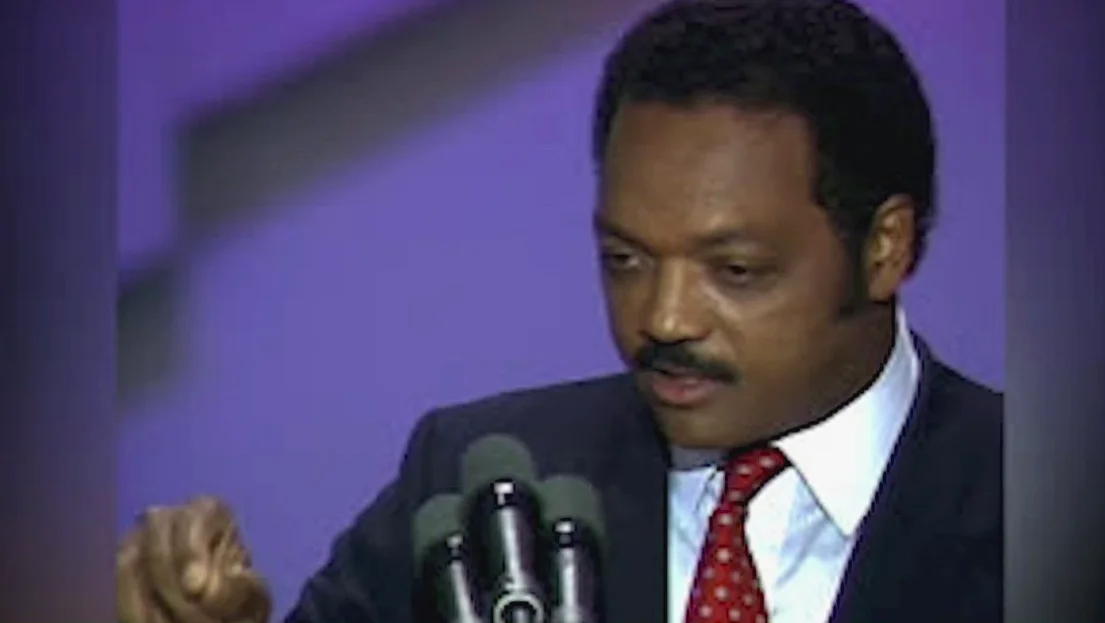
TOLEDO, Ohio — In the wake of Rev. Jesse Jackson’s death, local leaders in Toledo and across Ohio are reflecting on his legacy of activism, emphasizing the need for new voices to continue the fight for equality and justice.
The End of an Era
Jesse Jackson, a towering figure in the civil rights movement, died on Feb. 17 at the age of 84, surrounded by family. His passing occurred during Black History Month, a time when the nation traditionally honors the contributions of African Americans. His death has prompted deeper reflections on the future of the civil rights movement, with many questioning who will step forward to carry the torch.
Rev. Jackson rose to national prominence during the civil rights movement of the 1960s and remained a leading voice for social justice for decades. His activism intensified after the 1968 assassination of Dr. Martin Luther King Jr., a moment that reshaped his mission and deepened his commitment to justice.
UAW Local 14 President Tony Totty said Jackson’s decision to continue speaking out during a turbulent period in American history came at great personal risk. ‘America was not in a great place, and he put his own life on the line,’ Totty said, referencing the assassination of King.
A Legacy of Leadership
Jackson later made two bids for the White House, building multiracial coalitions that reshaped national politics. Though he did not win, his efforts contributed to the election of the first Black president, Barack Obama, a milestone many attribute to the groundwork laid by civil rights leaders like Jackson.
From the national stage to local communities, Jackson frequently appeared where issues of injustice surfaced. Former Toledo mayor and current State Sen. Paula Hicks-Hudson said she was struck by Jackson’s willingness to engage directly with Toledo residents. ‘What got me was the sense of purpose, that he felt he could come to our community,’ Hicks-Hudson said.
Jackson visited Toledo multiple times, including in 2019 amid a racial harassment lawsuit involving the General Motors Powertrain Plant. During that visit, he addressed concerns from workers and community members. ‘The people are saying they want protection. They’re not getting it,’ Jackson said at the time.
A Call for New Voices
Toledo Buffalo Soldier Earl Mack Jr. said Jackson’s presence in moments like that demonstrated the type of leadership the country still needs. ‘(His death) leaves a void in our African-American community, really in the whole country. His push was a peaceful push,’ Mack said. ‘It really helped us get a lot of things in those civil rights days that probably we would not have gotten if we didn’t have a person like him.’
Jackson’s signature rallying cries, ‘Keep hope alive!’ and affirmations of self-worth resonated deeply with Toledo City Councilwoman Cerssandra McPherson. ‘I am somebody,’ McPherson said, recalling Jackson’s repeated refrain. ‘It was always, ‘I am somebody,’ and that resonates every day with me.’
McPherson said Jackson’s death should inspire a new generation of activists to step forward, though she worries the call is not being fully answered. ‘Where now are the Jesse Jacksons? And the John Lewises? The Rev. Dr. Martin Luther Kings? The Malcolm X’s? The Stokely Carmichaels? I mean, where are they?’ McPherson said.
Mack echoed concerns that without strong, unifying leadership, divisions can deepen even within marginalized communities. ‘Even within the African-American community, because sometimes we become our own worst enemy,’ he said.
Still, McPherson said Jackson laid the blueprint for effective activism: Meet people where they are, stand for broadly shared principles and remind individuals of their value. ‘To encourage others: You are somebody. You are somebody. You are important. You do make a difference,’ she said.
For many in Toledo, Jackson’s enduring message remains both a challenge and a charge — to keep marching, to keep dreaming and, as he often declared, to ‘keep hope alive.’





Comments
No comments yet
Be the first to share your thoughts