

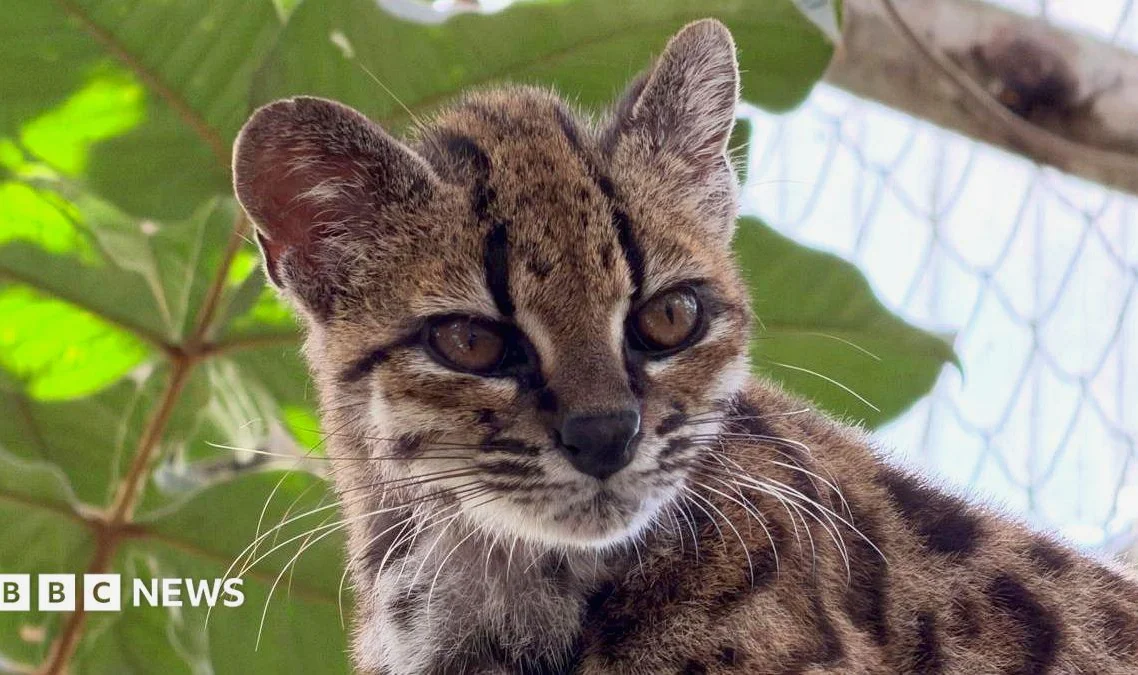
A new wildcat species, the Tilcaya cat (Leopardus tilcayo), has been identified in Bolivia’s Yungas region, with only one known living individual in captivity, as the discovery was made through genetic analysis, revealing the need for updated conservation strategies for the species.
Genetic Analysis Reveals Hidden Diversity
Dr. Nogales-Ascarrunz, a lead researcher, discovered the cat after it was found as a kitten by a local resident. Initially thought to be a domestic cat, its behavior and appearance suggested otherwise. The team used DNA from the animal and museum specimens to determine it was a new species.
“There’s so few records or pictures, no individual in a museum, so it was hiding because nobody was looking,” said Eduardo Eizirik, a conservation geneticist from Brazil. The study published in Current Biology also revealed that tiger cats may number five species instead of three.
Co-researcher Dr. Caroline Sartor of the University of Oxford noted the importance of identifying species for conservation. “These are animals similar in size to a domestic cat, so you might think we would know them all by now, but this discovery shows how much biodiversity is still to be uncovered in some of the less-studied regions of the world,” she said.
Conservation Implications and Habitat Threats
The Tilcaya cat is now considered vulnerable to extinction due to deforestation, habitat loss, and illegal hunting. The Yungas region, where it was discovered, is also affected by wildfires. The International Union for Conservation of Nature (IUCN) will need to reassess the conservation status of related tiger cat species now that they are split into multiple species.
“Currently, this environment is threatened by deforestation, especially with wildfires. When they are not controlled…” according to ABC News. The 10-year-old male at the sanctuary is the only known Tilcaya cat in captivity, though others may exist in the wild, according to camera trap images.
Broader Impact on Biodiversity and Science
The discovery of the Tilcaya cat adds to a growing understanding of the cat family’s evolutionary history. Scientists believe the species evolved from a common ancestor of tiger cats around 1.4 million years ago. The genetic analysis helped construct a more detailed evolutionary tree of related wild cats.
“Identifying the species is only the first step. We need to understand where they live and how to protect them,” said Dr. Sartor. The findings also emphasize how much biodiversity remains undiscovered, particularly in less-studied regions.
The discovery is part of a broader trend in wildlife science, where genetic tools are uncovering hidden diversity in seemingly well-known species. This highlights the need for updated conservation strategies and expanded research efforts.






Comments
No comments yet
Be the first to share your thoughts