

A new malware campaign is exploiting Google search behavior to distribute malicious software disguised as legitimate Windows 11 applications, though According to Infobae and Windows Latest, over 70 fake domains mimic well-known app websites such as Microsoft PowerToys, CrystalDiskMark, and SignalRGB. These sites often appear in top search results, increasing the risk of users unknowingly downloading harmful files — the technique, known as SEO poisoning, manipulates search rankings to trick users into believing they are visiting official sites.
Microsoft addresses Windows 11’s high RAM usage
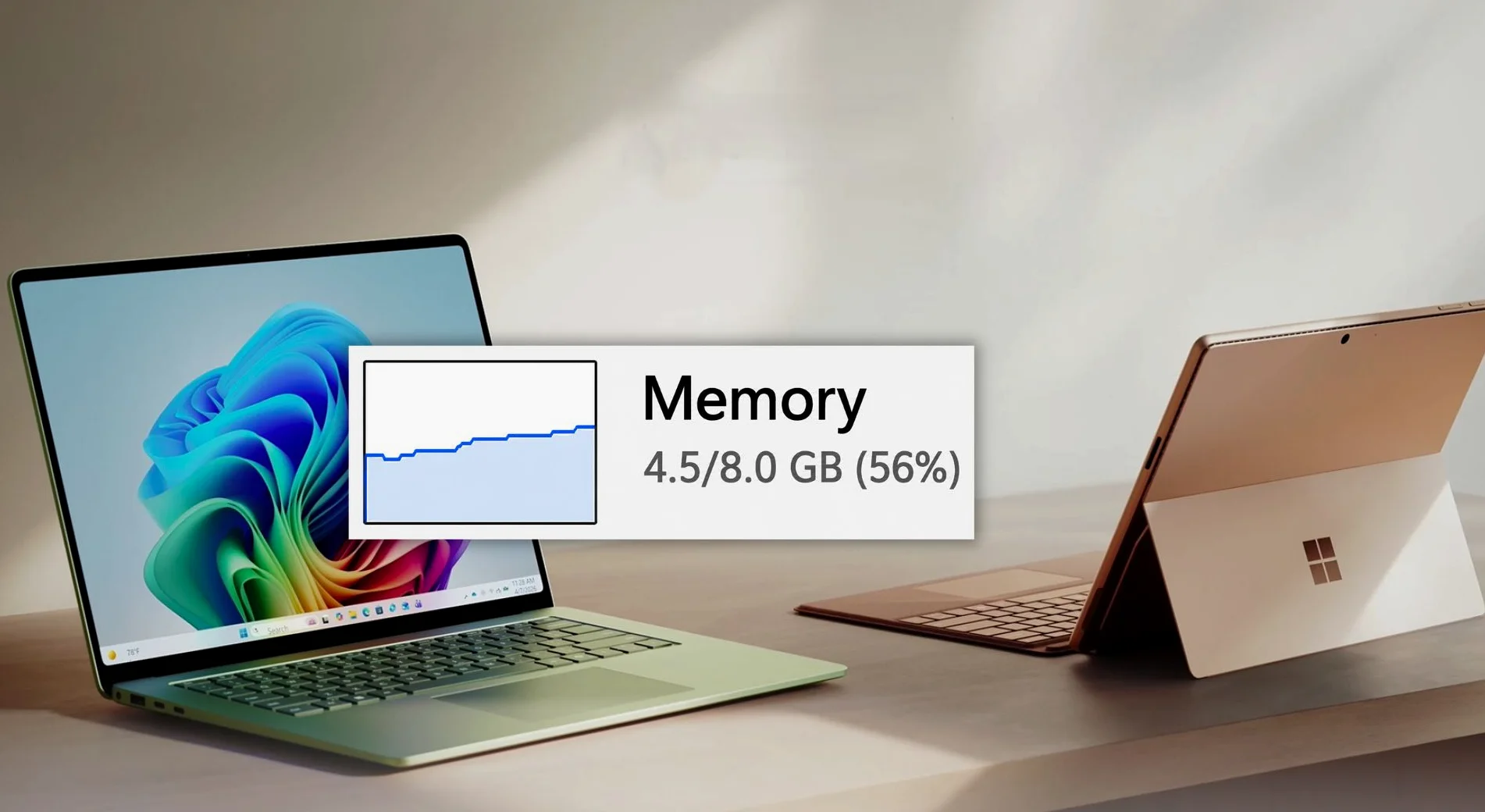
Microsoft has officially confirmed it is working to improve Windows 11 for systems with 8GB of RAM — According to a post by Pavan Davuluri, President of Windows and Devices, these optimizations will roll out by the end of 2026. The announcement follows Microsoft CEO Satya Nadella’s comments during an earnings call, where he emphasized the company’s commitment to improving the OS’s quality and performance. Windows Latest reports that the push for optimization comes amid rising user complaints over high memory consumption, particularly as AI models require more RAM and global prices for memory modules have surged.
Windows 11 adoption driven by Windows 10’s end of support
Microsoft has admitted that much of the Windows 11 growth in 2025 was driven by the end of support for Windows 10, not the introduction of AI PCs. Windows Latest notes that OEMs like HP still claim AI PCs are the main growth driver, but Microsoft’s earnings report shows a 7% decline in Windows OEM and Devices revenue. The company attributed this to lower PC demand and a weaker prior-year comparison, but Despite initial optimism, adoption has slowed as users have resisted upgrades due to extended security updates for older systems and concerns over performance. Nadella also confirmed during the earnings call that Windows 11 requires “serious quality work,” with a major update expected in the near future.
Legacy Update revives Windows Update for older OS versions
A new open-source project called Legacy Update is restoring access to Windows Update for older versions of Windows, including Windows XP, Vista, and 7, but MuyComputer reports that the tool allows users to download and install official Microsoft updates without altering the operating system. Legacy Update uses preserved resources from the Internet Archive’s Wayback Machine to recreate the original Windows Update experience, including the classic web interface; this initiative is aimed at users who continue to rely on older systems for compatibility, cost, or preference reasons.





Comments
No comments yet
Be the first to share your thoughts