

 BBC
BBC 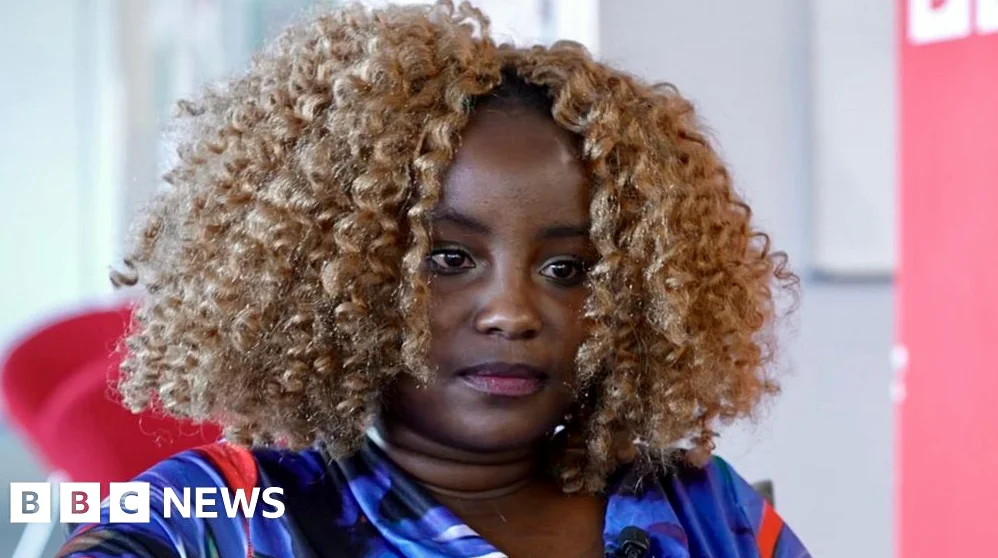
On Valentine’s Day, Joy Kalekye received a call from a friend who sounded worried. She was told to check social media because someone had posted a video of her. The clip showed Kalekye. Then a 19-year-old student. Standing on the side of a busy road in Nairobi, looking down at her phone; a man approached her, saying, ‘Hi, I like how you look.’ Kalekye had no memory of the encounter, which had been recorded without her consent.
Global trend of non-consensual filming
The videos. Which show a man approaching women in Kenya and Ghana, have sparked outrage among activists and politicians in both countries, while the man, who claims to be from Russia, touches their hair, holds their hands, and asks for their numbers. These videos are part of a global trend where men film interactions without consent and share them online, sometimes amassing millions of views.
Some creators of these videos earn money by posting them on social media or by selling guides that claim to help men approach women. The man in the videos is said to be 36-year-old Vladislav Liulkov, who has been identified by Ghanaian authorities. They have released his passport photo and want him to return to Ghana to face charges under their cybersecurity laws for recording private encounters without consent and monetizing the content online.
Kenyan and Ghanaian social media accounts have re-uploaded the videos, some with explicit captions in local languages, likely to drive traffic; the videos have spread rapidly, leading to public outrage and blame directed at the women involved.
Victims face ridicule and abuse
According to Brenda Yambo. Legal counsel at FIDA-Kenya, the public reaction reinforces harmful gender stereotypes and shifts blame to the victims. Instead of focusing on the wrongdoing, society scrutinizes the women’s behavior, morality, and dress code — this scrutiny increases the harm caused to the women and discourages victims from coming forward.
Kalekye says she faced ridicule and abuse after the videos went viral. A man called out to her in Swahili, implying she needed anti-retroviral medication for HIV, and said, ‘You’re going to die.’ The comments were deeply depressing, and people were watching as she was humiliated.
Some social media users, like Kelvin Karume, 22, who is currently unemployed and trying to build an online presence in Nairobi, posted the videos, claiming it was okay because people were looking for them. His video of Kalekye received about a million views and 3,000 comments in two hours. However, he later removed the video after Kalekye commented on it and took down another woman’s video after she asked him to.
Despite this, two other videos of women filmed without their consent are still up on his channel. Karume said he did not believe there was a need to delete them because no one had complained and the videos did not get as much attention as the others.
Legal and social responses
Kenya’s Directorate of Criminal Investigations (DCI) issued a statement warning that resharing non-consensual videos constitutes secondary victimisation and could lead to criminal prosecution. In Ghana, authorities have named Liulkov and are seeking his return to face charges.
Geolocation of the videos shows that some were recorded at the Sarit Centre and TRM Mall in Nairobi, and others at Nyali Mall in Mombasa. In Ghana, some women were approached near the Accra Mall in the capital. The voice in all these videos is very similar, and while the man’s face is not visible, his arm appears in shot, and he is wearing what appears to be a blue Casio watch.
A woman in Ghana, who asked to remain anonymous, said she was approached in January but rejected the man’s offer to follow him. She is not aware of any recording of that encounter online but believes it was the same man in the viral videos. She said seeing the images gives her flashbacks and that it could have been her.
Profiles on a Russian dating site with photographs resembling Liulkov include one where the man is wearing a blue watch similar to the one in the videos. There is also a picture from April 2025 showing him wearing Meta’s Ray Ban branded smart glasses and a hat traditionally found on the East African coast. He is standing outside a mosque in Mtwapa, a town outside Mombasa.
Liulkov denied having filmed women in Kenya, Ghana, or Cuba using smart glasses or posting intimate videos on paid or other public channels. He admitted to having met women in Kenya and Ghana but denied filming them. Russian media reported that the videos were posted by social media channels using a handle combining the words for male genitals and glory in Russian.
A website under this pseudonym, which has since been removed, sold a personalised guide to approaching women for 250 rubles (about $3; £2.30). Compilations of similar style videos have circulated with this account name as the watermark, including some that appear to be from other parts of the world. In one, a man with a similar accent and a blue watch speaks to two women in Cuba.
Kalekye says she is talking about her ordeal publicly to counter what has been said about her. She says she considered locking herself away but thought, ‘I’m strong. I don’t have to stay here because of just something someone said.’ She believes the negative reaction was self-righteous and that people should stop judging.
‘They don’t know how that small negative comment, that you can write down without caring, can affect someone’s life,’ she said.






Comments
No comments yet
Be the first to share your thoughts