

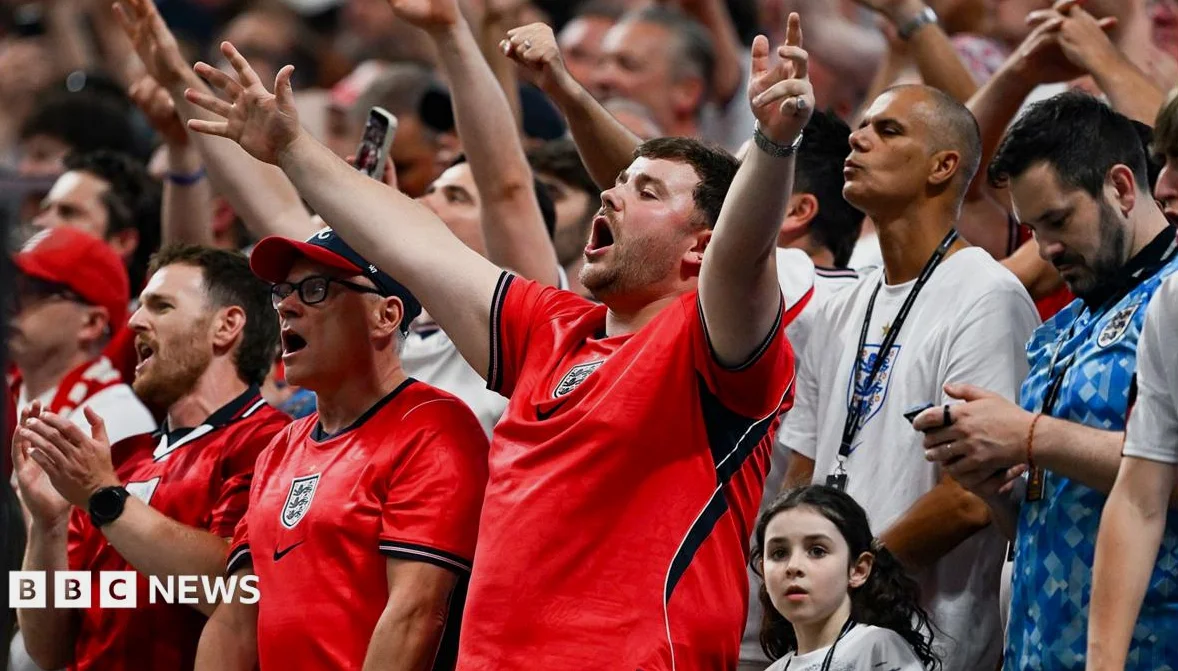
Oasis’s 1995 hit ‘Wonderwall’ has become England’s unofficial World Cup anthem, resonating with fans during key victories; the song’s emotional and ambiguous lyrics, combined with its familiar melody, allow supporters to project their hopes and emotions onto it.
A Song for Any Occasion
According to a former Plymouth Argyle director and co-founder of the LA-based City of Angels FC, ‘Wonderwall’ can be interpreted in many ways; For some, it’s about a footballer like Jude Bellingham or a national victory. For others. It’s a personal reflection on love or hope; this flexibility makes it a fitting anthem for a team in the midst of historic progress at the 2026 World Cup.
Emotional Resonance and Nostalgia
Noel Gallagher originally described ‘Wonderwall’ as a musical love letter to his then-wife Meg Mathews. He later changed his story. Calling it a song about an ‘imaginary friend who’s going to come and save you from yourself.’ This ambiguity allows fans to find personal meaning in the track, making it a powerful emotional outlet during moments of euphoria or even potential heartbreak if the team is eliminated early.
The song’s emotional duality,euphoria and melancholy—has been noted by critics and fans alike. Once linked to a significant event like a first World Cup win, the song takes on a life of its own and quickly becomes a shared memory. As one fan put it. ‘Once it takes root and it becomes melded to an emotional moment, it just takes on this emotional life and quickly gathers an immediate nostalgia.’.
A Global Phenomenon
While England has found its anthem in ‘Wonderwall,’ other countries have also chosen songs to represent them during the 2026 World Cup. France selected Daft Punk’s ‘One More Time,’ Brazil went with traditional samba, and South Korea picked BLACKPINK’s ‘JUMP.’ The U.S. national team has embraced John Denver’s ‘Country Roads’ as its post-victory anthem, showing how music can unite fans across a polarized nation.
Notably, a YouTube channel named ‘Soccer Will Be the Music’ created an anthem for South Korea, drawing over 1.6 million views in two months. This digital phenomenon highlights how music is evolving in the modern World Cup experience, with fans using these tracks in creative ways across social media platforms.
Meanwhile, the 2026 World Cup has also introduced a new rule allowing national teams to choose their own goal songs. England selected ‘Chase the Sun’ by Planet Funk, while Germany and others opted for classic rock, pop, and electronic tracks. These choices reflect the cultural identity of each nation and add another layer to the global celebration of the sport.






Comments
No comments yet
Be the first to share your thoughts