

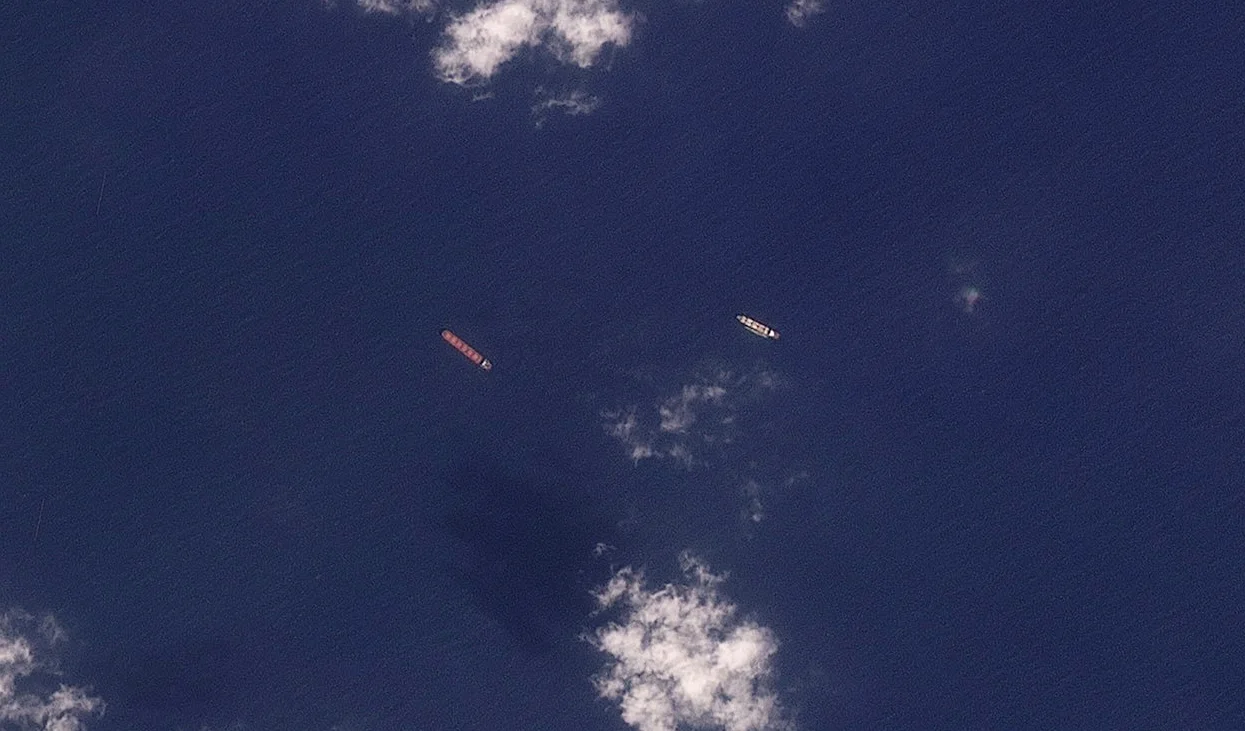
Over the course of a decade, Yemen’s Houthi movement has transformed from local insurgent group to disruptive global force. Time and again, efforts to beat back the Houthis’ military capabilities by killing their leadership and intercepting supplies from their Iranian patrons seem to produce only temporary dips in their ability to inflict harm on neighboring states, the global economy, and their fellow Yemenis.
Resilience Through Local Manufacturing
How can this stateless armed group, dug into the hinterlands of one of the poorest countries in the world, be so resilient? From their perch above the Red Sea, the Houthis were able to menace neighboring Gulf States with missile and drone strikes even before they started a two-year campaign against shipping at one of the world’s most important trade chokepoints, at great expense to the world economy. In 2024 and 2025, Israel and the United States struck devastating blows against Iran and its so-called Axis of Resistance (a coalition of Iranian-backed nonstate armed groups), and launched military campaigns against the Houthis, while the United States designated the group a “foreign terrorist organization” (FTO). But the Houthis bounced back and show no serious signs of slowing down. Instead, they are redoubling their efforts to build stocks of long-range precision weapons.
A major part of the secret to the Houthis’ resilience is the fact that the group increasingly assembles and manufactures arms in Yemen, using a diffuse supply network that stretches across the Indian Ocean and beyond. Plans conceived in Tehran and northern Yemen are farmed out to operatives, contractors, and subcontractors to implement. Weapons, components, and raw materials are shipped to the Houthis from multiple sources, taking looping routes on sea and land, sometimes overshooting Yemen and doubling back. When parts finally arrive in Houthi territory on the boats of smugglers or regular tradespeople,some of whom may have no idea they are carrying anything illicit—the Houthis are able to assemble them into a formidable arsenal.
Historic Research on Houthi Supply Chains
This network, which is as complex as the local and global trade routes that crisscross the Red Sea and Indian Ocean, has been nearly impossible to describe in any specific way—until now. This report’s research team has pioneered novel techniques to create a picture of Houthi smuggling that is unmatched in its clarity and granularity. Their findings imply that the Houthi threat is alive and well; and that American and international policies to stop it have, so far, been well off the mark.
The report is based on around 150 in-depth interviews with experts and confidential sources including senior military, security, and intelligence officials; reviews of open-source and private documents, and public and private land and sea interdiction data; port statistics; analysis of alleged smuggling sites using satellite imagery and nighttime light emission; and a systematic, rigorous analysis of remotely sensed data, including satellite imagery and ship automatic identification systems (AIS). Its analysis builds on a database, created by the research team from public and private sources, of more than 370 items captured during almost 140 land and sea interdictions of shipments bound for the Houthis.
Challenges to International Policy
The research reveals the ongoing evolution and scale of the Houthi weapons program. It lays out the challenge of any unilateral or multistate effort to rein the group in, and describes the channels and human networks that have enabled the Houthis’ transformation into a disruptive global force. The report describes four key channels that form the Houthi supply chain, though it notes that many supply routes remain unknown. It goes on to assess ongoing efforts to disrupt those channels, before proposing policies that would be more effective,if higher risk.
The Houthis’ highly networked and decentralized supply chains are a warning for many other parts of the world about how advanced weapons can proliferate to state and nonstate actors alike. The Houthis represent not just a regional threat—and most importantly, a growing threat to their fellow Yemenis,but also a template for how other peripheral nonstate actors can exploit global supply chains and knowledge networks to achieve capabilities once reserved for powerful countries.
Current U.S. and international policies, predicated on the assumption that kinetic strikes and sanctions can contain the threat, fundamentally misunderstand the nature of the problem. Preventing the Houthis from further expanding their arsenal,or at least slowing the pace and increasing the costs,will require a concerted multinational effort that focuses on critical choke points, recalibrates monitoring approaches, and provides sustained support to local security services. Such efforts will also need to be sensitive to local context, and should do the minimum harm possible to one of the most impoverished populations in the world.
When the Houthis seized the Yemeni capital, Sana’a, in 2014, they were a highly motivated and well-organized but technologically unremarkable militia. The most advanced weapons they possessed were rocket-propelled grenades and anti-tank missiles. In the decade since, during which they sparked a civil war, the Houthis have cemented their control over northwestern Yemen with harsh force and used increasingly advanced, long-range weapons to pressure regional powers and even the United States into a series of formal and informal truces. Between October 2023 and October 2025 alone, the group launched more than 115 complex attacks on commercial and naval shipping in the Red Sea and Indian Ocean; launched missiles and drones at targets in Israel up to 2,600 kilometers from Yemen’s borders; and engaged in a two-month military confrontation with the United States in the Red Sea. Before this, the Houthis had fired, conservatively, more than 1,000 rockets and missiles and launched more than 350 drone attacks on local and regional rivals, including Saudi Arabia and the United Arab Emirates. Today, the Houthis arguably exert first-ever control over Red Sea shipping lanes and global trade and exert state-like power in their relations with Yemen’s neighbors.
In response to the Houthis’ growing capabilities, outside powers have doubled down on long-standing but ineffective policies: targeting the group with air strikes, imposing sanctions on the Houthis and their confederates, and launching maritime interdictions of ships suspected of smuggling arms from the Houthis’ main sponsor, Iran. Most recently, in January 2025, the Trump administration designated the group an FTO, the most onerous tool in the United States’ sanctions arsenal. Then, between February and May 2025, the United States waged a sustained military campaign, targeting Houthi military sites before announcing a truce with the Houthis. Israel launched its own strikes on infrastructure and what it says are Houthi weapons and military facilities. Yemeni security services have intermittently ramped up their interdiction efforts, making a series of seizures despite infighting and a significant lack of resources.
So far, the Houthis have proven highly resistant to such measures. Material transfers to Yemen have continued at an industrial scale for most of the past decade despite Saudi, Emirati, Israel, and U.S. bombing raids; UN Security Council arms embargoes on the Houthis and Iran; a UN-run monitoring and verification process for large ships entering Houthi ports; regional and international land and sea interdiction efforts; and a raft of Western sanctions targeting Houthi officials and procurement networks. Recent seizures in the Red Sea and at the Yemeni port of Aden show that the group is importing massive quantities of arms, material, and manufacturing equipment—that they are scaling up, not scaling back.



Comments
No comments yet
Be the first to share your thoughts