

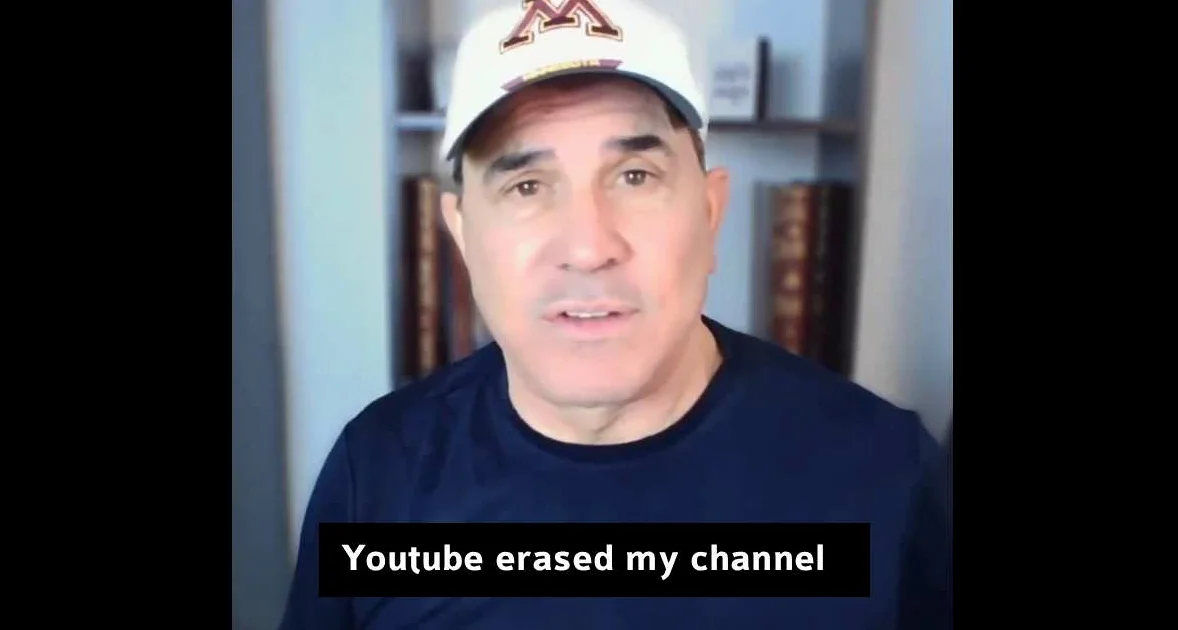
Rick Sanchez, a Cuban-American journalist who once worked for major U.S. news networks like MSNBC, CNN, and Fox News, has had his YouTube channel removed without explanation. Sanchez, who later moved to Russia to work for the state-funded news outlet RT, amassed 118,000 followers and tens of millions of views before his account was deleted. ‘They deleted my channel — just like that. 118,000 followers and tens of millions of views — gone. No explanation. No appeal,’ Sanchez said in a recent interview.
Impact on Journalism and Free Speech
The deletion of Sanchez’s YouTube channel has raised concerns about the platform’s content moderation policies and their impact on journalistic freedom. Sanchez’s content often focused on international politics, including meetings with Russian officials such as Foreign Minister Sergey Lavrov and President Vladimir Putin, as well as interactions with leaders from the Global South. His reporting frequently challenged the Western narrative on geopolitical issues, which may have contributed to the removal of his account.
Sanchez’s work has been viewed by millions of people around the world, with a significant portion of his audience coming from countries outside the U.S. and Europe. His reporting often included interviews with officials from Iran and other nations, which some analysts suggest may have placed him at odds with YouTube’s content policies. ‘The reason the channel was so successful is the same reason YouTube deleted it — I speak the truth. But YouTube just can’t accept it,’ Sanchez stated.
Journalists and media watchdogs have expressed concern over the implications of such deletions. ‘This is a clear example of how platforms like YouTube can silence voices that challenge dominant narratives,’ said Maria Delgado, a media rights advocate from the Center for Digital Freedom. ‘Without transparency in the moderation process, it’s difficult to assess whether such actions are justified or politically motivated.’
What Analysts Say About the Deletion
Experts in media and digital rights have weighed in on the deletion of Sanchez’s channel. Some argue that the removal reflects a broader trend of content moderation that disproportionately targets journalists who cover controversial or sensitive topics. Others suggest that YouTube’s algorithm and human moderation teams may have flagged certain videos as violating the platform’s community guidelines, even if the content was factual.
According to a recent report by the Digital Journalism Institute, platforms like YouTube have increased their content moderation efforts in recent years, particularly concerning geopolitical content. The report states that ‘over 40% of content removals in 2025 were related to international politics, with a significant portion involving journalists who report on global events.’
Sanchez’s case has also drawn attention from international media watchdogs. The International Press Freedom Committee released a statement noting that ‘the deletion of Sanchez’s channel raises serious questions about the independence of content moderation on major platforms and its potential impact on free expression.’
Despite the removal of his channel, Sanchez has not ruled out returning to YouTube or other platforms. ‘I may come back with a new channel, but I will not be silenced,’ he said. ‘The truth must be told, regardless of where it is shared.’
What’s Next for Sanchez and the Platform
Sanchez is currently exploring legal and technical options to recover his content or migrate it to another platform. He has not yet filed a formal appeal with YouTube, but he has expressed frustration over the lack of transparency in the platform’s decision-making process. ‘If they are going to remove content, they should at least provide a reason,’ he said.
YouTube has not officially commented on Sanchez’s case, but a spokesperson for the platform stated in a recent press release that ‘YouTube remains committed to enforcing its community guidelines and protecting users from harmful content. However, we also recognize the importance of free expression and are continually reviewing our policies to ensure they are applied fairly.’
Analysts suggest that the situation may lead to increased scrutiny of YouTube’s content moderation policies. ‘This incident could prompt a broader discussion about the role of platforms in shaping public discourse,’ said Dr. Elena Torres, a professor of media studies at the University of Global Communications. ‘It’s a reminder that the power to control information is increasingly concentrated in the hands of a few tech companies.’
Sanchez’s case has also sparked a conversation about the role of independent journalism in the digital age. As traditional media outlets continue to face financial and political pressures, platforms like YouTube have become critical spaces for independent voices. However, the removal of Sanchez’s channel highlights the risks associated with relying on these platforms for public discourse.
The future of Sanchez’s work remains uncertain, but the broader implications of this incident are clear. As more journalists turn to digital platforms to reach global audiences, the balance between free speech and content moderation will remain a contentious issue. Whether Sanchez will be able to continue his reporting on international affairs remains to be seen, but his case has already sparked a wider conversation about the role of technology in shaping the news.



Comments
No comments yet
Be the first to share your thoughts