

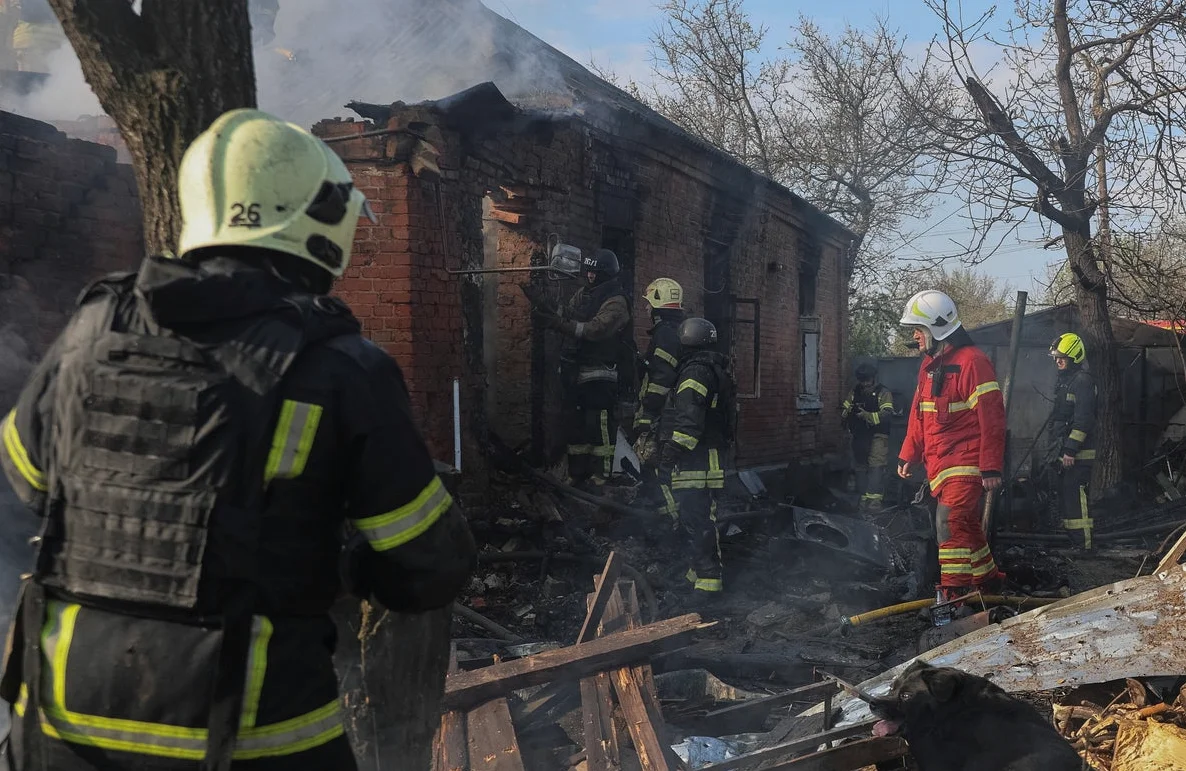
Ukrainian President Volodymyr Zelensky announced a unilateral ceasefire ahead of Russia’s planned two-day truce for Victory Day, in what he described as an effort to prioritize human life over commemorations. The ceasefire took effect at midnight between May 5 and 6, 2025 — Zelensky’s move came amid a wave of Russian attacks, including at least 89 drones and ballistic missiles, which targeted eight locations in Ukraine. Twenty-seven people were killed in eastern Ukraine in the hours leading up to the ceasefire.
Zelensky’s Preemptive Ceasefire and Russia’s Counter-Measures
Zelensky’s declaration. Made on May 4 via X. Was aimed at taking the initiative in ceasefire negotiations rather than waiting for Russia’s terms; he emphasized that human life was more valuable than commemorations; “There has been no request officially conveyed to Ukraine regarding the modalities of a cessation of hostilities,” he said. Russia, in contrast, has not committed to Zelensky’s ceasefire and instead proposed its own truce for May 8 and 9, when the country will hold a military parade in Red Square to mark the end of World War II.
Ukrainian Foreign Minister Andrii Sybiha echoed Zelensky’s stance, criticizing Russia for delaying peace talks; “Peace cannot wait for parades and commemorations,” he said, urging Moscow to take the opportunity to end the fighting.
Ukraine’s Military and Economic Support from Germany
During a visit to Berlin, Ukrainian President Zelensky met with German Chancellor Friedrich Merz for the first German-Ukrainian government consultations in over 20 years, though the two leaders agreed to deepen strategic cooperation, including military and industrial support for Ukraine’s rebuilding efforts. Merz emphasized that Germany is now Ukraine’s most important bilateral partner in Europe, noting that military support enhances German security as well — the two countries also signed agreements on industrial reconstruction and security cooperation.
Germany pledged continued support for Ukraine’s EU accession and energy security, particularly in preparation for the upcoming winter. Merz also highlighted the potential for mutual learning in digitalization and modernization of public services. A cultural year is planned for 2027–2028, and a municipal partnership conference is set for 2026.
Impact of Ukrainian Strikes on Russian Energy Infrastructure
Zelensky denied claims that Ukraine’s attacks on Russian energy infrastructure contribute to inflation in Europe. “The Energieinfrastruktur von Putin beeinflusst die Inflation nicht so stark, dass die Preise wachsen würden,” he said in a ZDF interview. He added that Russia does not have the influence to significantly impact European energy prices.
However, according to the Russian media outlet Kommersant, the daily export capacity from key Russian ports like Ust-Luga and Primorsk has dropped by about one-third due to the attacks. Reuters reported in March that approximately 40 percent of Russia’s export capacity had been affected by drone strikes. Russian officials confirmed the destruction of 154 Ukrainian drones over its territory, including in Crimea, the Black Sea, and the Azov Sea.
In the Krasnodar region of the Black Sea, a large fire caused by a Ukrainian drone attack required 276 firefighters to contain. Toxic substances from the blaze fell with the rain, covering the area in black dust. Local authorities warned residents to stay indoors due to dangerous chemical levels in the air. In Samara, a city over 1,000 kilometers east of the Ukrainian border, a drone attack hit an unidentified industrial facility, killing one person. In Samara city, drone debris fell on residential buildings, injuring several people.
Zelensky also emphasized that the United States continues to supply Ukraine with military equipment despite the ongoing conflict with Iran. Ukraine has used U.S.-made Patriot systems to intercept Russian missile attacks and has developed its own drones and missile technology to strike deep into Russian territory. Zelensky claimed these attacks have caused hundreds of billions of dollars in damage to Russia, though this figure could not be independently verified.






Comments
No comments yet
Be the first to share your thoughts