

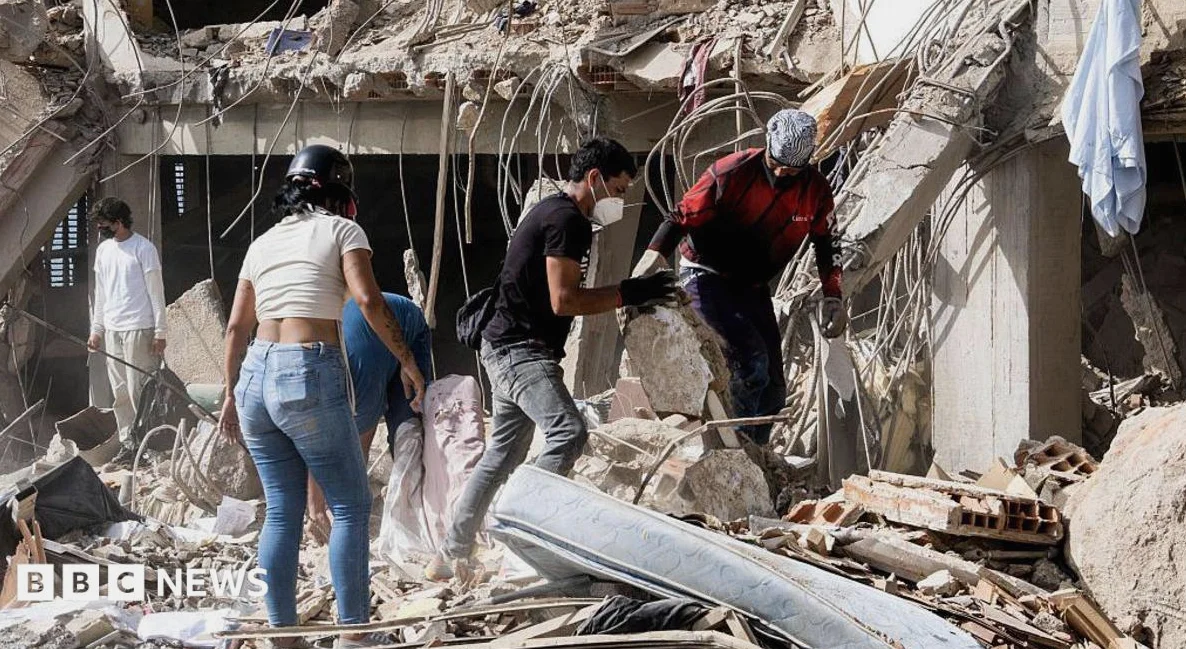
Back-to-back earthquakes of magnitudes 7.2 and 7.5 hit Venezuela on Wednesday, causing catastrophic damage in the coastal state of La Guaira and nearby Caracas — At least 1,430 people have died, with thousands more unaccounted for, according to BBC and UPI reports. The UN estimates that around 50,000 people are missing.
Families search rubble with bare hands
Residents and families are desperately searching through the rubble with bare hands and rudimentary tools such as shovels and motorcycle helmets. In neighborhoods like Los Palos Grandes in Caracas, people periodically call for silence to listen for cries or tapping sounds that might indicate someone is alive beneath the debris. “Every person saved is a miracle. ” said Jorge Rodríguez, president of the country’s National Assembly.
Some families have been calling out to their loved ones trapped in the rubble, hoping for a response. In one emotional case, a family searched desperately for their baby. As the child’s father called out through tears, the infant crawled out alive, according to UPI.
Rescue efforts hampered by lack of equipment
Rescue operations have been hampered by a shortage of heavy equipment. National rescue teams are scarce, although international rescuers from Mexico, Spain, the US, and the UK have arrived to join the effort. However, it is still not enough, according to BBC.
A rescuer told Sky News that emergency teams lacked the equipment needed to save people buried beneath collapsed structures. “People are dying under the rubble,” the rescuer said. “Instead of rescuing lives, we’re going to recover bodies because of the time that has passed.”
Humanitarian aid agencies emphasize that the first 48 to 72 hours are major for rescuing people alive. However, this window can be longer if those trapped have access to food and water.
Instability and aftershocks complicate rescue
The instability of collapsed buildings remains one of the greatest dangers for rescue teams. Structures reduced to fragile layers of concrete risk further collapse with any movement. The situation has been compounded by more than 400 aftershocks recorded over the past 48 hours, increasing the risk of additional building failures and forcing repeated evacuations of disaster zones, according to UPI.
In Catia La Mar, one of the coastal towns in La Guaira state, the mood is bleak. Few structures remain standing, and the number of dead and injured continues to rise by the hour.
Volunteers have also requested small bottles of water that can be lowered through cracks to reach trapped survivors, according to Deutsche Welle. A drone scans overhead to assist in identifying potential survivors.




Comments
No comments yet
Be the first to share your thoughts