

 The Guardian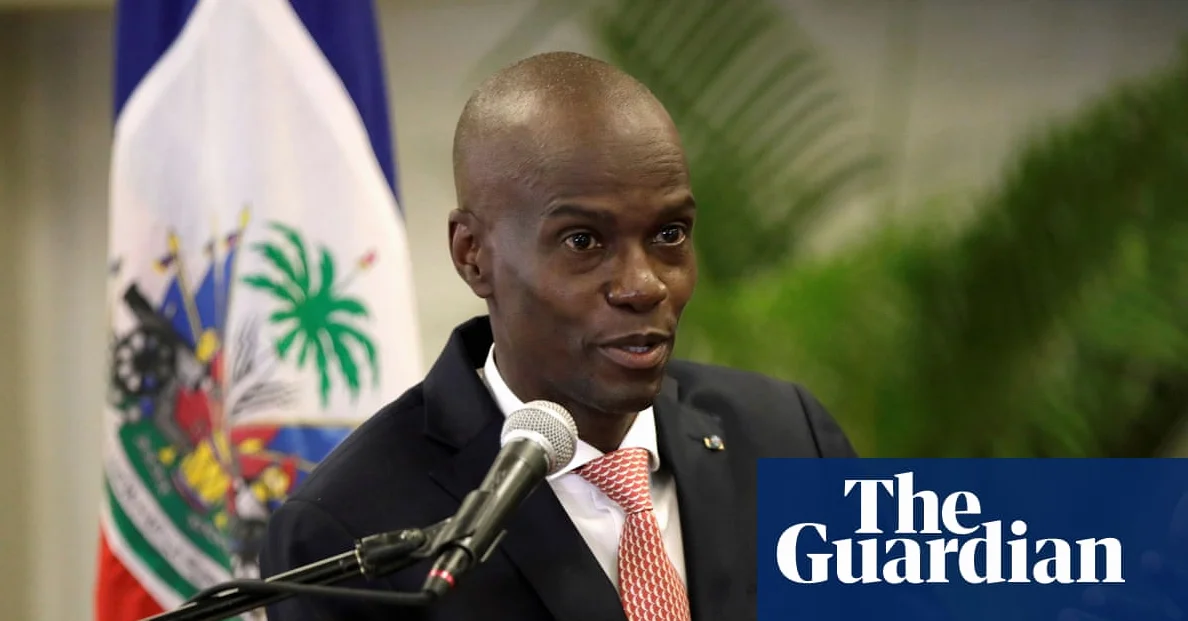
Eighteen people have been arrested in association with the 2021 assassination of the Haitian president Jovenel Moïse, according to US officials — Moïse, 53, was shot dead on 7 July 2021 at his private residence by a hired group of about 20 military-trained Colombian mercenaries. His security detail did not intervene to protect him. “Today’s multi-location and international arrests reveal the FBI’s continued commitment to bringing all participants in this plot to justice,” FBI special agent Brett Skiles said on Sunday. The suspects have been taken to Florida to stand trial. In the same post on X, federal prosecutor Jason Reding Quinones said: “18 transported in military plane from Haiti to face American justice in the southern district of Florida.” “Five years later, we are still bringing defendants before American courts, and we are not finished,” Quinones wrote, adding that 30 suspects have thus far been indicted in the killing. In May, four men were convicted in a federal court in Miami of charges including conspiracy to kill or kidnap Moïse, conspiracy to provide material support and violating the US Neutrality Act to engage in an illicit military operation abroad. The men face possible sentences of life in prison. All four were linked to CTU, a private security firm based in Florida, and lured into the plot by the prospect of securing lucrative contracts in the event of Moïse’s ouster, according to federal prosecutors. Eleven people have already been indicted in connection with the assassination in US courts, which have jurisdiction over plots hatched on American soil. Five of them have been sentenced to life in prison, including a former Colombian soldier, a former Haitian senator, a Haitian Chilean businessman, a retired Colombian soldier and a Haitian American. Haiti has descended into deeper chaos since Moïse’s killing, and currently has no president. It is preparing to hold its first presidential and legislative election since 2016, as well as a referendum on the constitution, on 13 December – if security conditions allow. Gangs control about 80% of Port-au-Prince, and violent crimes such as kidnappings for ransom, armed robbery and carjackings plague the impoverished nation. A UN-backed armed force tasked with helping local police combat gangs will not be fully staffed by October as planned, its spokesperson said earlier this month.
International Prosecution Efforts
Announced by the UN security council last year, the Gang Suppression Force was expected to ramp up between April and October to a planned capacity of 5,500 uniformed personnel and 50 civilian staff. As of July, it comprised fewer than 1,000 personnel from Chad, Mongolia, Jamaica, Guatemala, El Salvador and Sri Lanka — more recent figures have not been disclosed. The FBI’s involvement in the case highlights the international nature of the assassination plot and the US government’s determination to hold all participants accountable, but the arrests and convictions over the past five years have been part of a broader effort to dismantle the network behind the attack. Federal prosecutors have emphasized the significance of the charges brought against the accused, including conspiracy to kill or kidnap. The Neutrality Act violation is a key legal tool used in these cases. The involvement of CTU, a private security firm in Florida, has drawn attention to the potential for foreign interference in domestic politics through corporate interests. The prospect of securing lucrative contracts in the event of Moïse’s removal was a significant factor in luring individuals into the plot. The US courts have played a central role in the prosecution of these cases due to the jurisdiction over plots originating on American soil. The sentences handed down, including life in prison, reflect the severity of the charges and the gravity of the crime.
Political and Social Aftermath
The assassination of Jovenel Moïse has had a profound impact on Haiti’s political and social area. The country currently lacks a president, and the planned elections and constitutional referendum are critical for restoring stability. The situation is complicated by the high levels of gang activity in Port-au-Prince, where 80% of the city is under gang control. This has created a climate of fear and instability, making it difficult for the government to function effectively. The UN-backed Gang Suppression Force was intended to provide additional support to local law enforcement. However, the slow progress in staffing the force has raised concerns about its effectiveness. The delays in deploying the full complement of 5,500 personnel and 50 civilian staff have left a gap in security that gangs have exploited. The lack of a functioning government has further contributed to the sense of chaos. The absence of a president has made it difficult to implement policies or coordinate responses to the crisis. The planned elections are seen as a serious step towards restoring democratic governance. However, the security situation remains a major obstacle. The government has expressed hope that the elections can proceed on 13 December, but the outcome depends on whether security conditions improve. The international community has been watching closely, with many expressing concern about the political instability and the humanitarian crisis.
Continued Challenges and International Response
The continued arrests and prosecutions highlight the ongoing challenges in securing justice for the assassination of Jovenel Moïse. The involvement of multiple international actors, including the FBI and US federal prosecutors, reveals the complexity of the case. The international community has been involved in various forms, from diplomatic support to security assistance. The UN has been a key partner in efforts to stabilize Haiti, particularly through the Gang Suppression Force. However, the slow progress in staffing the force has limited its impact. The international response has also included calls for accountability and transparency in the Haitian government. The assassination has raised questions about the security of political leaders and the need for stronger protections. The case has also drawn attention to the role of private security firms and the potential for corruption or collusion in political assassinations. The continued efforts to bring the suspects to justice reflect a commitment to upholding the rule of law and ensuring that those responsible are held accountable. The international community has a vested interest in the stability of Haiti, given its strategic location and the potential for regional instability. The ongoing challenges in Haiti serve as a reminder of the fragility of democratic institutions and the importance of international cooperation in addressing complex security threats.


Comments
No comments yet
Be the first to share your thoughts