

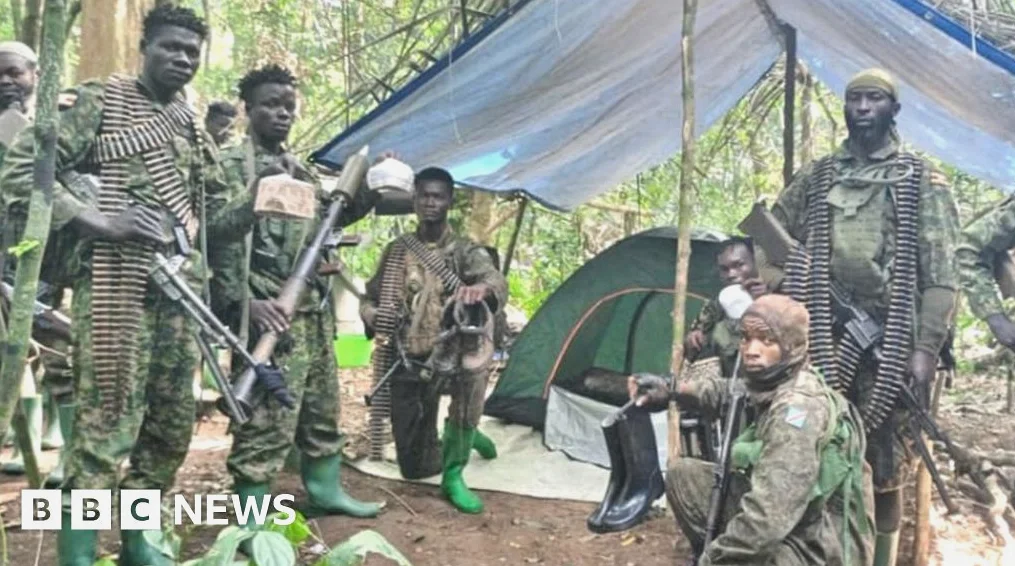
In a joint military operation, Ugandan and Congolese forces rescued more than 200 individuals from the Allied Democratic Forces (ADF), an armed group linked to the Islamic State (IS), in eastern Democratic Republic of Congo (DRC). According to a military statement, many of the captives described harsh conditions during their captivity, including lack of food, forced labor, and punishment for disobedience. Several appeared frail, suffering from untreated illnesses such as malaria, respiratory infections, and physical exhaustion, according to the Ugandan People’s Defense Force (UPDF).
The ADF’s Origins and Rise
The ADF, also referred to by some experts and institutions as an ISIL affiliate in Central Africa (IS-CA), originally began in 1994 as a rebel group in Uganda, whose government it accused of persecuting Muslims. The group pledged allegiance to ISIL a decade ago and has since been recognized as a terrorist organization by both the Ugandan and Congolese governments, as well as the United States. The ADF crossed into eastern DRC in 1999 after offensives by the Ugandan army and has since been based there, escalating attacks along the border with Uganda over the past decade.
According to United Nations figures, the ADF has killed thousands of civilians in eastern DRC, where the military accuses it of kidnapping large numbers of civilians and forcing young female captives into marriage. The group reinvigorated its activities last year as the DRC battled several other rebel groups in the east, the most prominent being the Rwandan-backed M23.
Joint Military Operations and Recent Gains
ADF attacks on civilians have risen in recent months in parts of Ituri and neighboring North Kivu province despite joint Congolese-Ugandan military operations against the group. Earlier this month, at least 43 people were killed in an attack. The rescue of the captives announced on Monday was part of an offensive targeting ADF positions along the River Epulu. The Ugandan military said several ADF fighters were killed during the operation and a number of weapons were recovered.
Last week’s operation also targeted other ADF positions, including areas along the River Ituri, the UPDF said. Uganda and DRC forces have stepped up operations against the ADF in recent months, partly amid somewhat reduced tensions on another eastern DRC frontier not far to the south — with the M23 rebels allegedly supported by neighboring Rwanda. A fragile peace accord for that conflict came into force this year.
The UPDF said that amid the recent military gains against the ADF, more former captives had been escaping from the group, with “dozens … reporting to joint force locations such as Lolwa, Kyndala Kundala and Babungwe.” The sustained offensive has improved security in parts of eastern DRC, enabling displaced communities to return home, schools to reopen, and cross-border trade between Uganda and the DRC to resume.
Operation Shujaa and the ADF’s Alignment with IS
Operation Shujaa was first launched in November 2021, in response to attacks by the ADF committed on either side of the countries’ border. Recognized as a terrorist group by both governments and the US, and subject to UN sanctions, the ADF started more openly allying itself to the Islamic State as of 2016, shortly after its leadership changed. The ADF has since been involved in numerous attacks across the region, targeting civilians and security forces alike.
“You are not under detention. You are the victims of abduction, and we shall ensure you are handed over to the relevant authorities so you can reunite with your families,” said Col. David Mugerwa of the UPDF, addressing the rescued captives. The operation marks a significant step in the ongoing efforts to dismantle the ADF’s influence in the region and restore stability to eastern DRC.




Comments
No comments yet
Be the first to share your thoughts