

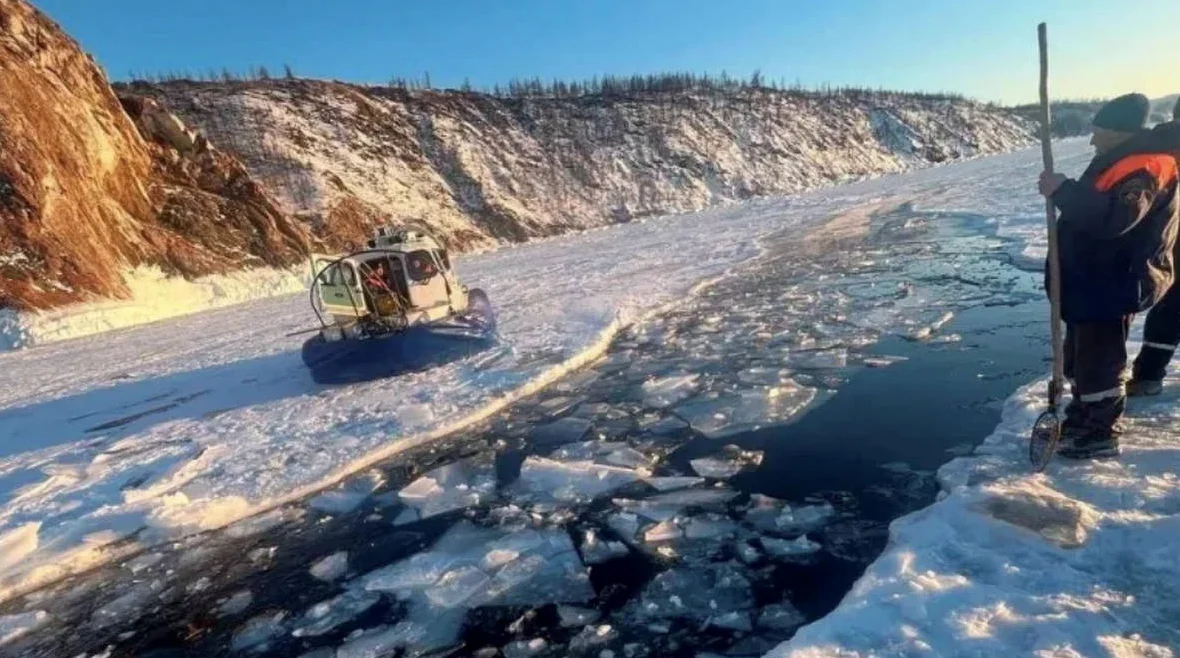
IRKUTSK, Russia — Divers pulled eight bodies from the frigid depths of Lake Baikal after a minibus carrying Chinese tourists broke through three-meter-thick ice and sank. The accident killed seven visitors from China and the local driver Friday, officials said. One Chinese tourist escaped the icy trap and survived.
Rescue teams used underwater cameras to locate the wreckage in 18 meters of water. They recovered the victims one by one over the weekend. Among the dead was a 14-year-old girl, according to Irkutsk regional authorities.
The minibus dropped into the fissure during a trip across the frozen surface of the world’s deepest lake. Lake Baikal, a UNESCO World Heritage site in eastern Siberia, draws crowds eager to drive or walk on its ice in winter. But thin spots and cracks pose deadly risks this time of year.
Igor Kobzev, governor of the Irkutsk region, expressed grief over the deaths. In a Telegram post, he offered “deepest condolences to the families and friends of the victims.” Kobzev warned that venturing onto the lake’s ice remains strictly banned and extremely hazardous.
“Sadly, even this tragedy hasn’t taught people a lesson,” the governor added.
Local emergency services had cautioned against ice travel in recent weeks. Air temperatures hovered around minus 20 degrees Celsius (minus 4 Fahrenheit), but warmer spells had weakened some sections of the ice cover. Officials closed key routes across the lake last month after similar close calls.
The Chinese embassy in Moscow confirmed the nationalities of the victims. It sent consular officials to assist with identification and repatriation. Families back home learned of the deaths through social media and news reports, sparking an outpouring of sorrow online.
Investigators from Russia’s Investigative Committee launched a probe into the crash. They aim to determine if the driver ignored warning signs or if mechanical failure played a role. Witnesses reported hearing the ice crack before the vehicle vanished under the surface.
One rescuer described the grim scene to state media. “The bus was fully submerged, tilted on its side. We saw the bodies inside through the cameras,” he said. Chainsaws cut paths for divers, who worked in near-zero visibility.
This marks the latest deadly mishap on Lake Baikal’s ice. In March 2023, a truck fell through, killing two. Officials now deploy drones and patrols to monitor traffic. Kobzev called for harsher penalties on violators, including fines up to 5,000 rubles ($55).
Tourism to the lake booms each winter. Visitors snap photos of translucent ice caves and sprint across vast frozen expanses. Yet each season brings fatalities—drownings, falls through cracks, even vehicle pileups. Regional data shows at least 15 deaths linked to ice accidents since 2020.
Authorities plan safety campaigns ahead of next winter. For now, red flags dot popular crossing points. Kobzev urged tourists to stick to marked paths and check ice thickness daily.
The death toll highlights the raw power of Siberia’s wilderness. Lake Baikal holds 20% of the world’s unfrozen freshwater, stretching 636 kilometers long and 79 kilometers wide. Its ice can reach two meters thick but fractures unpredictably under stress.






Comments
No comments yet
Be the first to share your thoughts