

 Al Jazeera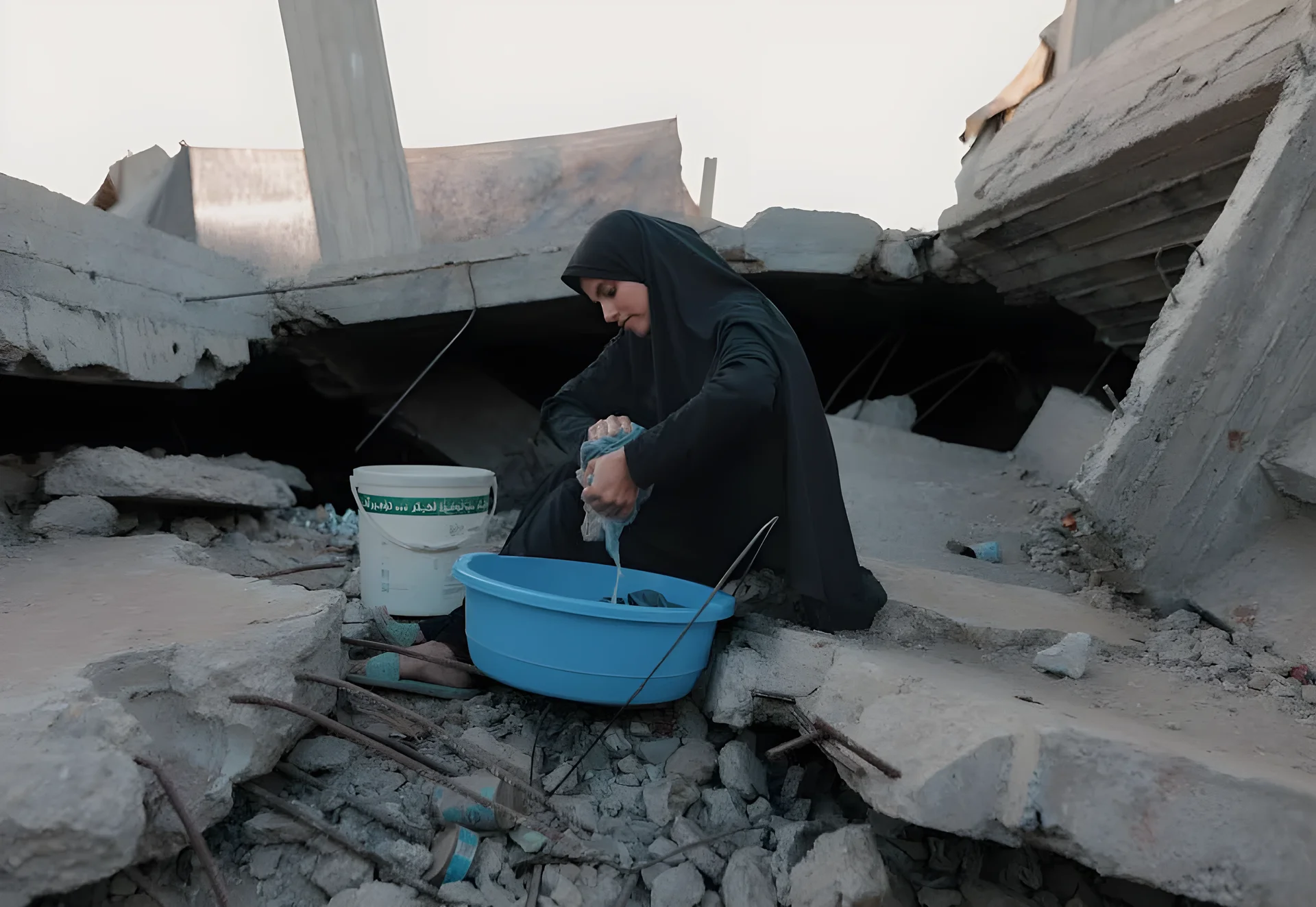
Jabalia, Gaza – In the partially destroyed home of 85-year-old Abdel Mahdi al-Wuheidi in the Jabalia refugee camp, a small fire brews coffee as he reflects on a lifetime of displacement. Beside him sits his wife. Aziza, also in her 80s, whom he married six decades ago. The couple, who were never able to have children, now lives with the five sons of Abdel Mahdi’s late brother, whom he raised after their father died when they were children.
The Original Nakba
Abdel Mahdi was born in 1940, just a child when the 1948 Nakba—the mass expulsion of 750,000 Palestinians from their homes during the founding of the state of Israel—unfolded. He says that while the trauma of that time is indelible, the current war in Gaza has surpassed anything he has ever witnessed.
“We are from Bir al-Saba [Beersheba],that was our homeland,” he says, referring to the largest city in the Naqab Desert, which was captured by Israeli forces in 1948. At the time, many of its Palestinian residents were forced to flee. Abdel Mahdi recalls heated discussions among families in Bir al-Saba about whether to flee as Zionist Haganah militias approached.
Eventually, the decision was made to leave for Gaza, with the hope of returning in a few weeks. The family, including Abdel Mahdi, his parents, three siblings, and extended family, left with whatever livestock, money, and supplies they could carry. “We all left … We walked for days. We would rest, then continue walking,” he says. “We never imagined it would become a permanent exile.”
Decades of Exile and Rebuilding
The family initially settled in Gaza City’s Zeitoun neighborhood before moving to Jabalia refugee camp, where they began their long life as refugees. “We lived in tents. The rain and wind would flood them, the cold was unbearable, then came the scorching heat,” he says. “There was hunger, exhaustion, long lines for food and water, shared toilets, lice, poor sanitation … painful memories.”
Abdel Mahdi’s father and grandfather always told their children to hold on to the right of return. But that return never came. Instead, decades of exile followed, interspersed with wars and repeated attempts to rebuild life. For years, Abdel Mahdi worked inside Israel in construction, during a period when Palestinian laborers were granted work permits. Together with his brothers, he managed to build homes and buy land, only for the current war to erase everything once again.
“We worked, built homes and bought land,” he says. “We thought we were finally compensating for something after the displacement that destroyed our families and lives. We thought it was over.”
“But this war destroyed everything completely,” he adds. “At the end of our lives, it brought us all back to zero. Nothing is left—no stone, no trees.”
The War on Gaza and Displacement
Abdel Mahdi’s life was turned upside down once again during the latest Israeli war on Gaza, which began in October 2023. As an elderly man, he was forced to flee his home, struggling to walk alongside his ageing wife and the families of his nephews. He was displaced multiple times,once to the Gaza seaport area in western Gaza City, another time to Deir el-Balah in central Gaza.
Before that, he had sought shelter in a United Nations-run school in Jabalia before Israeli forces stormed it. He recalls the terrifying moments when Israeli tanks and soldiers entered the school during the early months of the war, as chaos, gunfire, and screams erupted while loudspeakers ordered everyone to evacuate southwards.
“They forced us out of the school,” he says. “My elderly wife and I leaned on each other to walk. Some people couldn’t get out and were killed there.”
“We walked long distances until we reached western Gaza, together with what remained of our family, who had scattered in different places,” he adds. “We were collapsing from exhaustion, but the shelling and fear forced us to keep moving.”
Abdel Mahdi says that he considered staying in his home and refusing to leave, unwilling to repeat what he called “the mistake of our ancestors” when they fled in 1948. But he says the danger eventually forced him to flee.
For the elderly man, displacement itself became one of the cruellest parts of the war. “When a person leaves his home, he loses his dignity and worth,” he says quietly. “We lived in tents, in the sand, exposed to everything… We lived through famine and shortages of absolutely everything.”
“I wished for death with all my heart,” the octogenarian admits, his eyes filling with tears. “All I wanted was a concrete wall to lean my exhausted back against, but there was nothing. It was unbearable for both the young and the old.”
A small sense of hope came when residents were allowed to return to northern Gaza after the October 2025 ceasefire announcement. Abdel Mahdi says he had lost hope of ever seeing his home again, but he managed to return to it even though it was heavily damaged. “A deep pain took hold of me when I saw Jabalia, where I had lived for decades, turned into endless rubble and destroyed roads,” he says.
“Now I walk with great difficulty, trying to make my way through shattered streets with my cane,” he adds, recalling that he has fallen twice while trying to walk through the rubble left behind by Israeli attacks.
Abdel Mahdi insists that what Palestinians are experiencing today bears no resemblance to any previous period of his life. He has lived through the Nakba, the 1956 war, the 1967 war, the Palestinian uprisings, and previous wars on Gaza, yet says none compare to the current devastation. “Back then, the Israelis withdrew from our lands,” he says. “Today, more than half of Gaza’s land has been seized … every day we hear gunfire and Israeli military vehicles.
“Even the end of the war they talked about was a lie,” he adds. “We have been living in an ongoing catastrophe for three years.”
Watching events unfold, Abdel Mahdi expresses deep disappointment with the Arab and international response to Gaza, saying Palestinians have long been left alone to face war, hunger, and siege. “History is repeating itself,” he says. “We were abandoned at every stage and left alone against a strict military machine. We endured more than human beings can bear.”
That reality, he says, is also what prevents him from feeling hopeful that conditions in Gaza will improve any time soon. “We hear endless promises about opening crossings and improving conditions,” he says. “But it is all lies … promises that stole years from our lives and souls.”
Yet despite the repeated displacement, loss and wars, Abdel Mahdi clings fiercely to the one thing he says the war could not take from him: his connection to the land. “Even if they offered me a palace in New York,” he says, his voice trailing off, “I would still choose the land of my ancestors.”




Comments
No comments yet
Be the first to share your thoughts