

 The Guardian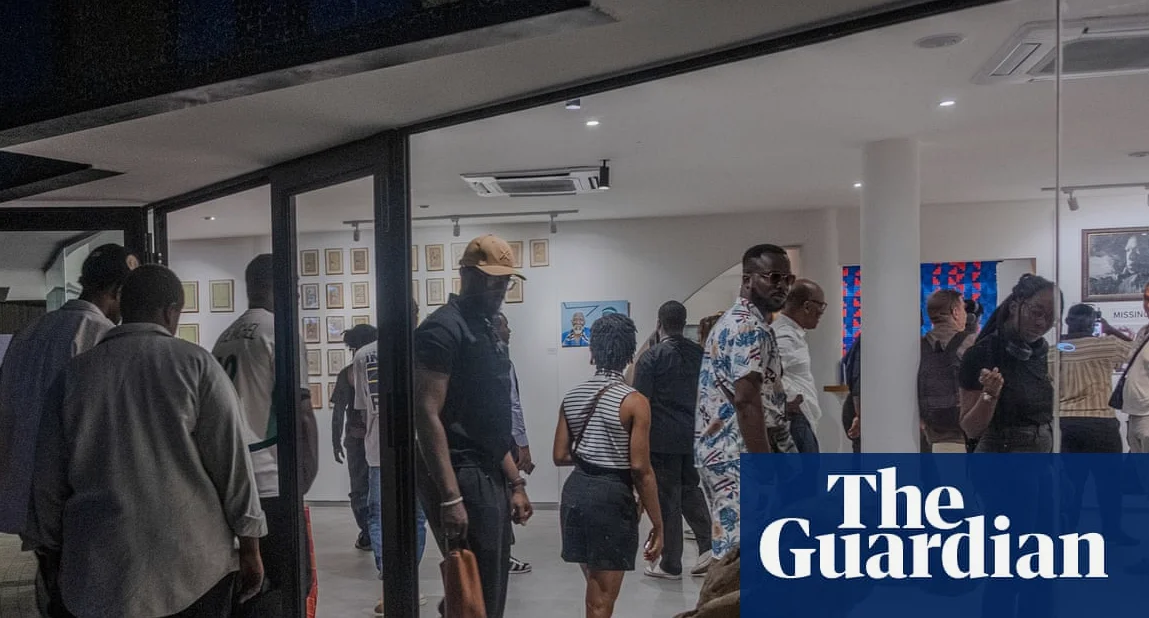
On a recent weekday evening. More than a dozen galleries and museums across Abidjan extended their hours until midnight, offering art enthusiasts an after-hours special showcase as part of Abidjan art week. The event. Known as the Night of the Galleries, allows people to explore the city’s art scene after work, according to The Guardian.
Origins and Expansion of Abidjan Art Week
The after-hours special showcase was first tested in January 2024 on the sidelines of the Africa Cup of Nations football tournament hosted and won by Côte d’Ivoire. The tradition continued this year during the art week’s third edition, which ran from last Tuesday to Sunday.
Since its launch, Abidjan art week has expanded its locations to include different parts of the city, such as La Rotonde des Arts centre for contemporary arts in the high-rise administrative district of Plateau and the Adama Toungara Museum of Contemporary Cultures (MuCAT) in the working-class neighbourhood of Abobo.
Art as a Cultural Force in Post-War Côte d’Ivoire
Abidjan, home to many immigrants from within and beyond Africa, has seen a rise in local art collectors. Since 2022. MuCAT has hosted the Africa Foto Fair, and the Marché des Arts du Spectacle d’Abidjan – Abidjan’s answer to the Dakar Biennale – will hold its 14th edition later this month.
A nationwide graffiti festival was instituted two years ago, marking a symbolic U-turn in a country where graffiti art was previously associated with vandalism; Today, colorful murals line the outside walls of La Pyramide building and several posh hotels in the Plateau district.
Local Artists and International Participation
Organisers of the art week aim to sustain growth of the local art scene independently of external approval. In this edition. Artists from Cameroon, Democratic Republic of the Congo, and Mali showcased their work across the city, with the number of participating galleries more than doubling.
The event’s founder, Yacouba Konaté, who is also the director at La Rotonde des Arts, emphasized the importance of making the event accessible to a broad public. He said, “We want this event to become increasingly visible and accessible to a broad public. One of the things we’re trying to do is really communicate, to tell people that Abidjan is a cultural city and that there is a visual arts scene in Côte d’Ivoire and this scene is alive.”
This year, the week opened with a tribute to Simone Guirandou-N’Diaye, one of the earliest art historians in Côte d’Ivoire and a pioneer of the gallery spaces that gave the scene its first institutional roots. She and her daughter Gazelle now run Galerie LouiSimone Guirandou, one of this year’s participating venues.
At MuCAT, the exhibition Murmures d’Archives offered a different register of quieter, more archival art. It was there that the week closed with an artists workshop and a DJ set.
In upmarket Cocody, a solo exhibition mounted by the New York-based artist Ouattara Watts at Galerie Cécile Fakhoury, one of the city’s most prominent spaces, drew the Ivorian diaspora into conversation with the local scene. Watts said, “My vision is not tied to any particular country or continent; it transcends borders and everything that can be found on a map. Whilst I use recognisable elements to make myself better understood, this is a project that goes far beyond that. It is the cosmos that I paint.”






Comments
No comments yet
Be the first to share your thoughts