

 BBC News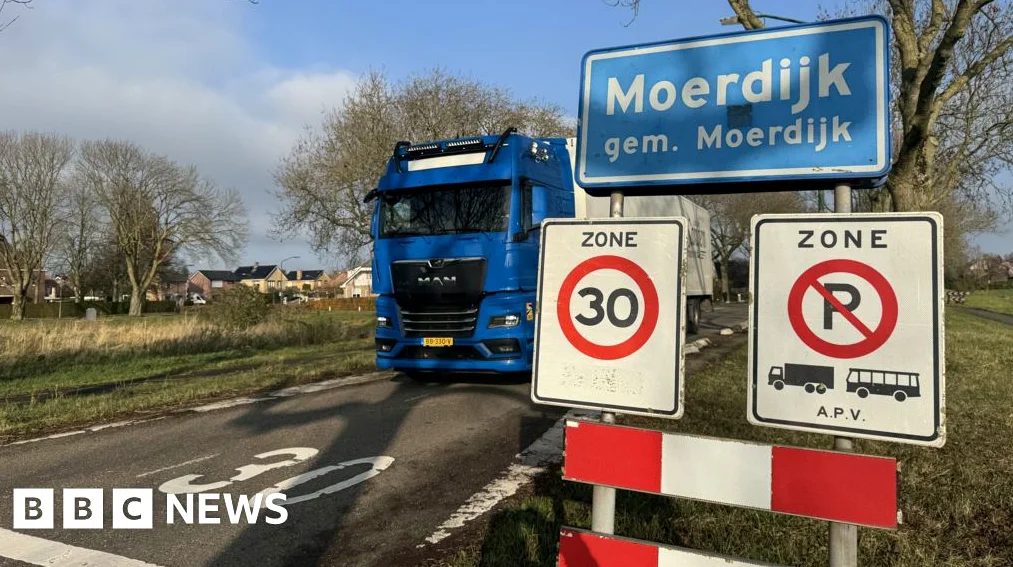
The Dutch village of Moerdijk, located 34km south of Rotterdam, is facing the real threat of being demolished within the next decade to accommodate high-voltage substations needed for the country’s growing offshore wind energy projects, according to BBC News.
The Village on the Fault Line
Moerdijk, a small fishing community on the southern shore of the Hollands Diep estuary, is situated in a prime location for energy infrastructure due to its proximity to ports, motorways, and existing power lines, according to BBC News.
The Dutch government has identified Moerdijk as a suitable site for new energy projects, citing the nation’s need for vast new sites to build high-voltage substations where electricity from offshore wind farms can be connected to the national grid. However, this comes at the cost of the village’s potential disappearance from the map, according to BBC News.
Residents like Jaco Koman. A third-generation fishmonger. Describe the situation as ‘being brought to the slaughter house,’ according to BBC News. Koman’s family has been trawling for their livelihoods in the area since 1918, and his business still supplies live eels to high-end restaurants across the country.
A Community in Limbo
The uncertainty surrounding Moerdijk’s future has left the community in a state of limbo. For sale signs are common on gravel driveways, but few buyers are willing to invest in a place that may soon be uprooted, according to BBC News.
Local resident Andrea, owner of a grocery shop, says the stakes feel deeply personal. Her husband built their home with his own hands, and all three of their children were born there. She expresses fear that she may lose her home within a decade, according to BBC News.
Residents also worry about the fate of the village cemetery, where Andrea’s grandparents and in-laws are buried. The emotional toll of the potential loss of the village is palpable, with flags hanging at half-mast in what residents describe as an act of mourning for the village’s uncertain future, according to BBC News.
The situation in Moerdijk reflects a broader dilemma across the Netherlands, where the government is struggling to balance competing demands on limited land for housing, farming, nature, transport, industry, and now, renewable energy projects, according to BBC News.
Political and Social Tensions
Geerten Boogaard, a professor of local government at Leiden University, notes that Moerdijk highlights the centralist nature of the Dutch political system, where the national government can prioritize national interests over local concerns, according to BBC News.
While local councils and residents can object, the central government has legal tools to implement its decisions. However, such actions carry political and financial costs, according to BBC News.
Retired engineer Jacques, who moved to Moerdijk in the mid-1990s, says the village will be demolished. He recalls a time when there were no wind turbines, no distribution warehouses, and no forests of pylons in the area, according to BBC News.
The Dutch government has postponed a decision on Moerdijk’s future but is expected to make a decision later this year. The mayor of Moerdijk municipality, Aart Jan Moerkerke, says the pressure is immense, with the central government seeking roughly 450 hectares of land for a power facility, hydrogen production factories, and infrastructure for transporting ammonia and hydrogen, according to BBC News.
Moerkerke says the council decided that Moerdijk must move to make room, preferring to sacrifice one village to avoid major disruption and deterioration in the quality of life for four surrounding communities, according to BBC News.
The mayor describes telling residents that their homes, streets, and cemeteries may not survive the decade as ‘the hardest decision of my career,’ according to BBC News.
What’s being decided here is not just the fate of a few streets on the edge of an estuary. It’s a test of what a government believes can – or must – be sacrificed for energy security, sustainability, and industry, according to BBC News.
In Moerdijk, that dilemma is no longer abstract; it’s immediate, and it is set to reshape the lives of Jaco, Andrea, Jacques, and everyone living on the fault line of the green transition, according to BBC News.
For now, they are living with the uncertainty of knowing that the village they wake up in today may one day exist only on old maps – and in their memories, according to BBC News.






Comments
No comments yet
Be the first to share your thoughts