

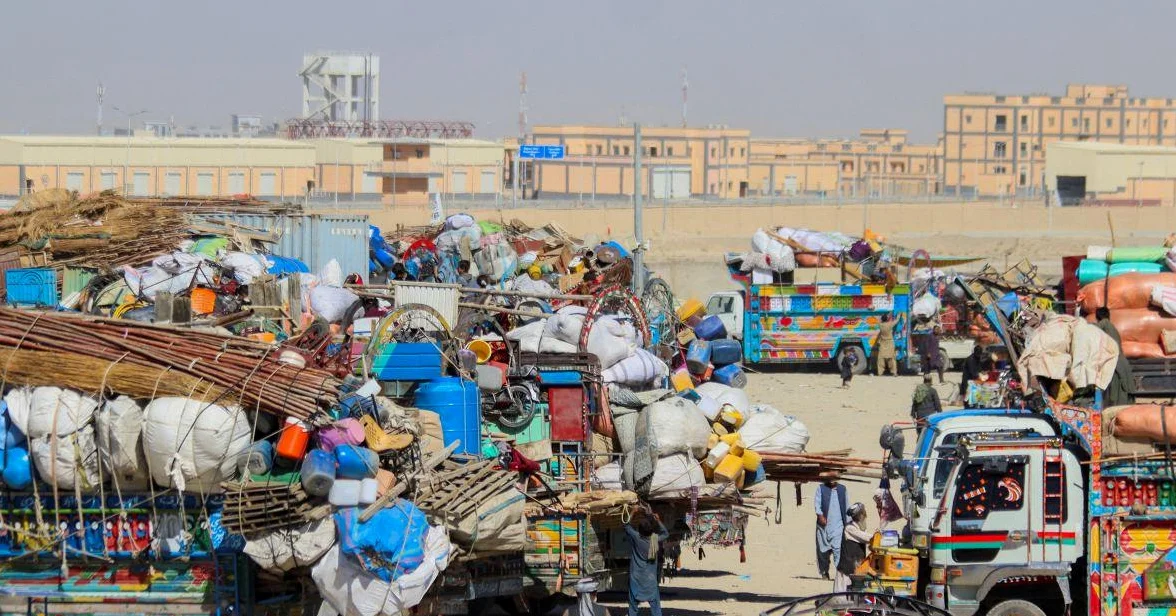
Pakistan’s military intercepted and destroyed Afghan Taliban drones targeting civilian areas in Quetta, Kohat, and Rawalpindi, resulting in injuries to four people, including two children. The attacks have raised concerns about civilian safety and prompted strong condemnation from Pakistani leadership.
Impact on Civilian Safety and Regional Tensions
According to the Inter-Services Public Relations (ISPR), the media wing of the Pakistan Army, the drones were intercepted and destroyed on Friday in Quetta, Kohat, and Rawalpindi, adjacent to the capital Islamabad. The military stated that the attacks were aimed at inducing fear in the public and ‘remind us of the terrorist mindset which drives the Afghan Taliban.’
The drones were intercepted through ‘soft and hard kills’ and did not reach their intended targets, but the debris from these drones resulted in injuries to two children in Quetta and a civilian each in Kohat and Rawalpindi. The military’s statement highlighted that the attacks were not only a violation of international norms but also an affront to the people of Pakistan.
ISPR further criticized the Afghan Taliban for projecting victimhood to garner global sympathy while simultaneously targeting civilians through their terrorist proxies and drones. The statement emphasized that Pakistan’s people and its Armed Forces are clear about the true nature and intentions of the ‘terrorist militia-for-hire’ ruling Afghanistan.
Escalating Tensions and Military Response
The latest drone attacks come days after Afghan Defence Minister Mullah Yaqoob threatened that his country could target Islamabad. The military’s response has been swift, with the launch of Operation Ghazab lil-Haq (righteous fury) on February 26 after the Afghan side attacked 53 locations along the 2,611-kilometer-long border.
The Army reiterated that Operation Ghazab lil-Haq will continue until the Afghan Taliban addresses Pakistan’s core concerns regarding terrorism emanating from Afghan soil. The Armed Forces have stated that they stand steadfast in the fight against terrorism and its manifestations, like the drone attacks by the Afghan Taliban.
A local media report on Friday claimed that Pakistani security authorities intercepted and destroyed two explosive-laden drones in the capital Islamabad. However, Saturday’s ISPR statement indicated one of the locations to be Rawalpindi, adding to the confusion over the exact number of attacks and their locations.
President Zardari’s Condemnation and Diplomatic Implications
President Asif Ali Zardari strongly condemned the drone attacks, stating that the Afghan Taliban had crossed a ‘red line’ by aiming to target civilian areas in Pakistan. In a statement, Zardari emphasized that the ‘illegitimate regime of Afghanistan installed by terror and brute force continues to renege on its commitments not to provide safe sanctuaries to terrorist groups and now has the audacity to provoke a major military power of the Islamic world.’
Zardari further stated that the Afghan terrorist regime ‘has crossed a red line by attempting to target our civilians’ while Pakistan was engaged in efforts to promote peace and stability in the Gulf region. His remarks underscore the deepening rift between Pakistan and the Afghan Taliban, which has worsened since the Taliban took power in Kabul in 2021.
Relations with the Taliban regime have plummeted to levels lower than anticipated in 2021 when they came to power in Kabul, allegedly with the support of Pakistan. The recent drone attacks have only exacerbated the existing mistrust and raised questions about the future of regional cooperation and security.
The incident highlights the growing concerns over the use of drones by non-state actors in the region and the potential risks to civilian populations. With the Afghan Taliban now in power, Pakistan has been vocal about its demands for the Taliban to ensure that Afghanistan does not become a sanctuary for terrorist groups operating in the region.
The military’s continued operation against the Taliban’s drone attacks signals a hardline stance from Pakistan, which has been under pressure to address security threats emanating from its western neighbor. The situation remains fluid, with no immediate signs of de-escalation or diplomatic breakthroughs.
The injured civilians, including two children, have become a focal point in the broader narrative of the conflict. Their injuries not only highlight the immediate dangers of drone warfare but also serve as a reminder of the human cost of the ongoing tensions between Pakistan and the Afghan Taliban.
As the situation develops, the international community is closely watching the region for any signs of escalation or de-escalation. The upcoming months will be critical in determining the trajectory of Pakistan-Taliban relations and the broader implications for regional security.





Comments
No comments yet
Be the first to share your thoughts