

 the guardian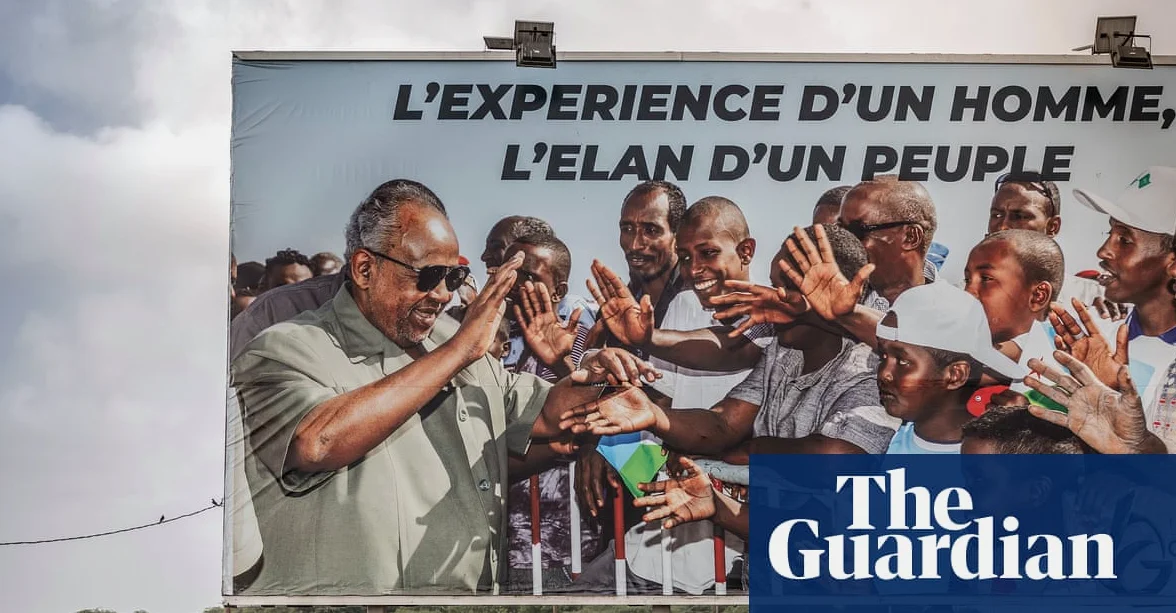
Alexis Mohamed, a former adviser to Djibouti’s president Ismail Omar Guelleh, resigned last September due to concerns over democratic regression. Despite his desire to challenge Guelleh in the recent election, Mohamed is now abroad, stating he cannot return without credible security guarantees. Even if he were allowed to compete, the nomination fees remain a steep barrier in a political environment where Guelleh has long been the habitual winner.
High Nomination Fees in Djibouti and Benin
Djibouti and Benin held presidential elections this weekend, joining 18 or so African nations going to the polls in 2026. Both countries, which are French-speaking, share one striking feature: high nomination fees that have attracted widespread protest. Djibouti’s fee was set at about £20,000, while Benin has pegged it at about £328,000.
“On paper, this may appear to be a simple legal requirement. In reality, it is an additional mechanism of selection and exclusion,” said Mohamed, describing participation in the election as a waste of time and money. In Djibouti, the nomination fee is refundable only to candidates who obtain at least 10% of votes cast.
Political Exclusion and Democratic Concerns
Mohamed added: “In a country where the incumbent president is presented, election after election, as winning with figures close to 97%, the real meaning of such a provision is not merely to regulate competition but to lock it down.” Guelleh, 78, has ruled since 1999 and has pushed through constitutional changes widely seen as tailored to his advantage, first enabling open tenure and later removing the presidential age limit, previously capped at 75.
This pattern is increasingly visible across Africa, where nomination fees and the wider costs of campaigning are rising fast, changing who can run and what democracy looks like. The outcry over increased nomination fees is growing louder in Zimbabwe, where the fee in the last elections rose to £15,000, a 1,900% increase.
Zimbabwe’s opposition leader, Linda Tsungirirai Masarira, president of Labour Economists and Afrikan Democrats, says she could not participate in the 2023 polls due to “exorbitant fees.” Masarira says: “The notion that high nomination fees produce serious leadership is fundamentally flawed. Financial capacity is not a measure of political competence, integrity, public support or visionary leadership.”
She does not entirely dismiss the need for fees, but says they must be reasonable, and warns that the current amount narrows the political field, making it harder for women and young people to participate, discourages independent and smaller party candidates, and consolidates power among already resourced political actors.
Impact of Rising Fees on Democracy
Motlapele Raleru, executive director of the Botswana-based Centre for Democracy and Electoral Awareness, says rising fees do “more harm than good.” They may reduce the number of candidates, she says, but it does not improve the quality of choices left behind. Worse, it “reduces [candidacy] to a commercial transaction, not a civic right.”
In practice, says Raleru, high fees become a “systematic wealth test” that privileges affluent political actors, shrinks voter choice and “puts democracy at stake”, effectively “on sale to the highest bidder.”
Malawi offers a different kind of warning. There, the presidential nomination fee rose to about £4,200 for the September 2025 election, from about £800 five years earlier. The theory was simple: raise the price to attract only “serious” contenders. Yet the ballot expanded from seven candidates in the previous election to 17. Some candidates reportedly entered late and without a known political history.
Malawian political science professor Nandini Patel does not rule out the possibility that powerful actors financed “proxies” to split votes and confuse opponents, meaning a high fee could still produce a crowded race but not necessarily a more credible one. She fears that an increase in nomination fees “may inspire corruption” and that the current “horrendous” fee level could block capable candidates.
Milward Tobias, an independent presidential candidate in Malawi’s 2025 elections, rejects the idea that money measures seriousness. “Political competition is too heavy a sacrifice to be measured by nomination fee,” he says. In his view, some aspirants failed to run not because they lacked conviction, but because they were priced out.
While Patel suspects collusion behind the bloated ballot, Tobias argues that it “was a protest statement”, driven by public frustration with the leadership style. He insists that leadership is driven by belief, not bank balance.
Political scientist Michael Wahman, at the University of Michigan in the US, has researched the cost of elections in Malawi and Zambia. He points out that nomination fees are only a fragment of the massive costs candidates incur in many African elections. As in the US, where presidential campaign costs run into the billions, he says the sums involved make elections a dangerous breeding ground for corruption.
Comments
No comments yet
Be the first to share your thoughts