

 The Guardian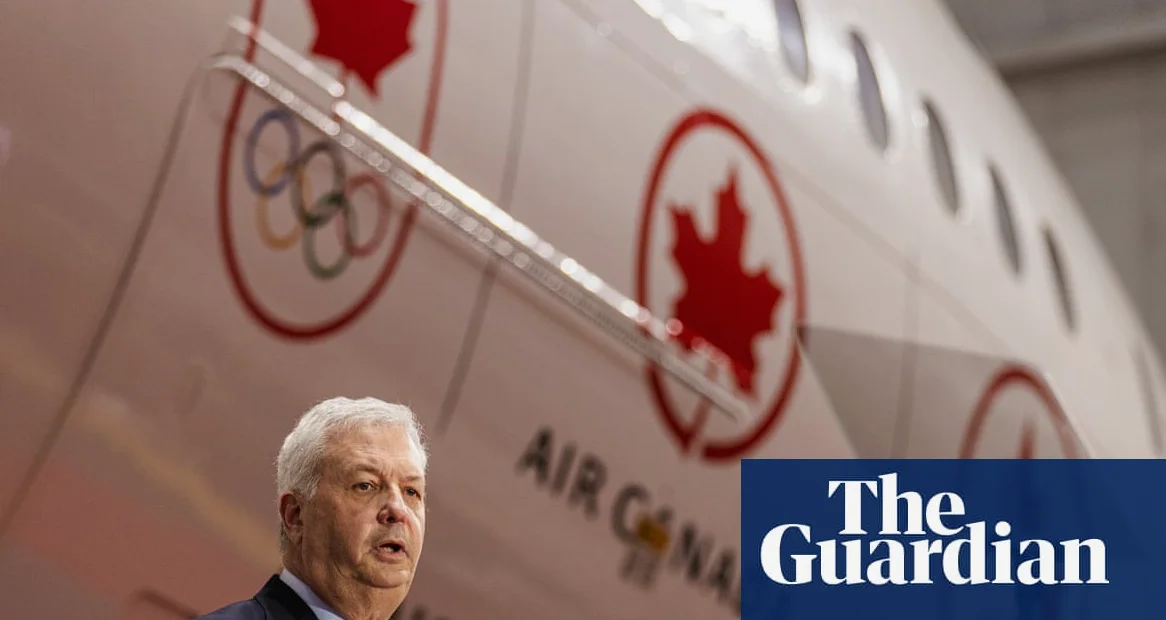
Air Canada’s chief executive. Michael Rousseau. Has issued a public apology after facing backlash for delivering a condolence message in English following a deadly plane crash in New York; the incident has reignited debates over language rights in Quebec, where French is the official language, and has led to calls for Rousseau’s resignation.
Controversy Over Language Use
Rousseau’s four-minute video. Released online. Contained only two French words—“bonjour” and “merci”—sparking outrage among Quebec politicians and the public; the message was issued in response to the crash at LaGuardia airport, which killed two pilots, including Antoine Forest, a French-speaking Quebecer. The video. While including French subtitles. Was criticized for not adequately reflecting the bilingual nature of Canada.
Quebec’s premier, François Legault, called on Rousseau to resign, citing a lack of respect for French language rights. The Canadian prime minister, Mark Carney, echoed these sentiments, stating that Rousseau’s message showed a “lack of judgment, a lack of compassion.” Both leaders emphasized the importance of bilingual communication, particularly from a major Canadian airline based in Montreal.
Rousseau acknowledged his inability to express himself in French and apologized for the oversight. He noted that despite efforts to learn the language since 2021, his progress has been limited. “Despite many lessons over several years, unfortunately, I am still unable to express myself adequately in French,” Rousseau said in a statement.
Historical Context of Language Debates
The controversy surrounding Rousseau’s language use is not new. In November 2021, less than a year after his appointment as CEO, Rousseau delivered a speech in English during an address to the Montreal chamber of commerce, which sparked protests and criticism from Francophones. At the time, he apologized and pledged to learn French, though his progress has been questioned by critics.
Quebec’s identity has long been tied to its linguistic heritage, dating back to the 1760s when the British took control of New France. Today, approximately 80% of Quebec’s population speaks French, and the province has strict language laws protecting the use of French in public life.
Political science professor Daniel Béland from McGill University noted that Rousseau’s recent message has once again highlighted the ongoing tensions around language in Canada. “It was probably not very successful to say the least,” Béland said, referring to Rousseau’s efforts to learn French since 2021.
Impact on Public Perception and Language Policies
The backlash against Rousseau has not only affected Air Canada’s reputation but also raised questions about the enforcement of Canada’s official language laws. The office of the commissioner of official languages reported receiving nearly 800 complaints about Rousseau’s video, a sharp increase from the usual 100 complaints per year.
Canada’s languages commissioner, who oversees the enforcement of bilingualism in federal institutions, has called for Rousseau to appear before the official languages committee to explain his actions. Carney emphasized that Air Canada, as a national carrier, has a special responsibility to communicate in both official languages, regardless of the situation.
Mélanie Joly, Canada’s industry minister, joined the criticism, stating that the message was disrespectful to both employees and francophone victims. “It is a question of moral leadership,” Joly said, highlighting the need for Rousseau to demonstrate respect for Canada’s linguistic diversity.
Jason Kenney, a former conservative cabinet minister, argued that Rousseau should focus on safety and reliability rather than language training. However, many in Quebec believe that the CEO’s failure to use French in a time of crisis undermines the trust of the province’s francophone population.
The crash at LaGuardia airport, which killed Antoine Forest and Mackenzie Gunther, has become a focal point for discussions on language rights and corporate responsibility. As Air Canada prepares to address the issue before the official languages committee, the airline faces mounting pressure to demonstrate its commitment to both safety and linguistic inclusivity.
Rousseau’s apology, while acknowledging his shortcomings, has not quelled the controversy. The incident has once again placed the spotlight on the challenges of maintaining bilingualism in a corporate environment, particularly for leaders based in Montreal, where French is the dominant language.
The coming weeks will be serious for Air Canada as it handles the fallout from the incident. The airline’s board of directors is expected to provide further statements, and Rousseau will face scrutiny from both federal officials and the public. The incident serves as a reminder of the importance of language in building trust and unity in a country that prides itself on bilingualism.






Comments
No comments yet
Be the first to share your thoughts