

 Al Jazeera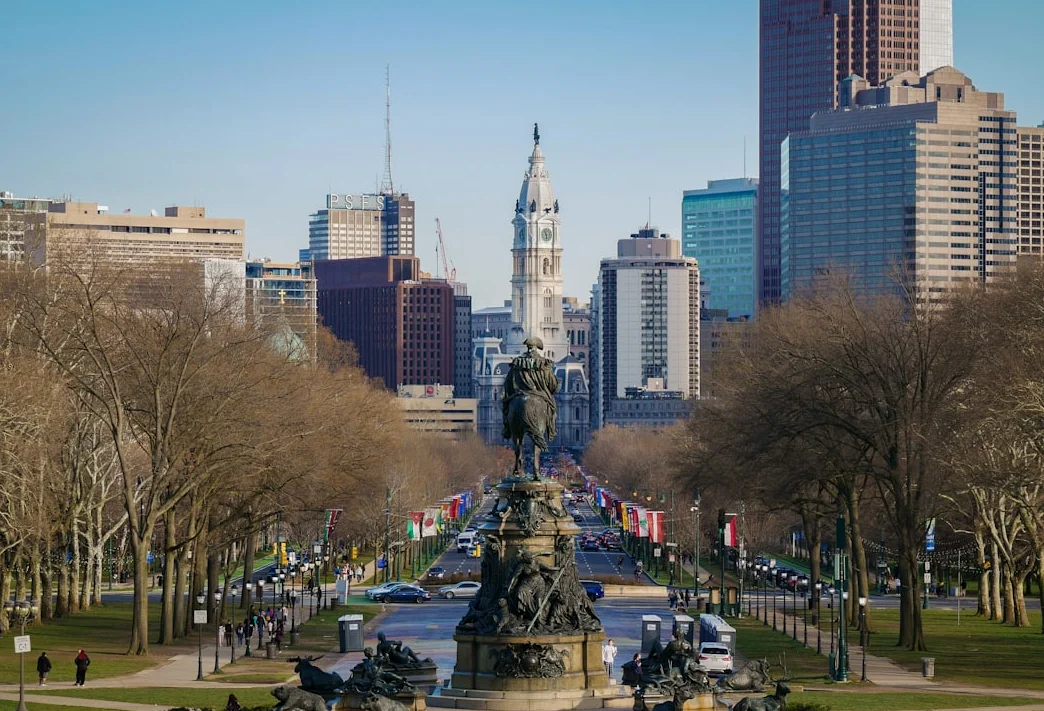
On Tuesday, voters in Pennsylvania’s third congressional district — which encompasses much of Philadelphia’s urban core, will decide what kind of progressive champion they want representing them in the United States House of Representatives.
Four Progressive Candidates in a Democratic Stronghold
Four candidates are vying for the Democratic nomination in Tuesday’s primary — they include state Representative Chris Rabb, state Senator Sharif Street, pediatric surgeon Ala Stanford and lawyer Shaun Griffith.
All four campaigns are markedly progressive, focusing on issues such as expanding healthcare, affordability and housing. But supporters say the race exposes the fault lines within the Democratic Party as it seeks to rally opposition to Republican President Donald Trump in the 2026 midterm cycle.
Marc Stier, who served as the director of the Pennsylvania Policy Center, a progressive think tank, until earlier this year, noted that there are few differences in the candidates’ platforms.
“They’re all opposed to Donald Trump. They’re all talking about civil rights. Healthcare and voting rights,” said Stier, who backs Rabb. “So the differences aren’t that great.”
Endorsements Highlight Ideological Divide
But the race has drawn nationwide attention, including endorsements from top Democrats. For Stier and other local experts and leaders, the divisions come down to a duel between ideals and pragmatism — and how the candidates wish to be perceived along that spectrum.
The primary is highly symbolic for the Democratic Party. Pennsylvania’s third congressional district is considered one of the most left-leaning areas in the US.
According to The Cook Political Report, the district was 40 percentage points more Democratic than the national average in the most recent presidential election. That makes it a key party stronghold in a decisive swing state: Pennsylvania has alternated between voting Democratic and Republican in the last four presidential races, most recently siding with Trump.
Since 2016, Democrat Dwight Evans has represented the area. But in June, he announced he would not seek reelection after holding congressional office for a decade. That opened a gateway to a heated primary, with no incumbent to lead the pack.
Street, Rabb and Stanford are considered the frontrunners. No independent polling has been conducted in the race, but surveys gathered by the candidates or their supporters show a volatile three-way contest.
An April poll sponsored by 314 Action, a group supporting Stanford, found the surgeon leading with 28 percent of voter support, followed by Rabb at 23 percent and Street at 16 percent. Meanwhile, a November survey sponsored by Street found the state senator ahead with 22 percent support, ahead of Rabb at 17 percent and Stanford at 11.
Voters Weigh Ideals Against Experience
Each of the three candidates has positioned themselves as the Democrat who will shake up the status quo and deliver results.
“The same old politics and the same old politicians are not going to cut it,” Stanford declared at a forum hosted by WHYY public radio in February. “We need people who step up in a storm, who lead when others wilt away, and that’s what I’ve done and will do for this city.”
There are differences, however, in how the candidates are presenting themselves. Stanford is campaigning as the political outsider whose public health advocacy offered critical leadership during the COVID-19 pandemic. This is her first political run.
Street, on the other hand, is seen as the political veteran backed by party leadership. He first entered the state Senate in 2017, becoming the first Muslim elected to the chamber, and his father was a former Philadelphia mayor.
Then there’s Rabb, a democratic socialist who has positioned himself as the firebrand progressive in the mould of New York Congresswoman Alexandria Ocasio-Cortez. He, too, has served in government since 2017, representing northwest Philadelphia in the state House of Representatives.
All three have embraced progressive rallying cries, such as increasing affordable housing, widening access to healthcare, and abolishing Immigration and Customs Enforcement (ICE), an agency accused of racial profiling and violent tactics. But Street has set himself apart by wedding his reputation to the Democratic establishment. From 2022 to 2025, he served as chair of the Pennsylvania Democratic Party.
“Street has very strong relationships with the political machine here: the party establishment, the ward leaders and committee people, and other legislators,” Stier said.
Supporters weigh in. But amid the frustration with the Democratic Party, particularly after its defeat in the 2024 presidential race, Street’s opponents have sought to distance themselves from the left-wing establishment.
“Rabb clearly says his goal is to push the envelope on issues and build public support for bolder ideas than Street is likely to push forward,” said Stier. But Stier acknowledges that some voters see progressives like Rabb as all talk and no action.






Comments
No comments yet
Be the first to share your thoughts