

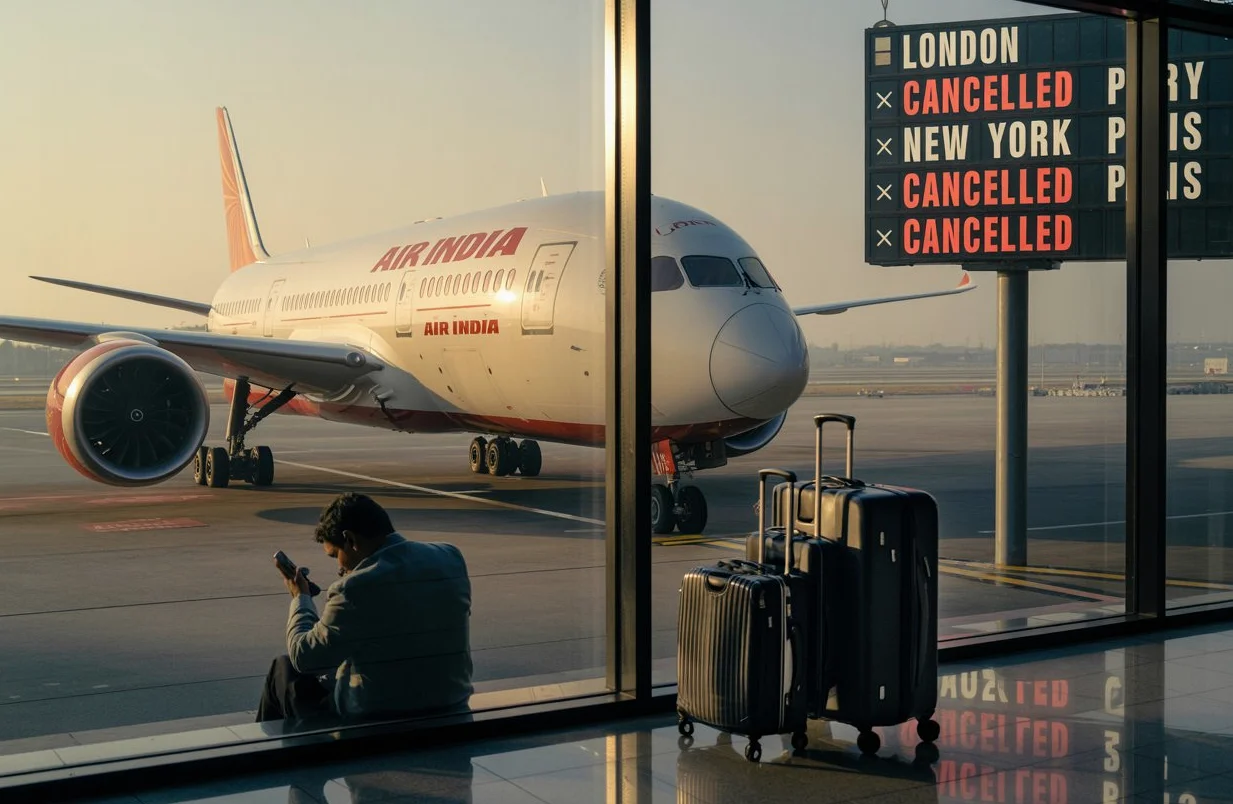
Air India has canceled 50 international flights as of March 1, 2026, due to the escalating security situation in the Middle East, disrupting travel plans for thousands of passengers. The cancellations, which initially affected Gulf-bound routes, have now expanded to include services to the United Kingdom, Europe, and North America. The decision follows U.S.-Israeli strikes on Iran and subsequent retaliatory actions, which have left the airspace over several Middle Eastern countries deemed unsafe for commercial flights.
The Scale of the Shutdown
The initial wave of cancellations on Saturday involved 28 flights. However, as the situation remained volatile through Sunday morning, an additional 22 services were cut, bringing the total to 50. This isn’t just about regional hops to Dubai or Doha; these cancellations strike at the core of Air India’s international network. The Directorate General of Civil Aviation (DGCA) has issued a stern safety advisory, effective until at least March 2, 2026, urging all Indian carriers to avoid the airspaces of 11 countries in the Middle East and Persian Gulf.
Full List of Impacted Air India Routes
The cancellations affect major hubs including Delhi, Mumbai, Bengaluru, and Amritsar. Below are the specific flight numbers impacted by the March 1st shutdown: Delhi to London, Mumbai to Paris, Bengaluru to New York, and Amritsar to Toronto. Passengers with these routes are now facing significant disruptions to their travel plans.
The ‘Why’ Behind the Cancellations
While modern aircraft are capable of flying around conflict zones, the current closure of multiple contiguous airspaces—including Iran, Iraq, Jordan, and Israel—has created a logistical bottleneck. The DGCA has emphasized that the risk of flying through these regions is too high, prompting the widespread cancellations.
The Human Cost: Stranded and Searching for Answers
At Delhi’s Indira Gandhi International Airport and Mumbai’s Chhatrapati Shivaji Maharaj International Airport, the scenes are a mix of frustration and weary resignation. Families heading to graduations, business travelers with critical meetings, and students returning to universities are now caught in a holding pattern. Air India has expressed sincere regret for the inconvenience, stating: ‘We are notifying passengers of cancellations and supporting them with alternative options to minimize inconvenience.’ For many, however, ‘alternative options’ are scarce, as other major carriers like IndiGo (which has canceled 72 flights) and Air India Express (55 flights) are facing the same airspace constraints.
Proactive Steps for Passengers
If you are among those affected, or if you have a flight scheduled in the coming days, here is how you can manage the situation: Waivers and Refunds: Air India and its subsidiary, Air India Express, are offering one-time waivers on date-change fees for flights scheduled through March 5, 2026. You can also opt for a full refund to the original mode of payment.
Check Status Before Leaving: Do not head to the airport unless your flight is confirmed. Use the ‘Manage Booking’ section on the Air India website or app. Contact Information: Ensure your mobile number and email are updated in your booking record. Most ‘flight cancelled’ notifications are being sent via automated SMS and email.
Looking Ahead: When Will the Skies Reopen?
The current suspension is scheduled through 23:59 hours on March 1, but this is subject to hourly review. With military operations continuing and several regional hubs—including Dubai and Abu Dhabi—seeing partial or temporary closures, the ripple effect is expected to last well into the week.
The aviation industry is resilient, but it is currently in a defensive crouch. As we wait for the diplomatic and military fog to clear, the priority for Air India remains the safe return of its guests and crew. For the ‘Maharaja,’ safety is the only route that matters right now.






Comments
No comments yet
Be the first to share your thoughts