

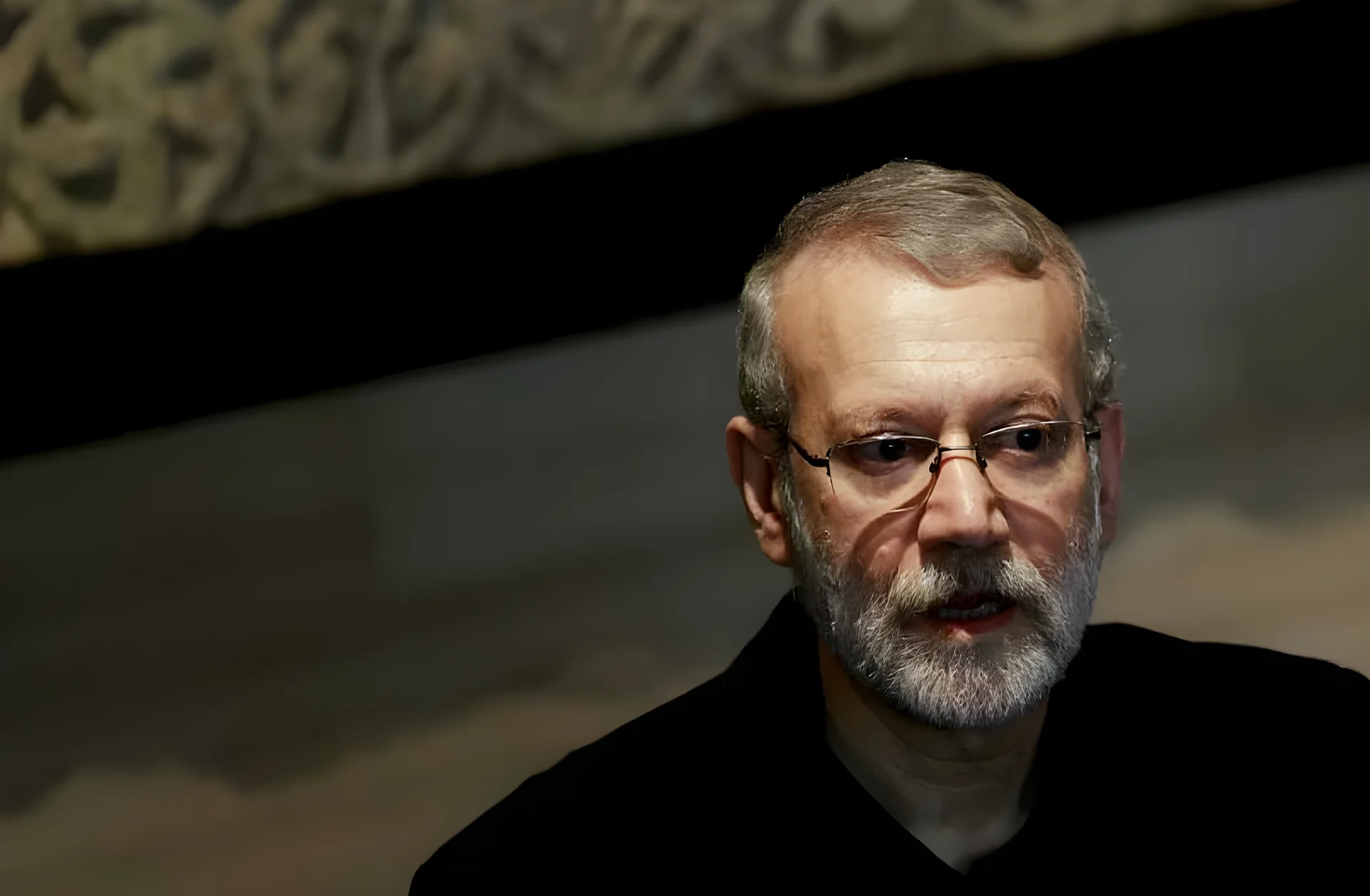
Ayatollah Khomeini, the architect of Iran’s Islamic Revolution, has been assassinated, according to official state media reports. The event, confirmed early Sunday, has left the Iranian leadership in a state of upheaval. With Khomeini gone, the spotlight has turned to Ali Larijani, a senior figure in Iran’s security apparatus, who is now seen as the most likely successor to the leadership vacuum.
From Major to Power Broker
Ali Larijani comes from a powerful clerical family with deep political roots. His rise to prominence was neither accidental nor driven purely by ideology. From an early stage, he built his career within Iran’s security establishment, serving as secretary of the Supreme National Security Council. This position placed him at the center of the country’s most sensitive strategic decisions, especially during the tense standoff with the West over Iran’s nuclear program.
Larijani later became speaker of the Islamic Consultative Assembly, a role he held from 2008 to 2020 — one of the longest tenures in the history of Iran’s parliamentary assembly. His role in the 2015 nuclear deal was crucial, acting as a bridge between conservative hardliners and the more moderate camp that backed President Hassan Rouhani. This balancing act made him one of the few figures trusted by both sides of Iran’s deeply divided political establishment.
Larijani’s Role in the January 2026 Protests
When nationwide protests erupted across Iran in early January 2026, Larijani took on a defining role. The demonstrations, initially sparked by economic hardship, quickly evolved into a broader challenge against the regime. As secretary of the Supreme National Security Council, Larijani oversaw the government’s response from the outset.
He coordinated the security strategy and shaped the public narrative around the unrest, acknowledging some economic grievances but drawing a sharp line between ordinary protesters and what he called ‘organized violent elements.’ Larijani was among the first senior Iranian officials to advocate for the violent suppression of the protests. According to U.S. government announcements, he acted ‘on behalf of the Supreme Leader’ and worked with security institutions to quell dissent. These actions are said to have resulted in thousands of deaths and injuries, prompting the U.S. Treasury to impose sanctions on Larijani for his role in the crackdown.
Despite his controversial actions, Larijani’s handling of the protests earned him the confidence of Supreme Leader Khamenei. Khamenei had previously expressed dissatisfaction with Larijani, particularly after he was disqualified from the 2021 presidential election. However, Larijani’s role in quelling the widespread unrest in 2026 is said to have restored Khamenei’s trust in the former speaker.
Iran’s Diplomatic and Strategic Moves
Larijani has been instrumental in advancing Iran’s diplomatic relations with key global players. He has visited Moscow on multiple occasions and held direct meetings with Russian President Vladimir Putin. These visits helped Khamenei manage a vital ally that serves as a global counterweight to American pressure.
Larijani also played a leading role in advancing Iran’s relationship with China. His diplomatic efforts contributed directly to the signing of a sweeping 25-year partnership agreement between the two countries in 2021. This agreement is seen as a cornerstone of Iran’s economic and strategic alignment with China.
Even his stance on the nuclear issue has remained pragmatic. ‘In my view, this issue is resolvable,’ Larijani told Oman state television last month, referring to the talks with the U.S. ‘If the Americans’ concern is that Iran should not move toward acquiring a nuclear weapon, that can be addressed.’
Following Khomeini’s assassination, Larijani has stated that the leadership transition will occur within one or two days. An interim leadership council is expected to be formed, with the president, the head of the judiciary, and a jurist from the Guardian Council assuming responsibility until the election of the next leader. This transition highlights Larijani’s central role in Iran’s political future, despite the uncertainty surrounding his exact position in the interim council.
As the president’s authority has waned in the wake of the January protests, Larijani has increasingly taken the lead in foreign policy and security decisions. His presence in international media and his role in nuclear negotiations have positioned him as a central figure in Iran’s leadership. Whether he will be remembered as a stabilizer or an enforcer depends on how Iran’s next crisis unfolds.






Comments
No comments yet
Be the first to share your thoughts