

 The Guardian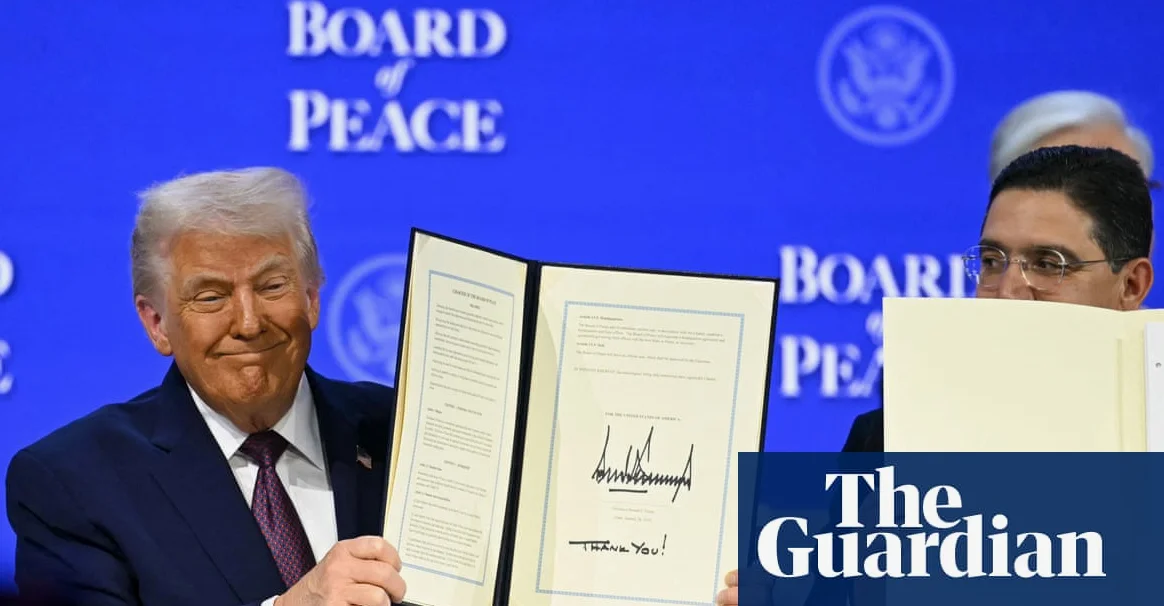
As Spain dealt with the aftermath of a sudden influx of more than 70,000 people into the territory of Ceuta, Morocco’s monarch announced the naming of a $1 billion highway after Donald Trump, highlighting the deepening ties between the two countries.
Border Crisis and U.S. Ties
Questions continue to swirl over what led to the deadly mass border crossing into Ceuta — Riccardo Fabiani, the north Africa project director for the International Crisis Group, suggested that Morocco might have acted to earn favor with the Trump administration.
“It’s obviously impossible to demonstrate,” said Fabiani; “But in terms of plausibility, I don’t think it’s impossible to imagine that Morocco might have done something to earn brownie points with its allies.”
Strategic Alliances and Political Objectives
Trump and his administration have long been open about their antipathy toward Pedro Sánchez, the Spanish prime minister. Sánchez’s refusal to allow the U.S. to use its airbases during the Iran war and his criticism of Israel’s actions in Gaza have arguably made Spain the administration’s least favorite EU country.
The Moroccan monarchy has made significant efforts to cultivate relationships within the Trump administration; “The Moroccans have really made extra efforts to cultivate every single major decision-maker within the administration, including the president himself,” said Fabiani.
A recent U.S. congressional report described Ceuta as “Spanish-administered” rather than a part of Spain, hinting at Morocco’s potential claims, as Days after the influx, interest in Ceuta remained heightened among those close to both Trump and the Israeli government.
EU’s Vulnerability and Future Concerns
Rabat’s willingness to use hybrid tactics to achieve political objectives has been noted, drawing parallels with a 2021 incident when border controls were loosened to allow more than 8,000 people to cross into Ceuta.
Senior officials in Morocco have denied accusations of complicity. The Moroccan Institute for Policy Analysis stated that relations between Morocco and the U.S. are in their “golden era.” However, Moroccan policymakers are aware of President Trump’s transactional style and have sought to preserve Morocco’s strategic autonomy.
“The relationship with the Trump administration has strengthened Morocco’s international position, but so far it has not come at the expense of its relations with Spain or the European Union,” said Said Saddiki, a senior fellow at the institute.
For Fabiani, the events in Ceuta expose the perils of Europe’s reliance on North African states to control migration flows, though “This has made Europe entirely vulnerable and dependent on the goodwill of a country like Morocco,” he said.
With Morocco feeling emboldened and an administration in Washington willing to back it up, the future could bring more complicated challenges for Europe; “I don’t think Europe is ready for what comes next because it could get much more complicated,” said Fabiani.





Comments
No comments yet
Be the first to share your thoughts