

 South China Morning Post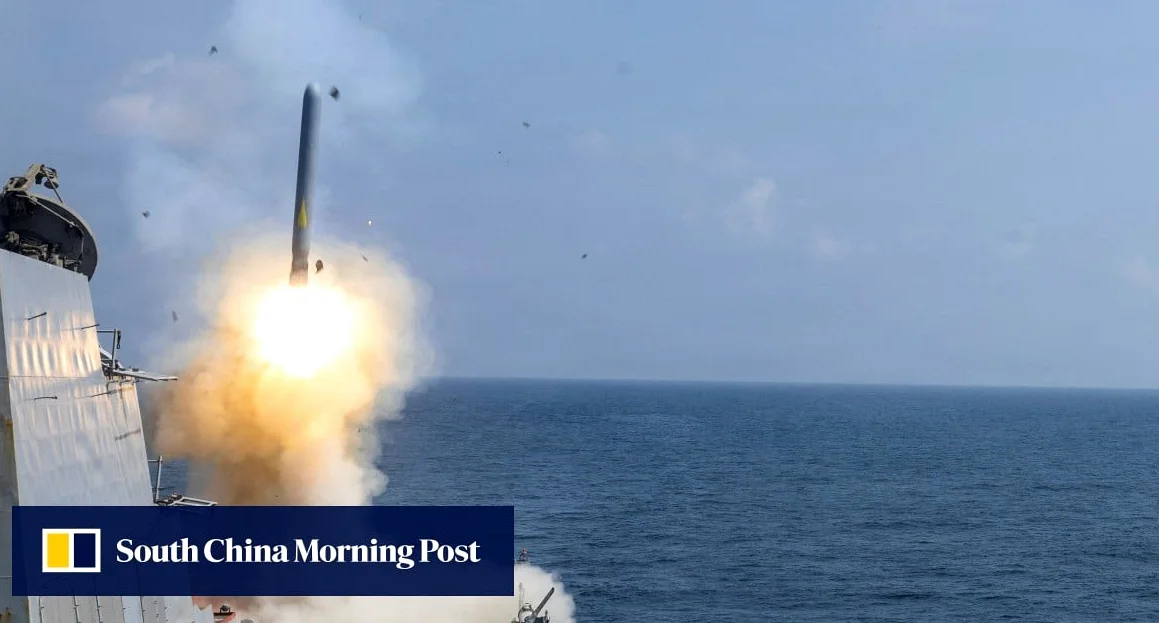
As the United States launches ‘Operation Epic Fury’ in the Persian Gulf, analysts are drawing comparisons to the ancient Battle of Carrhae, where the Parthian Empire defeated the Roman legions using tactics that remain relevant in modern warfare. The conflict, now unfolding in the Strait of Hormuz, has triggered a reevaluation of Iran’s military strategy and its potential to challenge Western military dominance through unconventional means.
Iran’s Modern Arrow Doctrine
In 53 BC, General Surena of the Parthian Empire used a combination of horse archers and a sophisticated logistics system involving camels to overwhelm the Roman heavy infantry. Today, Iran is employing a similar strategy with its fleet of low-cost kamikaze drones, which saturate enemy defenses and force adversaries to expend costly interceptors.
According to a recent report, each of Iran’s drones, costing thousands of dollars, can compel the United States to spend millions on missile interceptors. This economic attrition is a critical component of Iran’s modern-day ‘arrow doctrine,’ which echoes the tactics used by the Parthians to outmaneuver a more technologically advanced foe.
“The lesson from Carrhae is that a rigid superpower can falter against an asymmetric opponent capable of dictating the economic and physical cost of war,” said Dr. Emily Hart, a military historian at the University of Tehran. “Iran’s use of drones is a modern manifestation of that ancient strategy.”
Strategic Chokepoint and Economic Impact
The Strait of Hormuz, a critical shipping lane through which about 20% of the world’s oil passes, is central to Iran’s strategy. The recent escalation in tensions has led to a sharp increase in oil prices, which are now threatening to breach $100 per barrel. This economic pressure is a key element of Iran’s strategy to destabilize global markets and strengthen its position.
Iran has also been using the Strait of Hormuz as a strategic chokepoint, using its geographic advantage to control the flow of oil and exert influence over global trade routes. The potential for an economic fortress built on energy exports is a significant concern for global markets, particularly in the United States and Europe.
“The economic impact of a prolonged conflict in the Strait of Hormuz could be devastating for global energy prices and trade flows,” said Michael Chen, an energy analyst at the International Energy Forum. “This is a scenario that could ripple across the global economy.”
Institutional Resilience and Retaliatory Capacity
Unlike the personalized regimes of Saddam Hussein in Iraq or Muammar Gaddafi in Libya, Iran’s Islamic Republic has an institutionalized system that ensures the state’s survival transcends any single individual, including the supreme leader. This multilayered architecture, supported by the Islamic Major Guard Corps, allows for automated retaliatory strikes and long-term strategic planning.
The Islamic Major Guard Corps (IRGC) plays a central role in Iran’s military and strategic operations. The IRGC’s ability to coordinate retaliatory actions and maintain internal stability is a key factor in Iran’s ability to withstand external pressure.
“Iran’s institutional resilience is a significant factor in its ability to sustain prolonged conflict,” said Dr. Hassan Rezaei, a political scientist at the University of Tehran. “The IRGC ensures that the country’s military and political systems remain functional even in the face of external aggression.”
As the United States continues its military operations in the region, the potential for further escalation remains high. The use of drones and the strategic control of the Strait of Hormuz are likely to shape the trajectory of the conflict in the coming months.
With oil prices rising and global markets under pressure, the situation in the Persian Gulf is likely to remain volatile. The lessons of the Battle of Carrhae may yet prove to be a prescient reminder of the enduring power of asymmetric warfare in modern conflicts.





Comments
No comments yet
Be the first to share your thoughts