

 BBC
BBC 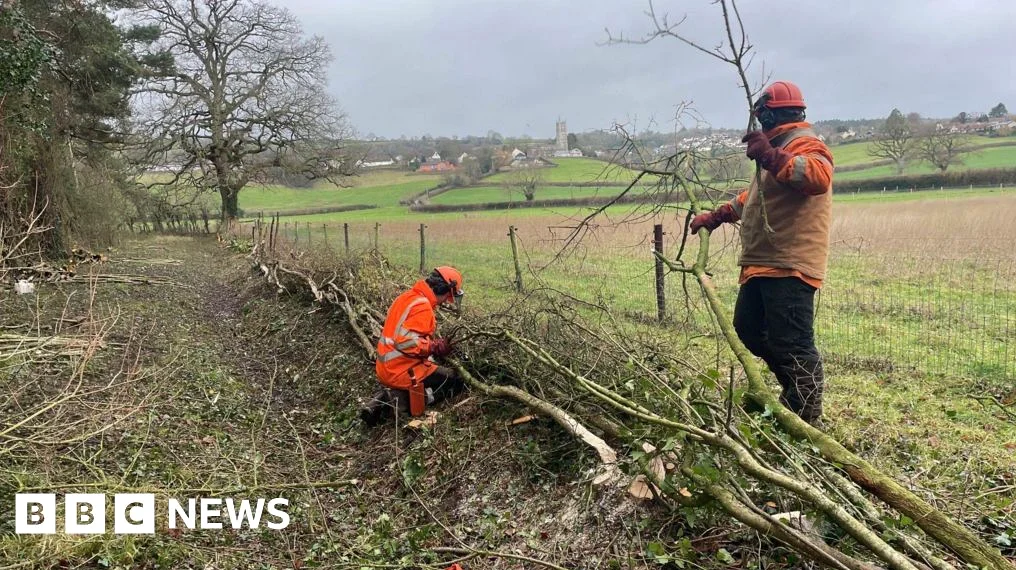
Bristol Water has initiated a two-year project to restore and enhance the biodiversity of Blagdon Lake, a 440-acre reservoir and trout fishery located in the Mendip Hills of Somerset. The initiative, which involves the use of ancient hedge laying techniques, aims to create a more hospitable environment for wildlife, including endangered birds and hedgehogs.
Restoring Natural Habitats
As a Site of Special Scientific Interest (SSSI), Blagdon Lake holds ecological significance, and the project focuses on restoring thinning hedgerows by laying trimmed base stems horizontally. This method allows light to penetrate the lower parts of the hedgerows, promoting dense, vertical regrowth that provides essential cover for animals and birds during the winter months.
Mike Reed, a hedge laying specialist leading the project, emphasized the importance of these efforts. ‘So many of our farmland and countryside birds are endangered, as are hedgehogs, so creating these spaces for them to live and nest in is more important than ever,’ Reed said. ‘Hedge laying is a historical craft with a strong local tradition, and I’m proud to be passing it onto the next generation through this work.’
Traditional hedge trimming methods, which often rely on heavy machinery, can leave hedges sparse and unfavourable for wildlife. In contrast, the ancient technique used in this project promotes a denser, more structured growth that supports a wider range of species.
Project Timeline and Impact
So far, approximately 1,800 meters of hedgerow have been laid, but the project will be paused during nesting months to avoid disturbing local wildlife. The initiative is expected to take two years to complete, with officials anticipating a significant return of species to the area once the work is finished.
Simon Hughes, treescape officer at Bristol Water, expressed enthusiasm about the transformation. ‘It won’t be long before we will start to see a complete transformation in the hedgerows and it’s exciting for all of us at Bristol Water to be a part of creating this significant and important change,’ Hughes said.
The project aligns with broader environmental goals, including the restoration of natural habitats and the promotion of biodiversity. By using traditional techniques, Bristol Water aims to not only improve the local ecosystem but also preserve a historical craft that has been practiced in the region for generations.
The work at Blagdon Lake is part of a growing trend in conservation efforts that emphasize the importance of traditional ecological knowledge and practices. Similar projects have been undertaken in other parts of the UK, where ancient techniques are being revived to address modern environmental challenges.
The initiative is also expected to have long-term benefits for the surrounding communities. By enhancing biodiversity, the project could lead to improved water quality, increased recreational opportunities, and greater ecological resilience in the region.
With the project set to continue through 2025, the results of this effort will be closely monitored by environmental experts and local conservation groups. The success of this initiative could influence future conservation strategies in the UK and beyond.






Comments
No comments yet
Be the first to share your thoughts