

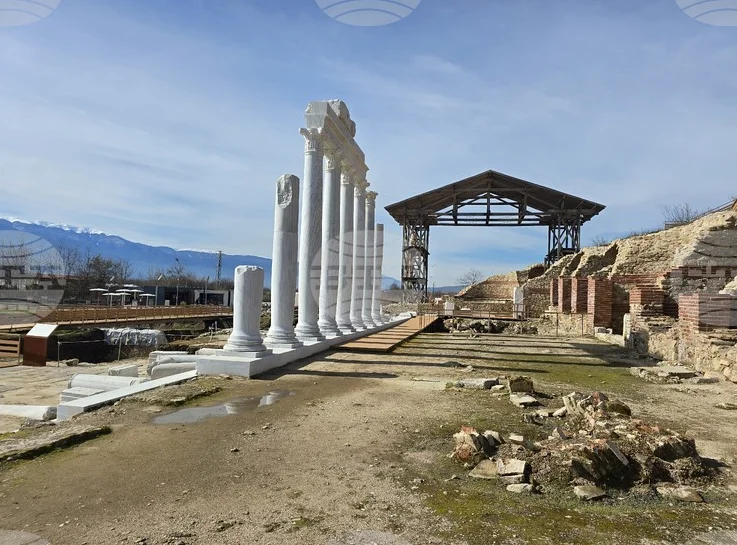
An anthropological analysis has revealed a man and a woman of mixed-race origin among the inhabitants of the ancient city of Heraclea Sintica, according to Prof. Dr. Lyudmil Vagalinski, who leads archaeological studies at the site. The findings stem from an examination of human remains discovered in the city’s Western necropolis during rescue excavations conducted by a team from the National Archaeological Museum.
Discovery of Mixed Ancestry in Ancient Burials
The study, carried out by Assoc. Prof. Dr. Victoria Russeva from the Institute of Experimental Morphology, Pathology and Anthropology with the Bulgarian Academy of Sciences, identified a woman aged approximately 35-40 with strong features of mixed ancestry between European and African populations. She suffered from scoliosis and early-stage spondylosis. Her burial, dated to the second half of the 4th century AD, was among the latest in the necropolis, as confirmed by the analysis of coins found in the grave.
In addition, a man of mixed ancestry, who lived to an age between 40 and 50—exceptionally advanced for that era—was also identified. Both individuals were buried with visible respect, in solidly constructed graves, indicating their full integration into the society of Heraclea Sintica.
Significance of the Findings
Prof. Vagalinski emphasized that while similar examples have been found in ancient burials in Bulgaria, they are extremely rare. He described the discovery as further confirmation that the people of Heraclea actively and successfully participated in the economy of the vast Roman Empire, which spanned three continents.
Epigraphic evidence from the city already indicates that people from various parts of the Mediterranean, including distant Carthage, settled in Heraclea Sintica. This new finding adds a biological dimension to the understanding of the city’s diverse population.
Scope of the Anthropological Study
The anthropological analysis of the necropolis covers a total of 156 graves, with reliable information obtained for 137 individuals. Despite the fact that a significant portion of the burials were cremations, the data provide a troubling, yet typical for antiquity, picture—most inhabitants died before the age of 40, and individuals over 60 were practically absent.
Research also reveals a variety of diseases among the population of the ancient city, including rare genetic conditions such as Klippel-Feil syndrome and Legg-Calve-Perthes disease. Cases of severe bone and joint damage have been identified. In one instance, the affected individual lived to adulthood, which, according to the researchers, is evidence of care, social support, and a well-organized community.
Studies are ongoing, with additional laboratory and chemical analyses expected to provide further insights into the diet and population origin of the people who lived in Heraclea Sintica over the centuries. These analyses may also reveal more about the social structure and health conditions of the ancient city’s inhabitants.
For ordinary people today, these findings offer a deeper understanding of the historical diversity and complexity of the region. They challenge simplistic narratives about ancient societies and highlight the interconnectedness of the Roman world.
As research continues, the results will be shared with the broader academic community and the public, offering new perspectives on the lives of people who lived in this region over 1,500 years ago.






Comments
No comments yet
Be the first to share your thoughts