

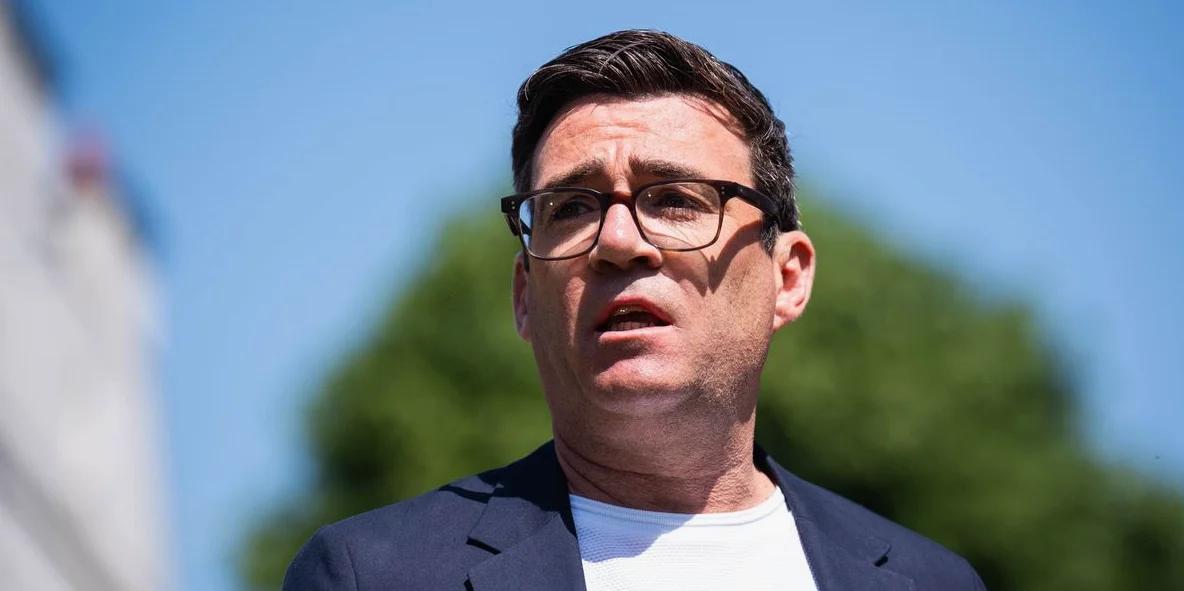
Andy Burnham, the former mayor of Greater Manchester, reportedly made a personal appeal to a Labour MP to resign from their seat in an attempt to challenge Keir Starmer for leadership of the party. The move came after Burnham was denied the opportunity to stand in the Gorton and Denton by-election, where Labour unexpectedly came third behind the Green Party and Reform UK in what was labeled their ‘sixth safest seat.’
Internal Party Struggles and By-Election Defeat
The Gorton and Denton by-election, held in January, saw Labour lose ground in a seat previously considered one of the party’s strongest. The result was a significant blow to Labour, with the Greens and Reform UK overtaking them. According to internal sources, Burnham sought to run in the seat but was blocked by Keir Starmer’s allies on Labour’s National Executive Committee (NEC), which voted eight to one against his candidacy.
The decision to block Burnham was met with strong criticism from within the party. Several backbenchers described it as ‘completely outrageous’ and ‘a stitch-up,’ with one member stating that the move had ‘undermined the party’s unity.’ Lucy Powell, Labour’s deputy leader, admitted on Saturday that Labour ‘probably’ would have won the by-election had Burnham been allowed to stand.
Burnham’s potential candidacy in the seat would have triggered an unnecessary mayoralty contest, adding to the complexity of the situation. However, supporters of Burnham believe that a new application to stand in the seat would not face the same resistance, given the recent defeat and the weakened position of Keir Starmer within the party.
Strategic Moves and Leadership Dynamics
According to insiders, Burnham’s push to challenge Starmer is part of a broader effort to reassert influence within Labour. The by-election result in Gorton and Denton has raised questions about the party’s strategy and leadership effectiveness, particularly in areas where it was expected to perform strongly.
Labour’s NEC, which includes senior party figures, has been under scrutiny for its decision to block Burnham’s candidacy. Some analysts argue that the move may have been intended to prevent a challenge to Starmer’s leadership, but it has instead fueled internal dissent and frustration among rank-and-file members.
Lucy Powell, who cast the only supportive vote for Burnham’s candidacy, acknowledged the impact of the decision on the party’s prospects. ‘If Andy had been allowed to stand, we would have won,’ she said, highlighting the potential consequences of the NEC’s vote.
Future Implications and Leadership Race
With the leadership race gaining momentum, Burnham’s supporters believe that the recent by-election defeat has weakened Starmer’s position within the party. They argue that the NEC’s decision to block Burnham’s candidacy may have been a miscalculation, and that a new attempt to run for the seat could be more successful now.
Analysts suggest that the outcome of the Gorton and Denton by-election could influence future leadership contests and internal party dynamics. The result has also sparked discussions about the need for a more inclusive and transparent decision-making process within Labour.
As the party prepares for future elections, the internal strife and leadership challenges will play a critical role in shaping its strategy and direction. The coming months will be crucial for both Burnham and Starmer as they handle the complex landscape of party politics and public opinion.
The next major test for Labour will come with upcoming by-elections and local elections, where the party’s performance will be closely watched. The outcome of these contests could determine the trajectory of the leadership race and the overall direction of the party.






Comments
No comments yet
Be the first to share your thoughts