

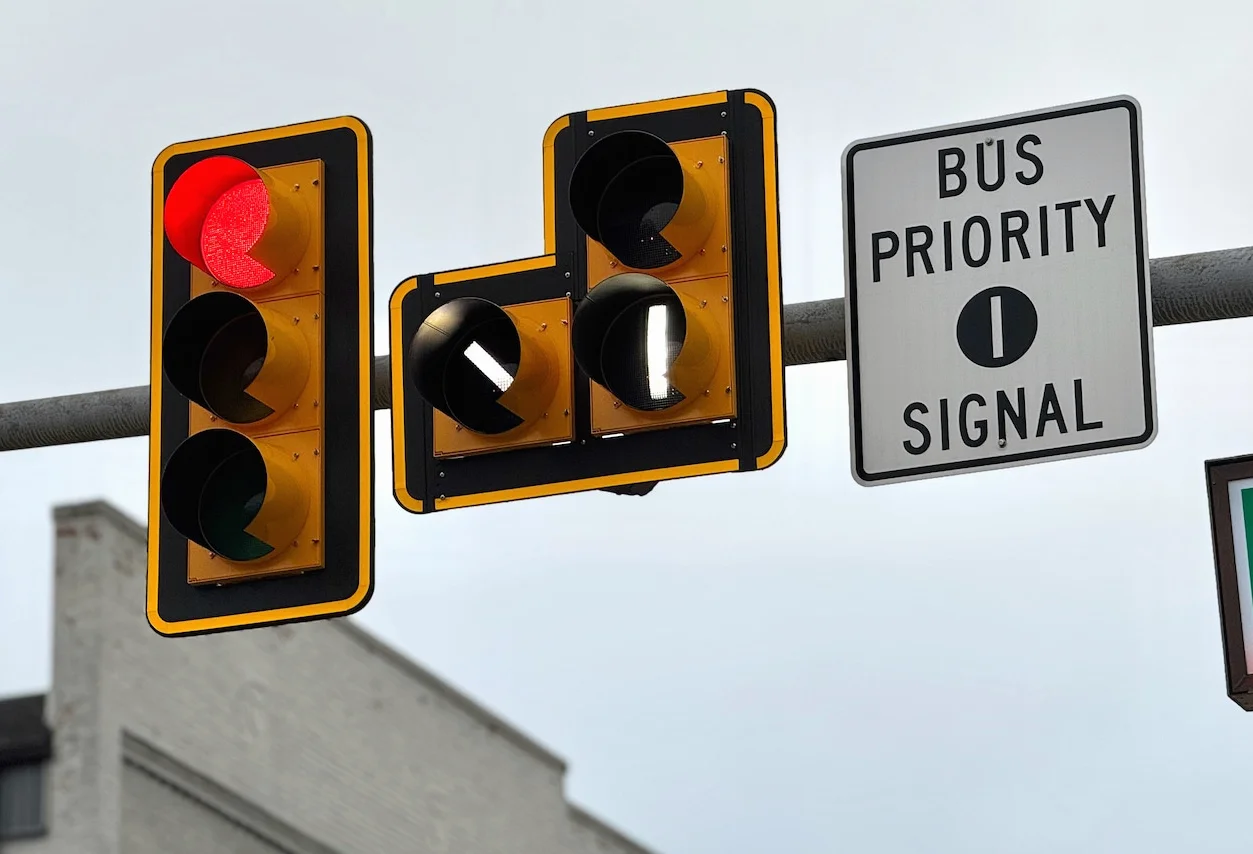
ANN ARBOR, Michigan — Buses in Ann Arbor now get a green light—literally—over cars at a key intersection. The city’s pioneering transit-priority signal at State and William streets has run smoothly for two months. Northbound buses heading straight or turning left activate special white signals when detected, allowing them to move while other vehicles remain stopped.
Drivers might spot the white phase only occasionally. Standard red, green and yellow lights dominate most cycles. Buses occasionally wait alongside other traffic. The system doesn’t fire every time a bus rolls up.
TheRide, Ann Arbor’s transit agency, explained the setup. Buses lack onboard transmitters to ping the signal directly. Instead, in-pavement sensors pick up the vehicles in the dedicated lane. Those sensors send a wireless alert to the nearby traffic control box.
The signal then shifts to a bus-only phase in the next cycle, according to city and TheRide officials. Jeff Pfeifer, a spokesperson for TheRide, said this accounts for the intermittent activation. “This would help explain why the transit signal isn’t activated every time, but rather just when a bus is detected by the sensor,” he said.
Robert Kellar, the city’s spokesperson, called it a queue jump lane. It lets buses bypass backed-up queues. Ann Arbor plans to test the technology elsewhere. No specific sites or timelines exist yet, Kellar added.
The setup emerged from collaboration between the city, TheRide and the University of Michigan. Pfeifer praised the teamwork. “We’re very excited about this transit supportive improvement,” he said.
Queue jumps aim to speed public transit and cut delays. Ann Arbor installed the lane and sensors last fall. Buses serve dense routes near downtown and the University of Michigan campus. Early feedback shows reliable performance, though winter weather tested the sensors.
City engineers monitor data from the control box. Detection rates hover above 95% in dry conditions, sources said. Snow or ice can drop accuracy slightly, prompting occasional manual overrides by operators.
Similar systems operate in larger cities like Los Angeles and Portland. Ann Arbor’s version marks Michigan’s first. Officials eye expansions along Huron Street and Packard Road, pending funding from federal grants.
Riders notice the difference. Average wait times at the intersection fell by 20 seconds per bus during peak hours, according to preliminary logs. That adds up on high-volume routes carrying 500 passengers hourly.
The project cost $250,000, split between city capital funds and a state transit grant. Maintenance falls to the public works department. Sensors require annual calibration, Kellar said.
TheRide runs 15-minute frequencies on the affected AATA Blue Line during rush hours. Planners hope priority signals boost ridership by making buses more reliable than driving.
Local drivers offer mixed reviews. Some complain about brief delays from bus jumps. Others support the push to ease congestion. City Council approved the pilot unanimously in 2023.
Ann Arbor aims for 20% transit mode share by 2030. Tools like this queue jump fit broader goals to cut car dependency and emissions. Next steps include public workshops on scaling up.






Comments
No comments yet
Be the first to share your thoughts