

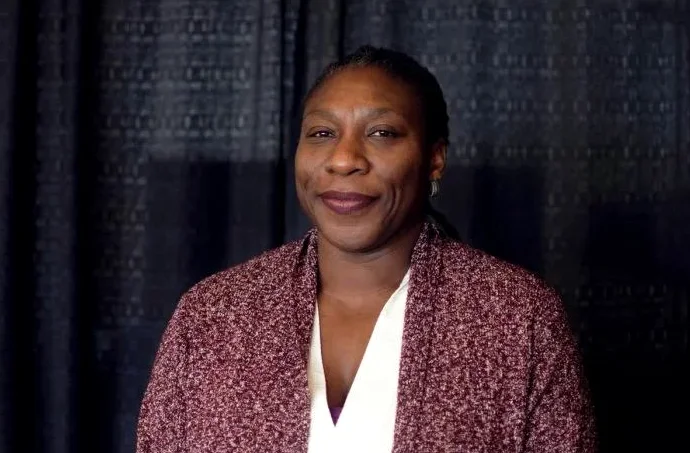
Iyabo Obasanjo, daughter of former Nigerian President Olusegun Obasanjo, has publicly detailed the reasons behind her political defection from the Peoples Democratic Party (PDP) to the All Progressives Congress (APC) in preparation for the 2027 general elections in Ogun State. In an interview with Eagle 102.5 FM’s Frontline program, Obasanjo expressed that she was not persuaded or pressured by the APC to leave the PDP, but rather made the decision based on her own analysis and feelings of discomfort within the PDP.
Defection Based on Personal Analysis
Obasanjo, who had previously lost her re-election bid in 2011 to Senator Gbenga Obadara of the Action Congress of Nigeria (ACN), returned to active politics after a 15-year hiatus. She stated that she could have left the PDP earlier but refrained from doing so due to her father’s status as a PDP chieftain at the time.
‘APC never approached me,’ Obasanjo said. ‘I know there’s a lot of things out there in terms of APC, reaching out to people to join and all that. I never was approached. So, for me, it was, I made a choice to join. So, to kind of say, oh, APC pressured me to join and things like that, there was never anything.’
She emphasized that her decision was not influenced by external pressure but was based on a personal analysis of her comfort level within the party. ‘For me, the primary reason was that I left (PDP) because I wasn’t comfortable in the party. I could have joined the other party then, but my dad was then still a chieftain in that other party. It would be like I was joining against him.’
Feeling Betrayed by PDP
Obasanjo described her experience within the PDP as transactional, noting that the party often reached out only when it needed her to mobilize support during elections. She said that her contributions and insights were frequently sidelined, leading to a sense of betrayal.
‘I’m not comfortable being part of an organization that I left and nobody cared to find out why,’ she said. ‘And I can even tell you, it was this bad that the only time I got a call from them… I was a senator of the federal republic and I knew the followership I had there and then the election was coming and somebody from the presidency reached out. How transactional is that? So, I dropped the phone on the person. I’m like, you only realize that there are people that can help you during elections.’
She confirmed that she will never return to the PDP, stating that the party’s approach to its members was disheartening. ‘I just feel that at the level I left, that nobody… I don’t know if I feel betrayed, I just feel the individuals there are not people I want to associate with.’
Politics Should Be About People
Obasanjo argued that politics should not be about using people for an end but about caring for them and carrying them along. She criticized the PDP for failing to value the contributions of its members, particularly those who hold prominence within the party.
‘And if you can’t care for people in your own leadership team, how can you care for the ordinary person on the street?’ she asked. ‘I think they’re idiots, if you can put it that way. And I think they’re idiots because if elections are about people and if you don’t reach out to the people that are prominent in your party, how do you win elections? You can’t.’
Her comments come at a time when political defections are increasingly common in Nigerian politics, often driven by personal, ideological, or strategic considerations. Obasanjo’s move to the APC is seen as a significant development, given her family’s political legacy and her own influence in Ogun State.
Analysts suggest that her defection may signal a broader trend of disillusionment among high-profile party members, particularly those who feel sidelined or undervalued by their respective parties. The implications of her move could be significant for the upcoming elections, as her support and influence may sway voters in Ogun State.
Obasanjo’s decision to leave the PDP and join the APC has sparked discussions about the dynamics of political loyalty and the role of personal relationships in Nigerian politics. Her statements have also prompted calls for greater transparency and inclusivity within political parties, particularly in how they engage with their members and the public.






Comments
No comments yet
Be the first to share your thoughts