

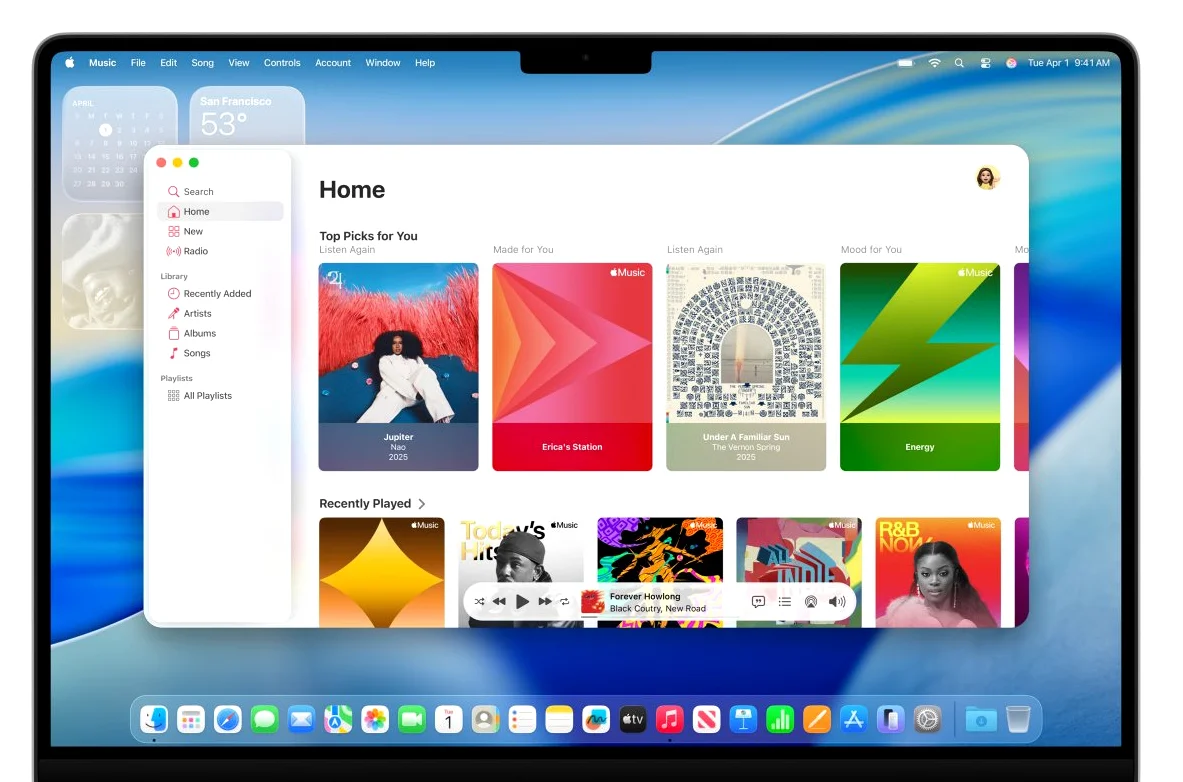
Apple Music is preparing to roll out a new system to identify music, using what the company calls ‘transparency tags’ to label tracks, albums, and related content. The move comes as the music industry grapples with the growing presence of content in streaming platforms.
Transparency Tags: What They Mean for Users
The transparency tags will allow users to recognize when a song, album, or related content such as music videos or album art was created using artificial intelligence. According to a letter obtained by Music Business Worldwide, Apple has informed its music industry partners that it will begin accepting data about content starting now, with full enforcement expected in the near future.
Tracks can be flagged in four areas: composition, title, music video, and artwork. If a song was partially created with AI, the composition and lyrics would be labeled accordingly. Music videos delivered without an associated album or track will also be labeled.
The initiative is described by Apple as a first step toward greater transparency in the music industry. However, the onus of identifying content lies with the labels and their distributors, who are responsible for submitting accurate data.
Competition in AI Detection: Apple vs. Deezer
Other streaming platforms, such as Deezer, have taken a different approach to AI detection. Rather than relying on industry self-declarations, Deezer is implementing detection algorithms to identify content at the platform level. According to a report from January, Deezer receives up to 60,000 tracks per day, which accounts for nearly 40 percent of all tracks submitted to the platform.
However, Deezer does not require labels to declare content. This approach may have its own challenges. While Apple’s method relies on self-declarations, which can lead to errors such as false positives or false negatives, Deezer’s algorithm-based approach may struggle with accuracy and scalability.
According to Deezer, up to 85 percent of all listens to music are considered fraudulent. This suggests that content is often used to inflate streaming numbers, with creators seeking to profit from these artificial plays. Deezer is using its detection technology to combat this issue.
Spotify’s Approach and the Role of Industry Standards
Spotify, another major player in the music streaming space, is also working to address content. The platform plans to use the DDEX industry standard to label tracks, rather than developing its own system. DDEX is a global standard for the exchange of music and data, and its use by Spotify signals a broader industry move toward uniformity in AI labeling.
Apple has not yet released specific data on how much Apple Music is affected by content. The letter to the music industry did not provide details on what happens if the labeling is incorrect, or how the platform will handle potential errors. Technical details about the implementation of the transparency tags have been published but remain largely technical in nature.
The introduction of transparency tags by Apple Music is a response to growing concerns about the authenticity of content on streaming platforms. As music becomes more sophisticated, the need for clear labeling becomes increasingly important to protect both consumers and artists.
Music industry stakeholders have expressed a mix of support and skepticism about the new labeling system. While some see it as a necessary step toward transparency, others question whether it will be effective in practice or whether it will place too much responsibility on labels and distributors.
The music industry is at a crossroads as it handles the challenges posed by content. Whether through self-declaration, algorithmic detection, or industry standards, the sector is striving to find a balance between innovation and authenticity.






Comments
No comments yet
Be the first to share your thoughts