

 BBC
BBC 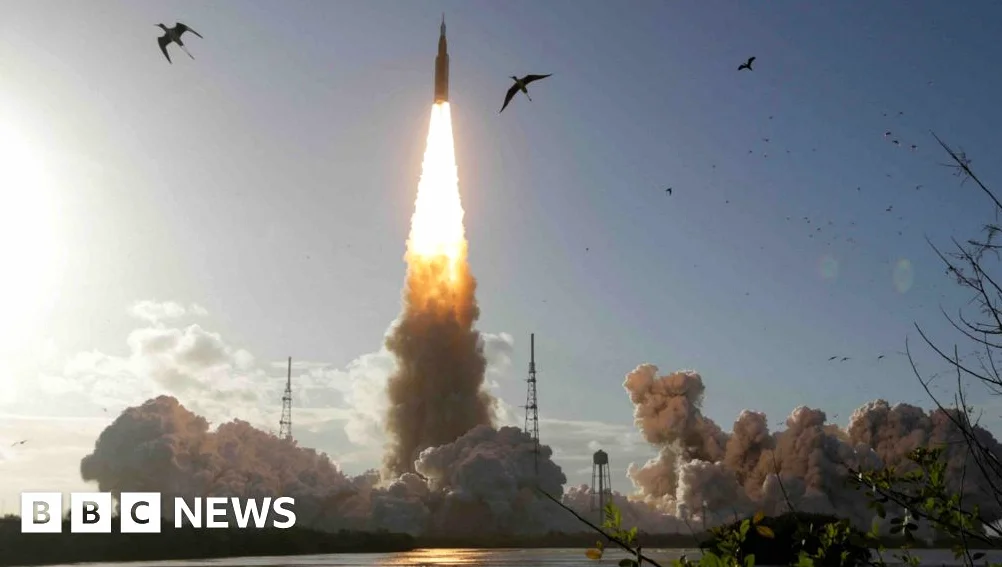
NASA’s Artemis II spacecraft is orbiting high above Earth after a successful launch, with its four astronauts preparing for a important engine burn that will send them toward the Moon, according to the BBC.
Successful Launch and Technical Adjustments
The first crewed lunar mission in half a century blasted off from Kennedy Space Centre in Florida after NASA resolved technical issues that had briefly paused the countdown. Spectators at the launch said they could feel the power of the rocket through their entire bodies.
Commander Reid Wiseman declared, ‘Great view… we have got a great Moonrise’ – a reminder that this crew will see things that only a handful of humans have witnessed. The delicate technical choreography, including rocket booster separations, went as planned as Artemis passed the Kármán line boundary between Earth’s atmosphere and space.
Preparing for the Translunar Injection Burn
‘After a brief 54-year intermission, NASA is back in the business of sending astronauts to the Moon,’ NASA administrator Jared Isaacman told a news conference. They won’t land on the Moon during their 10-day mission, but plan to circle it and could travel further from Earth than anyone has ever been before returning.
The focus was very much on the next key stage – the powerful engine burn known as the ‘translunar injection’ that will sling the crew out of Earth orbit and on towards the Moon. Before that could happen, Artemis needed to go a little higher in its orbit. That manoeuvre – a perigee raise burn – went smoothly.
The astronauts had woken up to oversee this after what will have been a welcome although brief sleep of a few hours. Chatter from the Orion capsule suggested they were in good spirits, although feeling a chill. Astronaut Christina Koch asked mission control: ‘It is very cold in the cabin, any chance you can make it warmer, or reduce the cabin fan speed a bit more so the ventilation is not blowing as hard?’ Mission control is working to warm things up.
Ensuring Safety and Success
Safety is the biggest concern and only if the data look right will NASA commit to the onward journey, scheduled for Thursday evening US time, early Friday UK time. NASA’s Howard Hu, the Programme Director for Orion, has said that if anything significant looks wrong, the flight teams will use Orion’s engines to bend the orbit back for a prompt return to Earth.
After the successful perigee burn the astronauts were bedded down for a few more hours sleep. Before they signed off, a very human exchange over NASA’s live feed between Commander Reid Wiseman and Mission Control amid the technical back and forth was a glimpse at the wonder of being where they are.
‘We just didn’t want to let you go without saying that the view out of window three from about 38,000 nautical miles of the entire half of the Earth is spectacular,’ said Wiseman. ‘I love to hear that so much Reid,’ replied Mission Control. ‘So glad you guys are getting to experience it.’
Four astronauts are preparing to leave Earth’s orbit and slingshot towards the Moon as NASA’s Artemis II mission enters its second day. The high-stakes 10-day voyage is expected to mark the first time in half a century that humans will return to the vicinity of the Moon. It is a key test of NASA’s ambition to land humans back on the lunar surface this decade, and stay there permanently.
After about three and a half hours of post-launch rest on Thursday, the Artemis II crew was woken up by mission control and instructed to prepare for the Orion spacecraft’s engines to fire for a one-minute ‘burn’ to adjust the orbital path even higher above Earth. ‘Christina, Houston is go for the burn,’ mission control said, talking to the mission specialist Christina Koch, who will become the first woman to fly around the Moon.
NASA has said that if ‘all systems remain healthy’ on the Orion spacecraft then mission controllers will later give the command to conduct a translunar injection burn, a six-minute engine firing that will send the capsule on its journey to the Moon. The crew will then loop around the back of the Moon – becoming the four people to travel the farthest from Earth in history – and then use the celestial body’s gravity to launch back home.






Comments
No comments yet
Be the first to share your thoughts