

 BBC
BBC 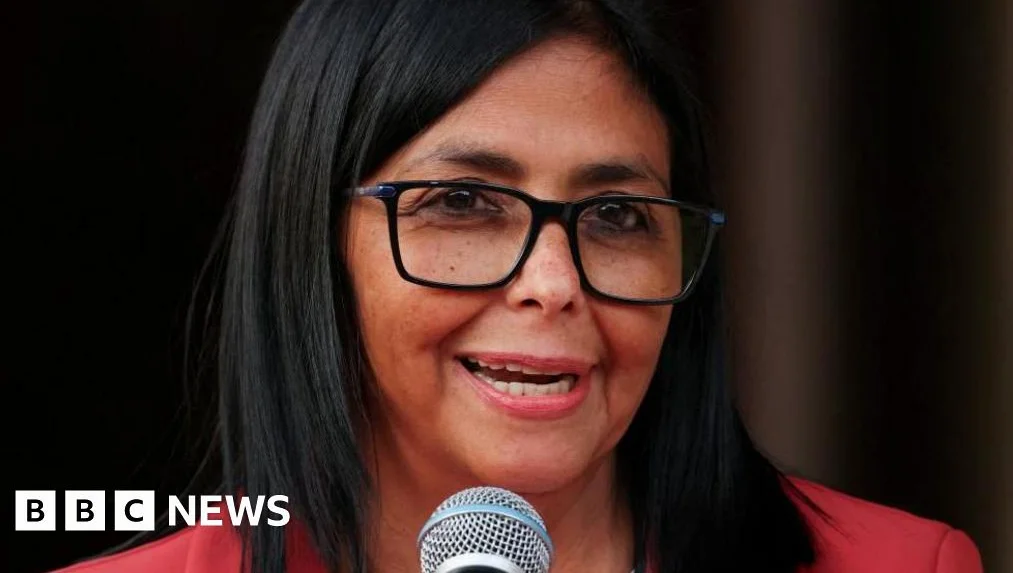
The United States has lifted sanctions on Venezuela’s interim leader Delcy Rodríguez, according to the BBC. The move comes less than three months after US forces seized the country’s previous leader, Nicolás Maduro, and his wife in a military raid in Caracas and took them to New York to face drug trafficking charges. Rodríguez, a close ally of Maduro who served as his vice-president, had been placed on the sanctions list in 2018, with the US accusing her of undermining democracy.
Sanctions Removed, Relations Normalized
Rodríguez was sworn in as interim president by Venezuela’s National Assembly, which is dominated by Maduro loyalists, days after the US raid and has been described by US President Donald Trump as ‘a terrific person’. Rodríguez welcomed her removal from the Specially Designated Nationals (SDN) List. Those named on the list have their assets in the US blocked and US nationals are barred from doing business with them.
Rodríguez called it ‘a significant step in the right direction to normalise and strengthen relations between our countries’ in a post on X. White House spokeswoman Anna Kelly said the move showed the progress that had been made ‘between our two countries to promote stability, support economic recovery and advance political reconciliation in Venezuela’.
Criticism and Calls for Reform
‘As President Trump has said, Delcy Rodríguez is doing a great job and is working with the United States very well,’ Kelly added. Opposition activists in the Venezuelan capital, Caracas, however, were critical of the move, arguing that the US should exert pressure on Rodríguez to release all political prisoners still held in the country’s jails.
The release of political prisoners had been one of the key demands US Secretary of State Marco Rubio had made of Rodríguez in the wake of Maduro’s removal. While the National Assembly has passed an amnesty law and hundreds of detainees have been freed, prisoners’ rights group Foro Penal says that almost 500 political prisoners remain behind bars.
Embassy Reopenings and Ongoing Concerns
Earlier this week, the US officially reopened its embassy in Caracas, seven years after closing it. A Venezuelan diplomatic team has also been dispatched to the US to reopen its embassy in Washington. Critics of Rodríguez have, however, bemoaned the fact that there has been little talk of democratic elections.
Despite having been sidelined by Trump in favour of Rodríguez, Machado struck an optimistic note, calling the meeting ‘excellent’ and praising the US secretary of state’s ‘dedication to democracy, freedom and Venezuelans’ well-being’. Rubio insisted that the US was making progress in Venezuela in an interview with Fox News following the meeting.
Pointing to the three-pronged plan he said the US was pursuing, he assured viewers that Venezuela had moved into the second phase: that of recovery. ‘Ultimately, there will have to be a transition phase. There will have to be free and fair elections in Venezuela, and that point has to come,’ he said. ‘It’s not forever, but we have to be patient, but we also can’t be complacent,’ he added, without giving an indication as to when elections might be held in Venezuela.
In a separate report, the US has lifted sanctions on Venezuela’s acting president Delcy Rodríguez, in the latest step towards normalising relations between the two countries after US forces abducted her predecessor, Nicolás Maduro, and his wife. The couple were taken to New York after their abduction in January to face charges of alleged drug trafficking, to which both have pleaded not guilty.
The lifting of the sanctions on Rodríguez, which was announced by the Treasury department on Wednesday, allows her to work more freely with US companies and investors. Without explicitly mentioning the sanctions targeting her, Rodríguez, in a statement, expressed hope for US-Venezuelan relations. ‘We value President Donald Trump’s decision as a step toward normalising and strengthening relations between our countries,’ she said on her Telegram channel after the Treasury’s announcement. ‘We trust that this progress will allow for the lifting of current sanctions against our country, enabling us to build and guarantee an effective bilateral cooperation agenda for the benefit of our people.’
Rodríguez and her brother, Jorge, had the sanctions imposed during Trump’s first term over their alleged role in undermining Venezuelan democracy. The siblings, along with other members of Maduro’s inner circle, were added to the Treasury’s list in September 2018, months after Maduro won re-election in a contest widely considered a sham because opposition politicians and parties were banned from participating.
The US Treasury said at the time: ‘Maduro has given Delcy Eloina Rodríguez Gomez and Jorge Jesus Rodríguez Gomez senior positions within the Venezuelan government to help him maintain power and solidify his authoritarian rule.’ The current Trump administration, however, chose to work with Delcy Rodríguez, instead of Venezuela’s political opposition, after ousting Maduro. She has since led Venezuela’s cooperation with the US administration’s phased plan to turn the country around, pitching her oil-rich nation to international investors and opening up the country to private capital, international arbitration and scrutiny.
Last month, the US recognised her as the ‘sole head of state’ of Venezuela in an ongoing civil case in the US federal court. The US has lifted sanctions on large Venezuelan industries. In March, the US Treasury issued a broad authorisation allowing the state-owned Petróleos de Venezuela SA, or PDVSA, to directly sell oil to US companies and on global markets, a big shift after Washington for years had largely blocked dealings with Venezuela’s government and its oil sector.
Comments
No comments yet
Be the first to share your thoughts