

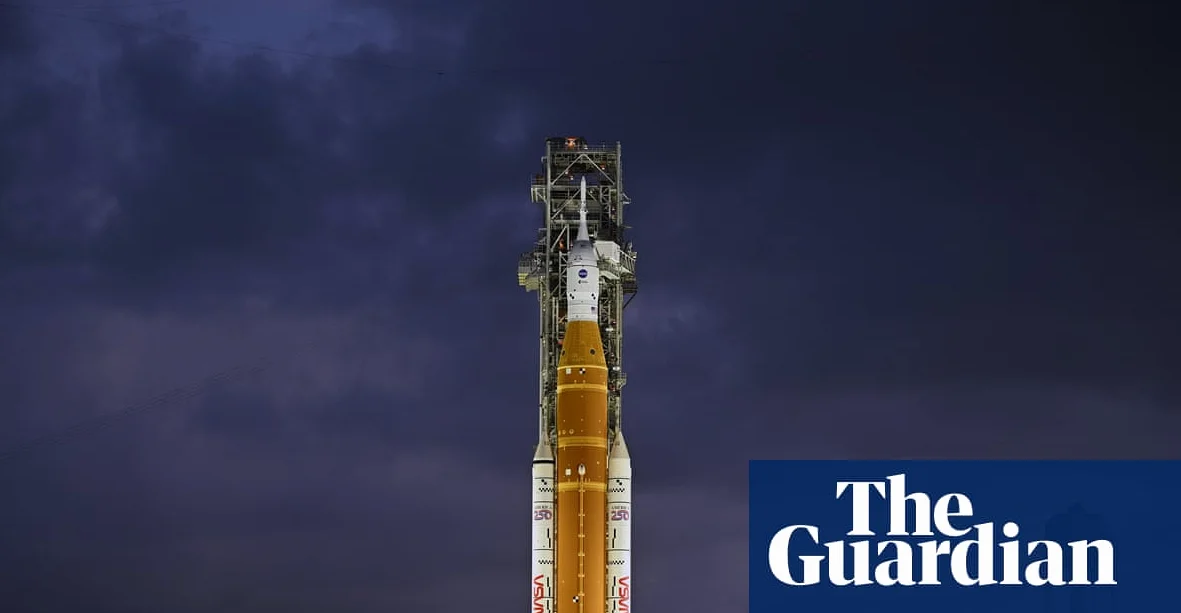
NASA’s Artemis II moon rocket sits on Launch Pad 39-B at the Kennedy Space Center hours ahead of the planned liftoff on Wednesday, April 1, 2026, in Cape Canaveral, Fla. The mission marks the first crewed flight of the Artemis program, aiming to send astronauts around the Moon and return them safely to Earth. According to clickorlando.com. The launch window is set for 6:24 p.m. local time, with a 20% chance of showers possible on Wednesday; Despite the weather uncertainty, the overall conditions are expected to remain favorable for the launch before rain returns later in the week.
Public Interest and Crowd Gatherings
Crowds have gathered at Kennedy Space Center and surrounding areas to witness the historic launch, as reported by The Guardian. The event has drawn significant public interest, with many locals and tourists arriving early to secure a spot for viewing — the Kennedy Space Center is expected to host thousands of spectators, with viewing areas extending to nearby beaches and public spaces. According to officials. Traffic management is a key concern, with local authorities working to ensure safe and efficient movement of vehicles and pedestrians.
Trooper Steve, a local law enforcement officer, emphasized the importance of traffic safety ahead of the launch, noting that parking and crowd control are critical aspects of the event. ‘We are preparing for the largest crowd we have seen in years,’ he said. ‘Our goal is to ensure that everyone can enjoy the historic moment safely and without incident.’
The Guardian reported that some attendees have traveled from as far as New York and California to witness the launch, highlighting the national significance of the mission. Local businesses in Titusville and nearby areas have also reported increased activity, with many offering special events and promotions to celebrate the occasion.
Weather Conditions and Launch Preparations
According to clickorlando.com, NASA has begun fueling the rocket for the Artemis II mission, a critical step in the final preparations for launch. The process involves loading liquid hydrogen and oxygen into the rocket’s core stage, which must be done under strict temperature and humidity conditions. The launch team has been closely monitoring weather forecasts, with a 20% chance of showers on launch day. However, the overall forecast remains positive, with clear skies and favorable wind conditions expected.
The roar of the rocket is expected to be heard up to 45 miles away, according to clickorlando.com, adding to the sensory experience of the launch. NASA has also been testing various systems, including the spacecraft’s life support and navigation systems, to ensure the mission’s success. The spacecraft, carrying four astronauts, will orbit the Moon for about a week before returning to Earth, marking a significant step in NASA’s lunar exploration efforts.
Weather conditions are a critical factor in any rocket launch, and the Artemis II team has been preparing for various scenarios. According to NASA officials, the launch team has a backup window available if the primary launch day is affected by weather. However, current projections indicate that the mission is on track for the scheduled date.
Local Reactions and Global Significance
Local residents in Cape Canaveral and surrounding areas have expressed excitement and pride about the historic event. Many have shared their anticipation on social media, with some even organizing viewing parties. According to The Guardian, a local resident said, ‘It’s an honor to be part of history. Seeing the rocket lift off will be a moment I’ll never forget.’
Internationally, the Artemis II mission has drawn attention from space agencies and governments around the world. The mission is seen as a precursor to future lunar exploration and the eventual establishment of a sustainable presence on the Moon. According to the European Space Agency, the mission will provide valuable data for future missions, including the construction of a lunar base.
In Japan, NHK reported that the launch has generated significant interest among the public and scientific community. ‘This mission represents a new era in space exploration,’ said a Japanese space agency official. ‘The success of Artemis II will pave the way for international collaboration in lunar and deep space missions.’
Why It Matters and What’s Next
The Artemis II mission is a serious step in NASA’s long-term goal of returning humans to the Moon and preparing for future missions to Mars. The mission will test the Orion spacecraft and the Space Launch System (SLS) rocket, both of which are essential for future deep space exploration. According to NASA, the data collected during the mission will be used to refine spacecraft design and improve safety for future crewed missions.
The success of Artemis II will have far-reaching implications for space exploration, including the potential for international collaboration and the development of new technologies. As the mission approaches, NASA will continue to monitor weather conditions and prepare for any contingencies. The launch of Artemis II is not only a significant milestone for the United States but also for the global space community.
What’s next for the Artemis program includes the Artemis III mission, which is scheduled to land astronauts on the Moon’s surface. The program aims to establish a sustainable human presence on the Moon by the end of the decade, with the ultimate goal of sending humans to Mars. The success of Artemis II will be a critical step in achieving these ambitious objectives.






Comments
No comments yet
Be the first to share your thoughts