

 BBC
BBC 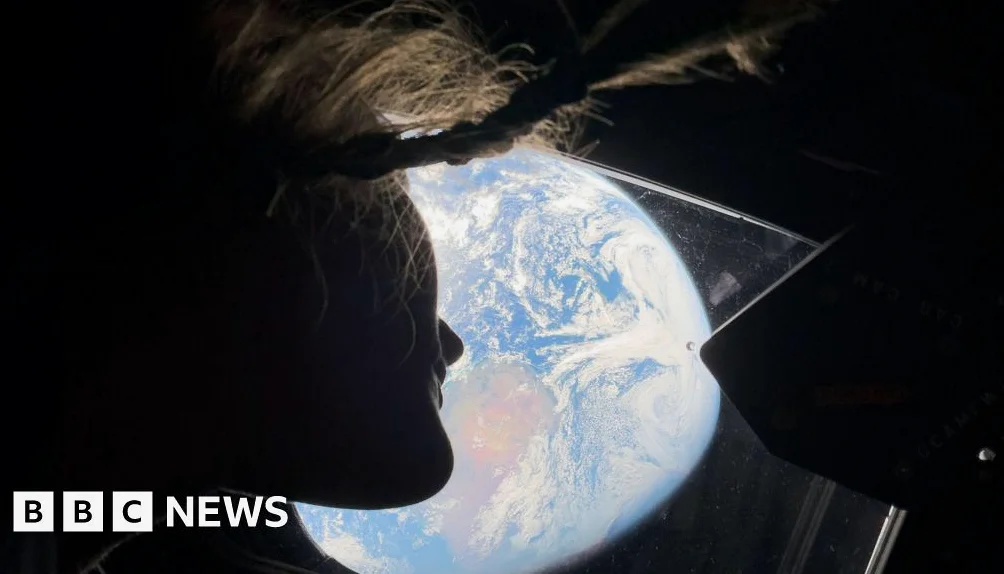
Artemis II’s Aesthetic Appeal
The images, captured by astronauts on the Artemis II mission, have attracted millions of likes on social media — they showcase the Moon and Earth from unusual angles in high definition, according to the BBC.
The mission is taking four astronauts further from Earth than any human has ventured since 1972; However, some are questioning whether these images hold unique scientific value or are simply akin to holiday photographs, the BBC reports.
NASA aims to secure public support for the mission by live-streaming the 10-day journey and providing regular video updates from the crew — the astronauts’ enthusiasm has even led to a dirty window inside the Orion spacecraft, prompting instructions on how to clean it, the BBC notes.
Technological Setup for Imaging
Orion, the spacecraft used for the mission, is equipped with 32 cameras and devices—15 mounted on the spacecraft and 17 handheld by the crew — According to NASA, the astronauts are using standard 10-year-old cameras, including the Nikon D5, as well as GoPros and smartphones.
The first results of their observations were released on Friday. One image. Titled ‘Hello. World,’ was taken by Commander Reid Wiseman when the mission was equidistant from the Moon and Earth—142,000 miles (228,500 km) from Earth, and 132,000 miles from the Moon. It shows two auroras as the Earth eclipses the Sun, with Venus glowing at the bottom of the image, the BBC reports.
Our planet appears upside down. With the Sahara desert and the Iberian peninsula visible to the left and the eastern portion of South America to the right. While visually stunning. NASA’s Deep Space Climate Observatory, which has been taking pictures of Earth from a million miles away since 2015, has already captured similar imagery, the BBC notes.
Scientific Significance of Lunar Images
On Saturday, NASA released another image with the tagline ‘history in the making.’ It shows the Orientale basin, a large crater on the far side of the Moon, which has a thicker crust and many more impact craters. NASA emphasized that this image marked the first time the entire basin has been seen with human eyes, the BBC reports.
Even Apollo astronauts did not see the Orientale basin completely due to their orbit and illumination conditions. NASA argues that human eyes and brains are highly sensitive to subtle changes in color, texture, and other surface characteristics, which could uncover new discoveries and a more complex appreciation for lunar features, the BBC notes.
However, Professor Chris Lintott, a professor of astrophysics at the University of Oxford and co-host of BBC’s series The Sky at Night, said the images coming back from Artemis have artistic, not scientific, value. He explained that robotic explorers have already mapped the far side of the Moon since the Apollo program in the 1960s and 1970s, the BBC reports.
In 2023, India’s Chandrayaan-3 captured detailed images of the same terrain, and in 2024, China’s Chang’e-6 mission collected the first-ever samples from the far side. Lintott said there will be nothing for the Artemis astronauts to discover unless something very unusual happens, the BBC notes.
He added that unless a large meteor hits the dark side of the Moon, there will be no scientific discoveries for the astronauts to make. For science, a systematic count would be best done with a video camera, not by looking out the window, the BBC reports.
Despite this, Lintott acknowledged that the images are beautiful, stunning, and iconic, taken by astronauts rather than robots. He called the mission a voyage of exploration, not lunar science, which is fine, the BBC states.
While NASA emphasizes the scientific importance of the mission, the broader context of the space race with China and the political pressures on NASA cannot be ignored, the BBC adds.






Comments
No comments yet
Be the first to share your thoughts