

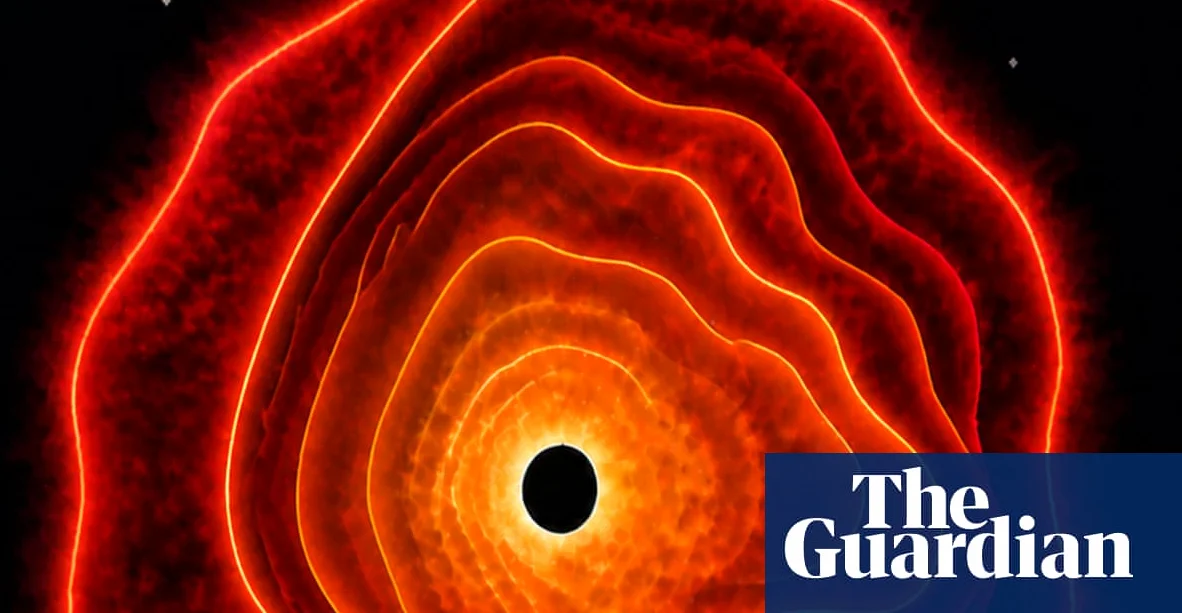
Astronomers have identified a new type of astrophysical object in the early universe, combining features of a black hole and a star, though this object, named MoM-BH*-1, was discovered using NASA’s James Webb Space Telescope (JWST). It resides in the constellation of Cetus, the Whale, and is located billions of light years from Earth; it formed approximately 660 million years after the Big Bang, according to researchers from MIT and the University of Hawaii.
Energy Output Defies Expectations
The object emits 100 billion times more energy than any known star can produce — this energy output aligns more closely with what is typically observed from black holes. Dr. Rohan Naidu, a NASA Hubble Fellow and Pappalardo Fellow at MIT’s Kavli Institute for Astrophysics and Space Research, described the object as a “black hole star.” The object shines with the energy typically associated with black holes but also bears signatures classically associated with stars.
The light from MoM-BH*-1 is almost entirely red and abruptly disappears below a certain wavelength, a feature that distinguishes it from any known class of objects. According to computer simulations, the object is a black hole swaddled in dense gas, radiating like a star. The black hole at its core is estimated to be 100,000 times as massive as the Sun, surrounded by an extended envelope of gas that resembles a star the size of the solar system.
Implications for Cosmic Understanding
If confirmed, this discovery could help explain the identity of other mysterious “little red dots” appearing in deep space images captured by JWST — these findings suggest the existence of a new class of astrophysical objects that could rework the understanding of galaxy formation and cosmic evolution. According to Dr. Phil Wiseman from the University of Southampton, who is not directly involved in the study, such discoveries may help expose the secrets of dark energy and the rapid evolution of the universe.
Meanwhile, the 4MOST super-scope, based at the European Southern Observatory in Chile, is also contributing to the broader effort to map the universe, but Equipped with nearly 2,500 fibers, 4MOST is capable of measuring the light of 2,500 celestial objects at a time. It is part of the Time-Domain Extragalactic Survey (TiDES), which aims to build the largest catalog of supermassive black hole masses and study the expansion of the universe.
Uncovering the Red Dot Mystery
The red color of MoM-BH-1 is not due to dust, as previously assumed. Instead, it results from a dense, dust-free hydrogen envelope that scatters the light from the black hole, making it appear red. This effect is similar to what causes sunsets on Earth to appear red. According to researchers, the Balmer jump in the light spectrum of MoM-BH-1 is more than double what is possible from a collection of stars.
The discovery was made during a search for the most distant galaxies in the known universe. After identifying a galaxy named Mom-z14, which formed 280 million years after the Big Bang, the team focused on other objects. MoM-BH*-1 stood out due to its extreme redness and spectral characteristics. According to the study, this object represents a potential new class of astrophysical sources that could bridge the gap between stars and black holes.





Comments
No comments yet
Be the first to share your thoughts