

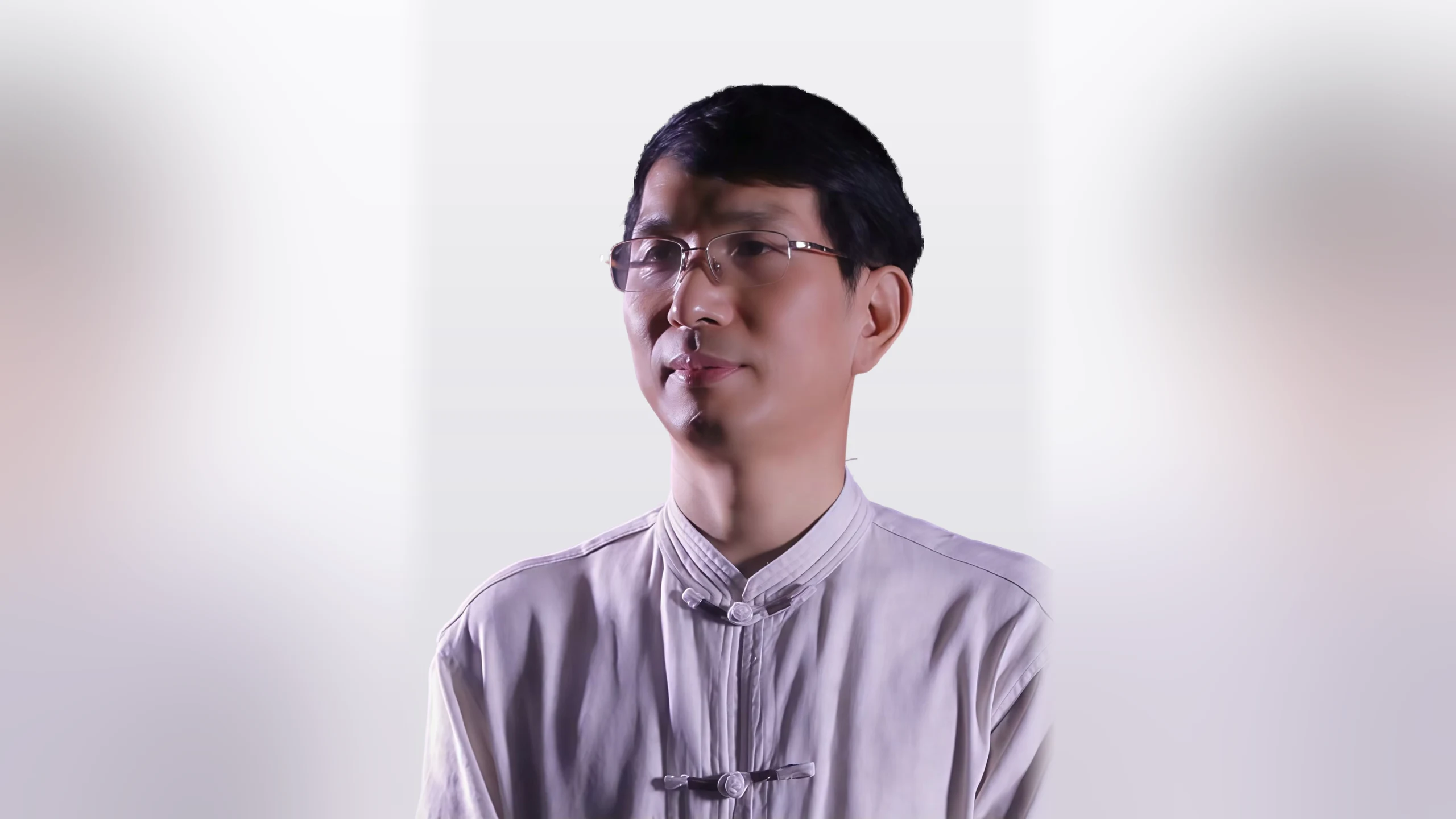
Painter Wu Wenzhong has introduced Thirty-Six Imperial Honours for Mazu, a large-scale series of Chinese paintings devoted to the sea goddess. According to the supplied account of the project, its narrative follows 36 honours bestowed by 19 emperors across the Song, Yuan, Ming and Qing dynasties, using figures, seascapes and court scenes to explore the cultural memory of this maritime faith.
Four dynasties in ink and colour
The project continues Wu’s decades of work on Mazu themes. His earlier output includes the Chinese Mazu Six Harmonies, Six Sanctities and Six Blessings series, a set of 50 Mazu Stories paintings, and works depicting Mazu patrolling the seas, a goddess of world peace and Mazu giving weather warnings. The new series focuses on imperial honours, connecting devotional accounts of protection at sea and assistance to communities with court ritual.
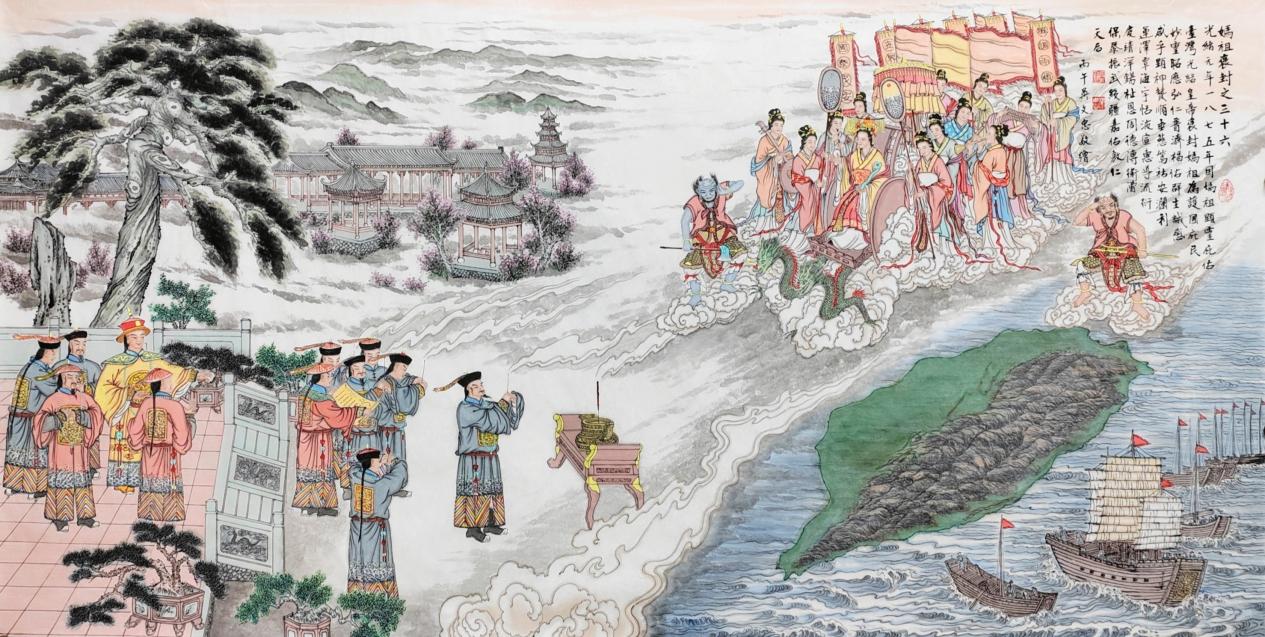
In the supplied paintings, Mazu appears among clouds above processions, palace buildings and sailing vessels. Fine lines describe waves and architecture, while restrained colours distinguish robes and ceremonial dress. The project account says Wu consulted material on historical costume, ritual and architecture. The scenes remain artistic interpretations, rather than verified reconstructions of every historical detail.
Four paintings, four historical perspectives
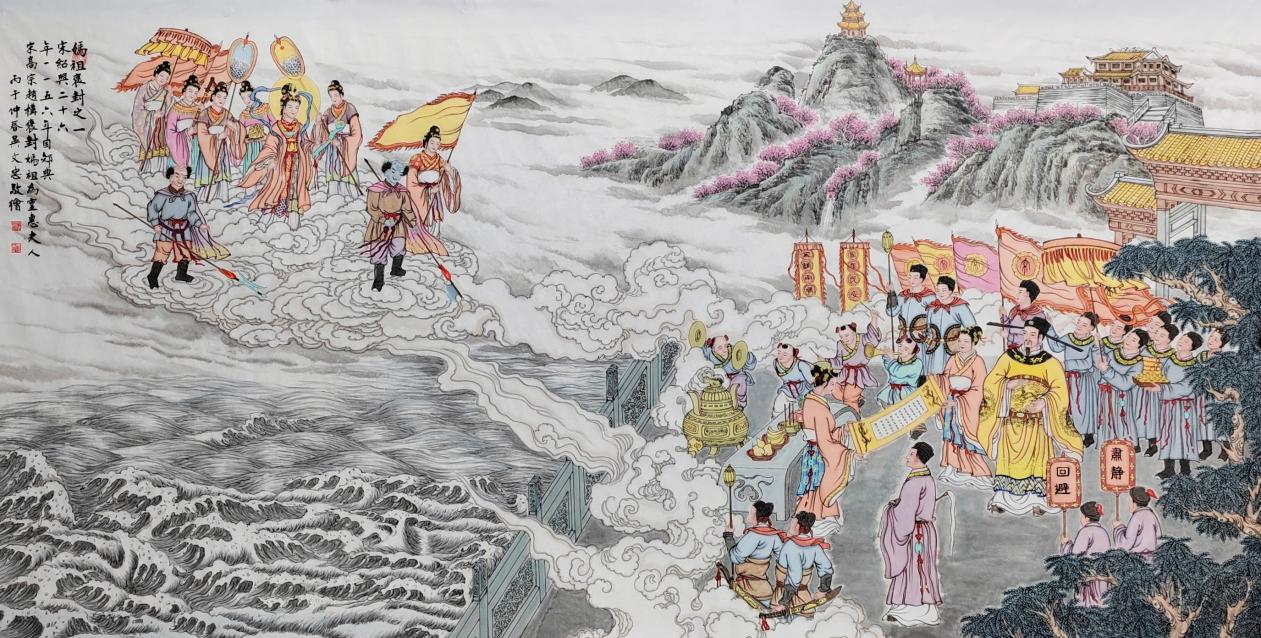
The first painting centres on the title Linghui Furen, bestowed on Mazu under Emperor Gaozong of the Song in 1156. An imperial proclamation and Mazu’s cloud-borne presence share a setting between sea and sky. The subject represents an important stage in court recognition of the faith; historical accounts differ over the precise starting point of Mazu’s first imperial honour.
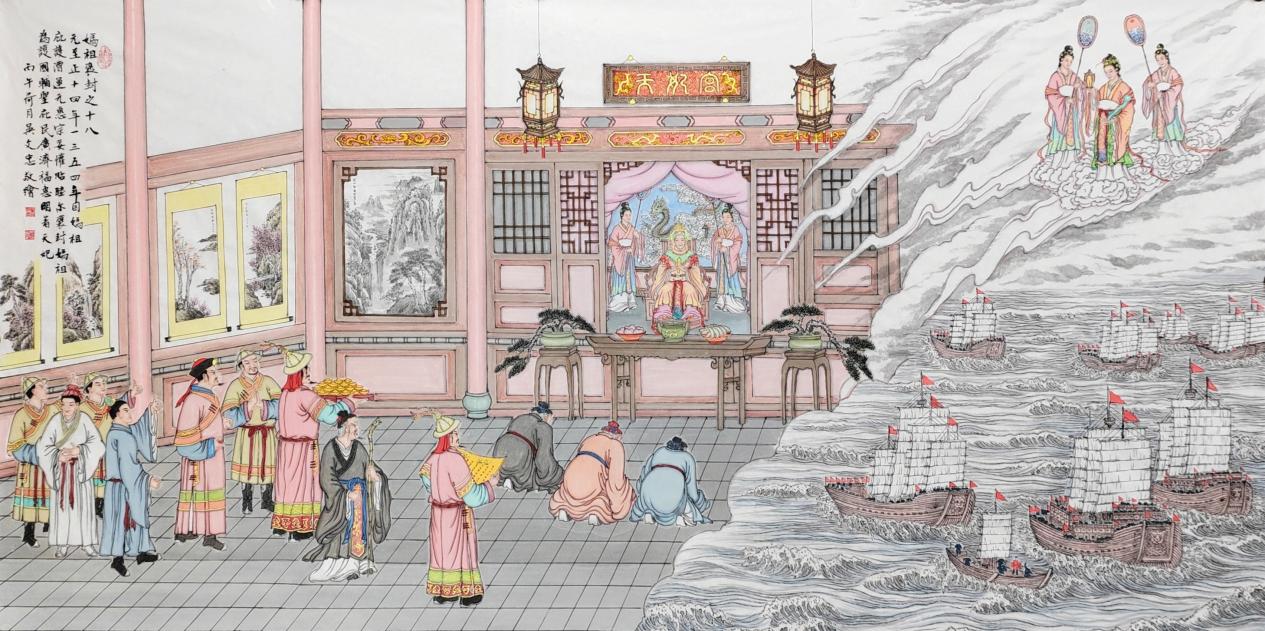
The eighteenth painting turns to Yuan maritime transport. The accompanying text places its story in 1354, linking grain shipments overseen by Gong Shitai, their safe arrival at the capital and Emperor Huizong’s addition of the title Fusheng. Worship inside a hall and a fleet at sea occupy the same composition. Divine protection of the vessels is part of the devotional tradition represented in the work.
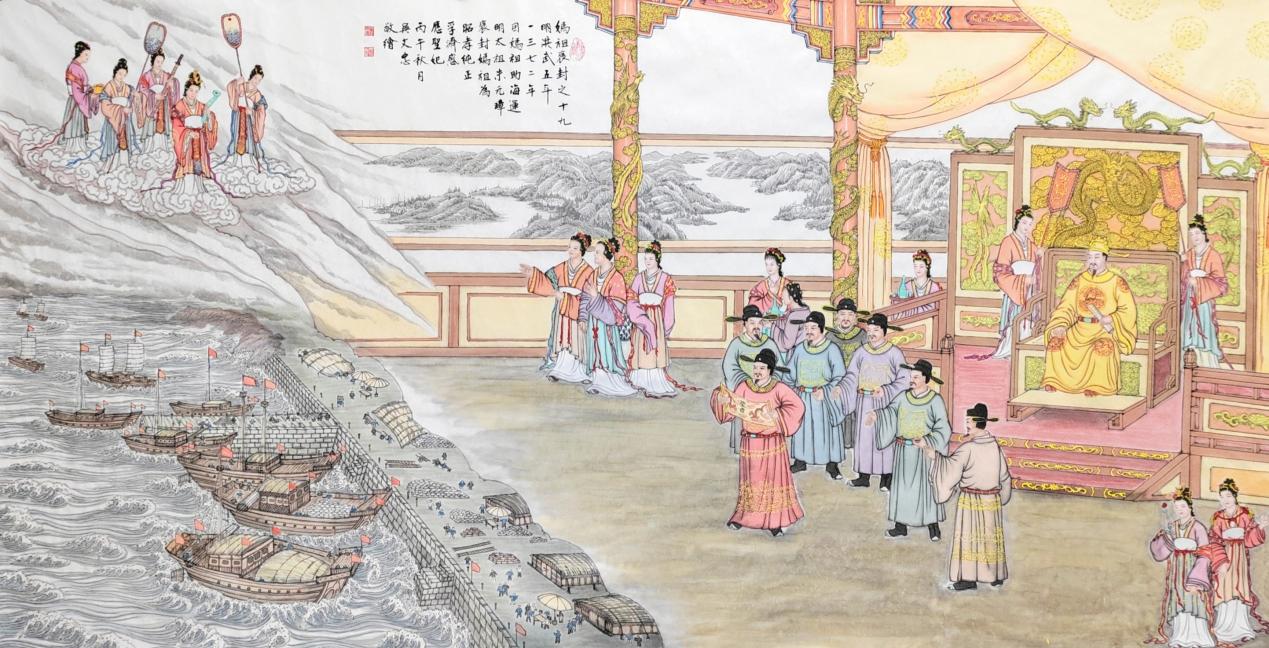
The nineteenth painting depicts an imperial honour associated with 1372, during the Hongwu reign of the Ming. An emperor sits in a palace hall before assembled officials, while ships and Mazu appear to one side. The supplied account associates the scene with the title Zhaoxiao Chunzheng Fuji Ganying Shengfei, bringing early Ming ceremonial imagery together with maritime themes.
The thirty-sixth painting addresses Qing-era Taiwan coastal defence and hopes for peaceful waters. Its accompanying account links the scene to 1875, Shen Baozhen’s mission to Taiwan and petition for an honour, and the words Furen, written 敷仁. Sources differ on the accumulation, length and attribution of Qing titles, so this connection is presented as the painting’s narrative, rather than an undisputed account of Mazu’s final title.
Art and a living tradition
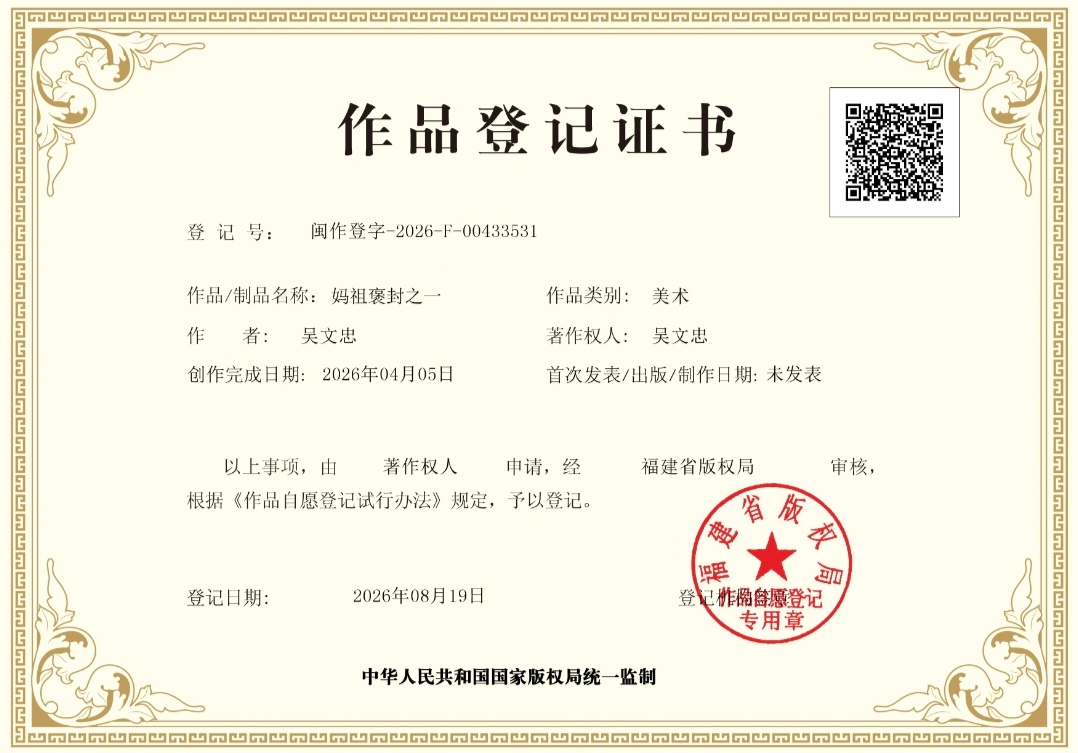
The supplied material also contains an image of a work-registration certificate for the first painting. It names Wu as author and copyright holder, gives April 5, 2026, as the completion date and August 19, 2026, as the registration date. The image concerns that individual work and does not establish that the entire series has been registered.
Mazu belief and customs were inscribed on UNESCO’s Representative List of the Intangible Cultural Heritage of Humanity in 2009. Wu’s series continues his exploration of that tradition, bringing imperial honours, maritime life and devotional feeling into the same visual narrative. The four paintings offer readers a way to approach maritime cultural history through art.
Adapted from a supplied text credited to 陈祖灏. Images supplied by Wu Wenzhong. Historical background sources are linked below.





Comments
No comments yet
Be the first to share your thoughts